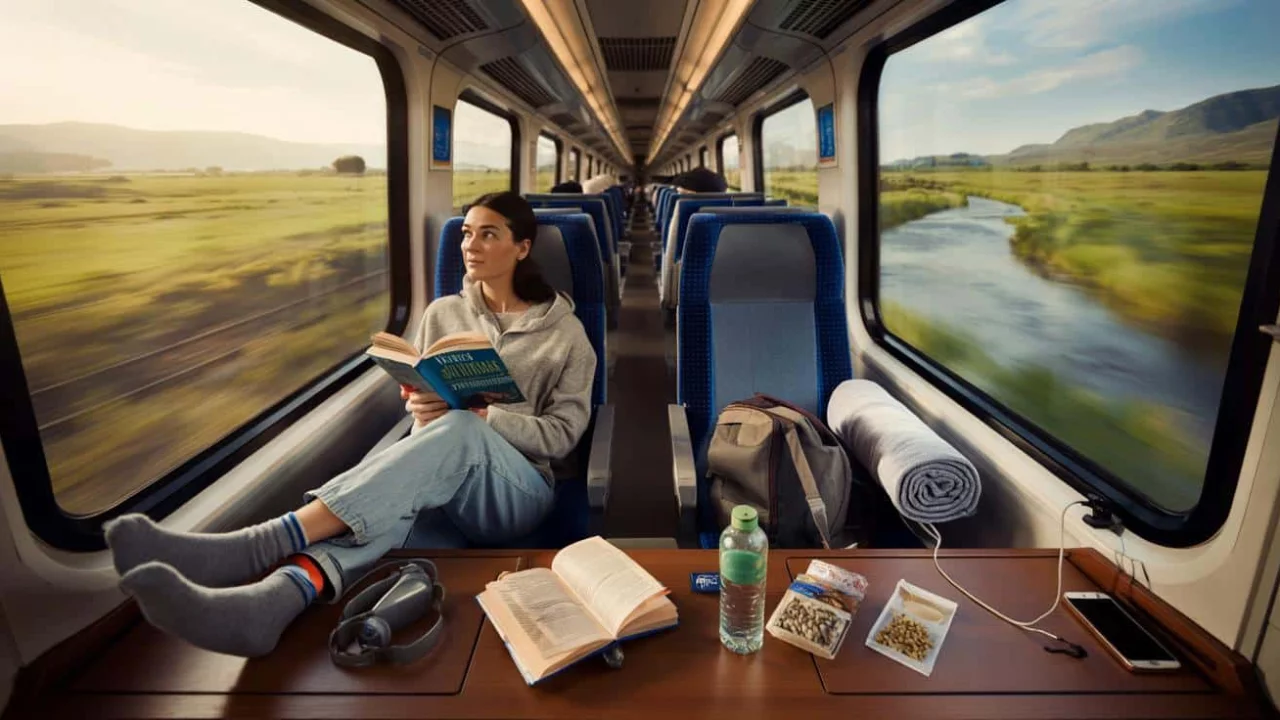
The first time I boarded an overnight Amtrak, I hauled my overstuffed suitcase down the platform like I was moving houses. The air smelled like diesel and cold metal, and people were doing that nervous half-walk, half-jog you only see in train stations. A conductor shouted “All aboard!” in a voice that made me feel like I’d stepped into an old movie.
By the time we rolled out of the city and into the dark, my seatmate was asleep, the Wi-Fi was already acting shy, and my bag full of “essentials” was wedged somewhere under three other people’s stuff. Hours later, somewhere between states, I realized: long-distance train travel is its own little universe, and it runs on different rules than planes or road trips.
That’s when the real learning started.
Why Long-Distance Train Travel Deserves Your Attention
After spending countless hours crossing the country by rail, I’ve discovered that Amtrak travel tips aren’t just about logistics—they’re about understanding a completely different way to move through the world. While airlines rush you through security lines and highways blur past your windshield, trains let you actually witness the country changing around you.
“Train travel forces you to slow down in ways that feel almost revolutionary now,” says Sarah Chen, a frequent cross-country traveler. “You’re not fighting for overhead bin space or hunting for gas stations. You’re just… moving.”
The numbers tell an interesting story too. Amtrak ridership has grown steadily, with long-distance routes seeing particularly strong demand from travelers seeking alternatives to flying. But here’s what the statistics don’t capture: the unique culture that forms on these extended journeys.
Each long-distance train becomes a temporary village where strangers share meals, swap stories, and help each other navigate the quirks of rail travel. Understanding this social dynamic is the foundation of every other tip that follows.
Essential Amtrak Travel Tips That Actually Matter
After logging hundreds of hours on routes like the Empire Builder, California Zephyr, and Coast Starlight, these are the strategies that consistently make the difference between a stressful journey and an unforgettable adventure:
- Pack light, pack smart – Your “essentials” bag should fit comfortably in your lap or under the seat in front of you
- Download everything beforehand – Wi-Fi is spotty at best, non-existent at worst
- Bring real food – The cafe car is expensive and limited
- Layer like an onion – Temperature control varies wildly between cars and times of day
- Claim your space early – Get to your seat, stow your gear, then explore
- Make friends with the crew – They know everything and can solve most problems
- Expect delays – Build buffer time into your plans
- Use the observation car strategically – Best views, but gets crowded during scenic sections
- Bring a good pillow – The provided ones are basically decorative
- Stay flexible with sleeping arrangements – Coach can be comfortable if you know the tricks
| Route | Duration | Best Time to Book | Key Stops |
|---|---|---|---|
| California Zephyr | 51 hours | 2-3 months ahead | Chicago, Denver, Salt Lake City, San Francisco |
| Empire Builder | 46 hours | 2 months ahead | Chicago, Minneapolis, Glacier National Park, Seattle |
| Coast Starlight | 35 hours | 6-8 weeks ahead | Los Angeles, San Francisco, Portland, Seattle |
| Southwest Chief | 43 hours | 2 months ahead | Chicago, Kansas City, Albuquerque, Los Angeles |
“The biggest mistake I see first-time riders make is treating the train like a bus,” explains conductor Mike Rodriguez, who’s worked long-distance routes for over fifteen years. “They pack like they’re going on a weekend trip, then wonder why they’re uncomfortable for two days.”
What to Expect When Reality Hits the Rails
Here’s what nobody tells you about long-distance train travel: it changes you. Not in some mystical, life-altering way, but in small, practical ways that stick around long after you reach your destination.
You’ll discover you can sleep sitting up (sort of). You’ll learn to read the subtle social cues that determine whether someone wants to chat or prefers to stare out the window in peace. You’ll develop strong opinions about which snacks travel well and which turn into crumb disasters.
The delays will happen. Count on it. Freight trains have priority on most routes, weather causes problems, and sometimes mechanical issues crop up. But here’s the thing experienced travelers know: delays often create the best memories.
I once spent an unscheduled three-hour stop in a tiny Montana station sharing stories with fellow passengers while kids played on the platform and someone’s grandmother distributed homemade cookies from her carry-on bag. That delay turned into one of my favorite travel moments.
“When people get upset about delays, I tell them to look out the window,” says veteran traveler Janet Morrison, who takes long-distance trains several times a year. “We’re seeing parts of America most people never see. The schedule matters less than you think.”
The accommodations will be different from hotels or even good hostels. Coach seats are wider than airline seats but narrower than your living room recliner. The bathrooms are small but functional. The food ranges from surprisingly good to aggressively mediocre.
But the views? The views are unbeatable. You’ll see backyard America—the parts invisible from highways and impossible from planes. Farm equipment sitting in fields, kids waving from backyards, small-town main streets that look like postcards from another era.
Most importantly, you’ll discover that the journey really can be more interesting than the destination. When you’re traveling at 79 mph through the American West with nowhere else to be and nothing else to do, something shifts. The constant connectivity pressure fades. The need to optimize every moment relaxes.
You might find yourself having actual conversations with strangers, reading an entire book, or simply watching the landscape change for hours without feeling like you’re wasting time.
That’s the real secret of successful Amtrak travel: stop trying to make it efficient, and start letting it be what it is—a slow, social, scenic way to cross the continent that rewards patience and curiosity more than speed and optimization.
FAQs
How far in advance should I book long-distance Amtrak tickets?
Book 2-3 months ahead for popular routes and peak travel times. Prices increase as departure dates approach, and sleeping accommodations sell out quickly.
Can I really sleep comfortably in coach on overnight trains?
Yes, with the right preparation. Bring a good travel pillow, blanket, and eye mask. Choose seats away from doors and bathrooms, and consider booking two seats if the train isn’t full.
What’s the food situation like on long-distance trains?
The dining car serves full meals (included with sleeping car tickets), while the cafe car has snacks and light meals. Prices are high, so many travelers bring their own food.
How reliable is Amtrak Wi-Fi on long routes?
It’s inconsistent at best. Download entertainment, work files, and maps before boarding. Cell service is also spotty in remote areas.
What should I pack for a multi-day train journey?
Pack light layers, comfortable shoes, toiletries, entertainment, snacks, and a power bank. Bring a small day bag for essentials since luggage storage is limited at your seat.
Are Amtrak long-distance trains safe for solo travelers?
Yes, they’re generally very safe. The crew is always present, cars are well-lit, and there’s usually a community atmosphere among passengers. Trust your instincts and use common sense as you would anywhere.











Leave a Comment