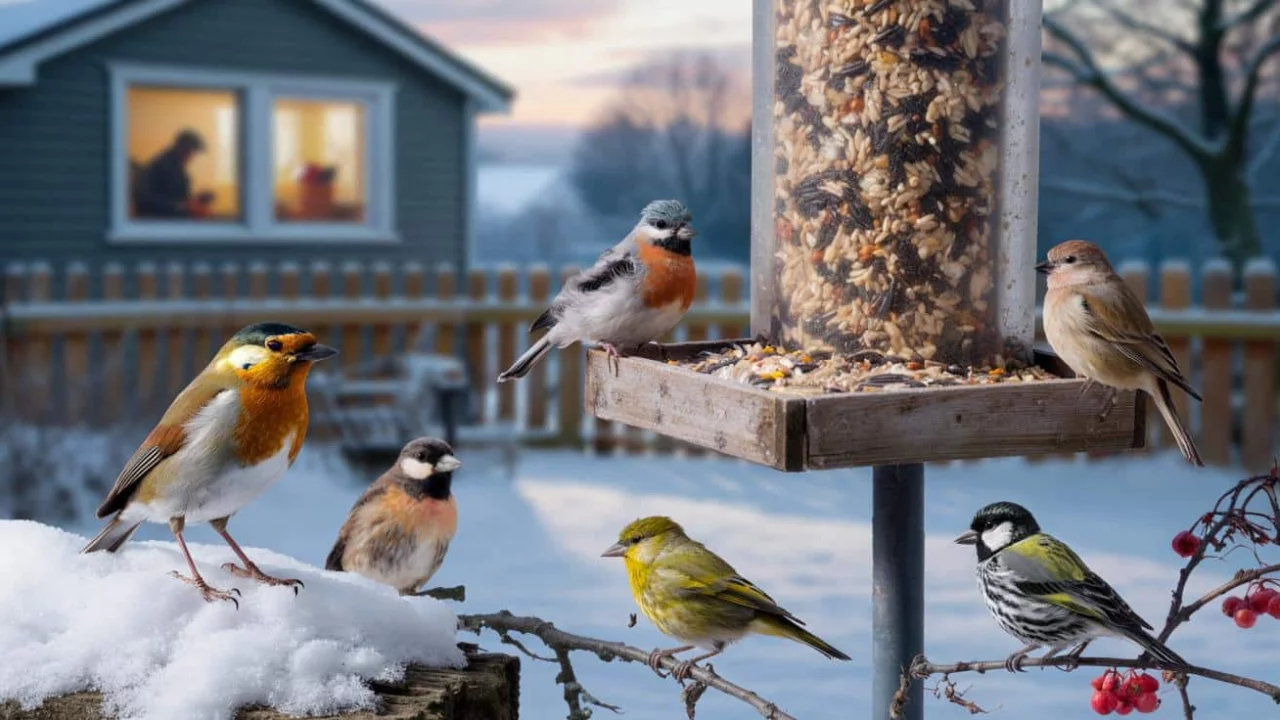
The first snow had barely dusted the lawn when the robins appeared, puffed up like tiny russet balloons on the frozen fence. You watched from the kitchen window, coffee in hand, feeling secretly proud of the brimming feeder you’d hung just last week. Sunflower hearts, peanuts, a fancy “winter wellness” seed mix you paid extra for. The birds lined up like shoppers at a food truck.
Then one morning, you noticed a finch clinging to the perch a little too still. Its feathers looked rough, its eyes half closed, as if someone had switched off its brightness overnight. The feeder was full. The yard was quiet. Something felt wrong.
You topped up the seed anyway and told yourself nature would sort it out. Sometimes, that’s exactly how the damage starts.
When your winter buffet becomes a disease highway
From the window, busy backyard bird feeders look like tiny miracles. In the middle of a frozen week, your garden suddenly hums with color and movement. Goldfinches squabble, robins hop underneath picking up scraps, a shy nuthatch zips in and out like a nervous commuter. It feels like you’re rescuing them from the cold.
Yet what we see as kindness can quietly stack the odds against them. When dozens of birds funnel into one cramped, predictable food spot, winter’s biggest threats stop being snow and ice. Disease, predators, and malnutrition slip in, almost invisible.
“The birds don’t complain about dirty feeders,” explains Dr. Sarah Chen, an avian veterinarian who has tracked feeder-related illnesses for over a decade. “They just keep coming back to the same contaminated spot until they’re too sick to fly.”
In January 2021, reports poured in across the eastern United States: sick and dead finches under backyard bird feeders. Wildlife agencies traced many deaths to salmonellosis, a bacterial disease that spreads fast when birds eat and defecate in the same crowded spots. One dirty feeder, refilled lovingly but never scrubbed, can become a slow, shared poison.
The pattern repeats with other diseases. Trichomoniasis turns up in doves and finches, creating yellow, cheese-like growths in their throats until they can’t swallow. Conjunctivitis makes house finches’ eyes swell shut, leaving them blind and vulnerable to predators they can’t see coming.
The hidden dangers lurking in your seed mix
Disease isn’t the only threat. Many backyard bird feeders accidentally create nutritional dead zones. That premium seed mix might look colorful and varied, but birds are surprisingly picky eaters. They’ll dig through everything to find their favorites, scattering the rest on the ground.
“I’ve seen feeders where 80% of the seed ends up rotting underneath, attracting rats and creating perfect breeding grounds for harmful bacteria,” notes wildlife biologist Marcus Rodriguez, who studies urban bird feeding patterns.
Here’s what commonly goes wrong with winter feeding:
- Overcrowding stress: Too many birds competing for limited perch space leads to weakened immune systems
- Poor seed quality: Cheap mixes often contain fillers that provide little nutrition but fill birds up
- Irregular feeding schedules: Birds become dependent, then starve when feeders run empty during cold snaps
- Predator magnets: Concentrated feeding areas make it easier for hawks and cats to hunt
- Window strikes: Fed birds become comfortable near houses, leading to more fatal collisions
The timing makes everything worse. Winter is already the hardest season for birds. Their natural food sources are scarce, and they need extra calories just to survive the cold nights. When a contaminated feeder makes them sick, they don’t have the energy reserves to recover.
| Disease | Common Symptoms | Most Affected Birds | Transmission Method |
|---|---|---|---|
| Salmonellosis | Lethargy, ruffled feathers, diarrhea | Finches, sparrows | Contaminated seed and surfaces |
| Trichomoniasis | Yellow mouth lesions, difficulty swallowing | Doves, finches | Shared food and water sources |
| Conjunctivitis | Swollen, crusty eyes | House finches | Direct contact at feeders |
| Aspergillosis | Respiratory distress, weakness | Multiple species | Moldy seed |
How well-meaning bird lovers are changing migration patterns
The impact goes beyond individual bird health. Reliable backyard bird feeders are subtly rewiring ancient migration patterns that took thousands of years to develop. Some robins and finches that should be heading south for winter are staying put, gambling that your feeder will keep them fed through the coldest months.
When that bet fails—when you go on vacation, forget to refill, or the feeder breaks—birds that depended on it face starvation in weather they’re not equipped to handle. Their wild survival instincts, honed over millennia, get overruled by the promise of easy food.
“We’re essentially training birds to make bad decisions,” warns ornithologist Dr. Lisa Patterson, who has documented shifts in wintering bird populations near suburban areas. “Some species are losing their natural foraging skills because they’ve become dependent on handouts.”
Young birds suffer the most. Juveniles that grow up visiting feeders never learn to find diverse natural food sources. When harsh weather hits and artificial food becomes unavailable, they lack the skills their parents’ generation took for granted.
The silence that follows is deceptive. Fewer birds doesn’t necessarily mean they’ve migrated somewhere safer. Often, it means they’ve quietly died, their small bodies hidden under bushes or swept away by winter winds. The gradual emptiness at your feeder might not signal success—it might signal a slow-motion ecological disaster you accidentally helped create.
But here’s the thing: this doesn’t mean you should give up on helping birds entirely. The solution isn’t to stop feeding them. It’s to do it smarter, cleaner, and with a better understanding of what they actually need to thrive through winter’s challenges.
Small changes in how you maintain and stock your backyard bird feeders can mean the difference between helping birds survive and inadvertently contributing to their decline. The birds depending on your feeder deserve that extra effort.
FAQs
How often should I clean my backyard bird feeders?
Clean feeders every two weeks minimum, or weekly during wet weather when bacteria and mold spread faster.
What’s the safest seed to offer birds in winter?
Black oil sunflower seeds are the gold standard—high in fat and protein, with shells birds can crack easily even when weakened by cold.
Should I take down my feeders if I see sick birds?
Yes, immediately. Remove feeders for at least two weeks, disinfect them thoroughly with a 10% bleach solution, and rake up old seed from the ground.
Is it better to have multiple small feeders or one large feeder?
Multiple smaller feeders spread at least 10 feet apart reduce overcrowding and disease transmission while giving timid birds more feeding opportunities.
Can I feed birds just during the coldest part of winter?
Actually, consistent feeding from fall through early spring works better than sporadic winter-only feeding, as it doesn’t create sudden dependency during survival-critical periods.
What should I do if I find dead birds near my feeder?
Remove the feeder immediately, dispose of dead birds wearing gloves, clean the area with disinfectant, and contact your local wildlife agency to report the deaths.











Leave a Comment