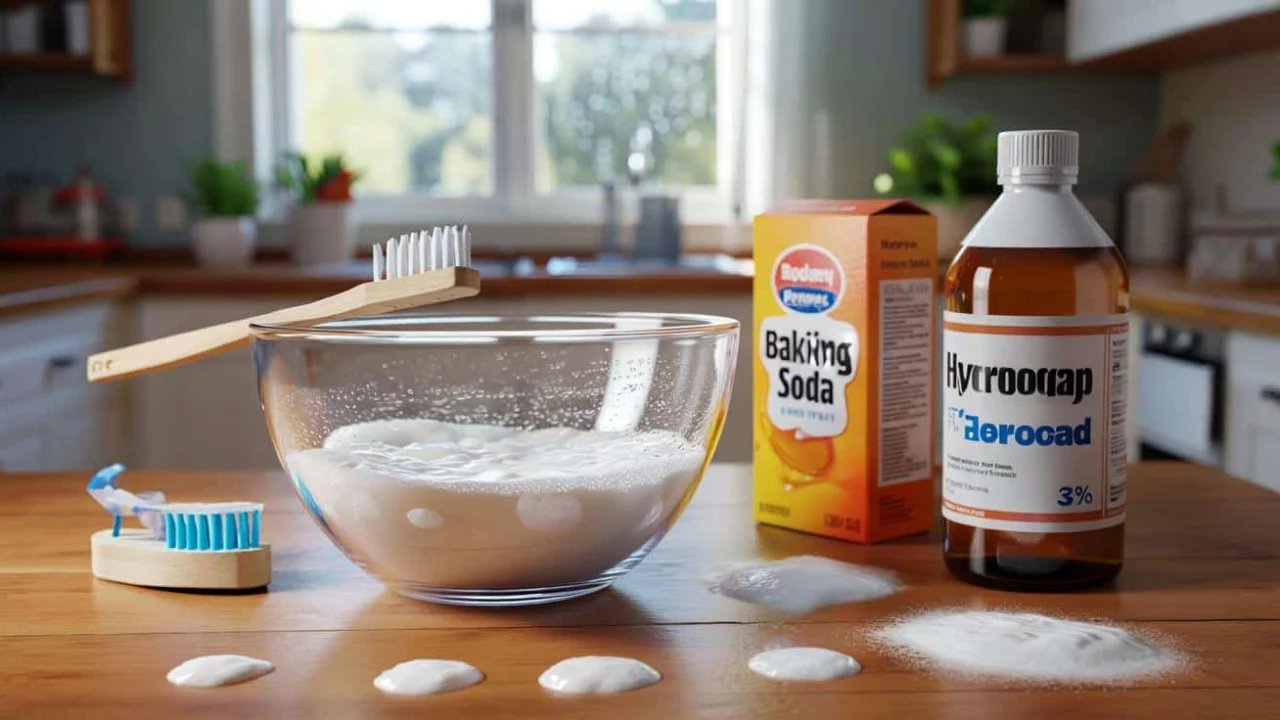
Sarah stares at the burnt casserole dish in her sink, the one that’s been “soaking” for three days now. Her mother-in-law is coming for dinner tomorrow, and this crusty mess isn’t going anywhere with regular dish soap. She’s about to reach for the heavy-duty chemical cleaner when her teenage daughter walks in, phone in hand.
“Mom, just mix some baking soda with hydrogen peroxide,” she says, not looking up from her screen. “Everyone’s doing it now.”
Sarah raises an eyebrow. These are the same two ingredients sitting in her medicine cabinet and pantry, the ones she’s used separately for years. Could it really be that simple?
It turns out her daughter is onto something. What started as a viral cleaning hack has gained serious scientific credibility, with researchers and cleaning professionals now recommending this powerful combination for everything from stubborn stains to disinfection.
Why experts are finally backing this kitchen chemistry
The baking soda hydrogen peroxide combination has moved from internet hack to legitimate recommendation, and there’s solid science behind the buzz. When these two household staples meet, they create a powerful cleaning reaction that’s both effective and surprisingly gentle.
“What you’re seeing is a classic oxidation reaction,” explains Dr. Michelle Torres, a chemistry professor at Portland State University. “The hydrogen peroxide breaks down into water and oxygen, while the baking soda acts as a mild abrasive. Together, they lift stains and kill bacteria without the harsh fumes of commercial cleaners.”
The chemical process is fascinating in its simplicity. Hydrogen peroxide (H₂O₂) naturally decomposes into water (H₂O) and oxygen (O₂), but baking soda (sodium bicarbonate) accelerates this breakdown while creating microscopic bubbles that help lift dirt and grime from surfaces. The alkaline nature of baking soda also neutralizes acidic stains, making it particularly effective against organic matter like food spills, sweat, and bodily fluids.
The timing isn’t coincidental. As people become more conscious about chemicals in their homes, especially families with young children or pets, this natural combination offers a compelling alternative. Unlike bleach or ammonia-based products, mixing baking soda with hydrogen peroxide won’t create toxic gases or leave harmful residues.
Recent studies have shown that this duo can eliminate up to 99% of common household bacteria, including E. coli and salmonella, making it as effective as many commercial disinfectants. A 2023 study published in the Journal of Applied Microbiology found that the combination was particularly effective against biofilms – those stubborn bacterial communities that form on surfaces and resist traditional cleaning methods.
Dr. Elena Vasquez, a microbiologist at the University of California San Diego, has been studying natural cleaning agents for over a decade. “We’re seeing renewed interest in these traditional combinations because they work,” she says. “The hydrogen peroxide provides the antimicrobial action, while the baking soda gives you the physical cleaning power. It’s chemistry working in harmony.”
The surprising range of uses that actually work
The applications go far beyond cleaning burnt pans. Research has revealed this combination’s effectiveness across multiple areas of home care and personal hygiene, often outperforming expensive specialized products.
- Teeth whitening: Dentists report using diluted versions for patients with stubborn stains, particularly coffee and tobacco discoloration
- Fabric restoration: Removes sweat stains, blood, and organic matter from clothing without damaging fibers
- Grout cleaning: Penetrates porous surfaces to eliminate mold and discoloration while preventing regrowth
- Pet odor elimination: Neutralizes urine and other organic odors at the molecular level rather than just masking them
- Kitchen degreasing: Cuts through baked-on grease without scratching surfaces or leaving chemical residues
- Mold remediation: Kills spores and prevents regrowth in humid areas like bathrooms and basements
- Carpet stain removal: Lifts embedded stains from carpet fibers without the need for steam cleaning
- Jewelry cleaning: Safely brightens silver and removes tarnish without harsh chemicals
- Cutting board sanitization: Eliminates bacteria from wooden and plastic cutting surfaces
- Shoe deodorization: Neutralizes odor-causing bacteria in athletic shoes and boots
The key is understanding the proper ratios and applications. Dr. James Chen, a microbiologist who studies natural cleaning agents, notes that “concentration matters tremendously. A paste made with equal parts can tackle tough stains, while a more diluted spray works perfectly for daily maintenance.”
Professional testing has revealed optimal formulations for different tasks. The thick paste works by creating extended contact time, allowing the chemical reaction to penetrate deeply into stains and bacterial colonies. Thinner mixtures are ideal for spray applications where you need even coverage over larger surfaces.
| Application | Ratio | Contact Time | Safety Notes |
|---|---|---|---|
| Teeth whitening | 1:1 paste | 2-3 minutes | Use only 3% hydrogen peroxide |
| Clothing stains | 2:1 baking soda to peroxide | 30 minutes | Test on hidden area first |
| Grout cleaning | 3:1 baking soda to peroxide | 10-15 minutes | Ensure good ventilation |
| General cleaning | 1:2 baking soda to peroxide | 5 minutes | Rinse thoroughly after use |
| Carpet stains | 2:1 baking soda to peroxide | 20-30 minutes | Blot, don’t rub |
| Mold removal | 1:1 paste | 15-20 minutes | Wear gloves and mask |
What this means for your daily routine
The growing acceptance of baking soda hydrogen peroxide mixtures reflects a broader shift in how we think about home care. Instead of reaching for different products for different problems, many households are discovering they can address multiple cleaning challenges with ingredients they already own.
Professional cleaners are taking notice too. Maria Rodriguez, who runs a green cleaning service in Denver, says she’s incorporated the combination into her standard toolkit. “My clients love that their kids can be in the room while I’m working. No harsh smells, no worrying about ventilation. And honestly, it works better than many commercial products I used to rely on.”
The financial impact is significant as well. A bottle of hydrogen peroxide costs around $1.50, and a box of baking soda runs about $2. Compare that to specialized cleaners that can cost $8-15 each, and the savings add up quickly for families. A typical household can save $200-300 annually by switching to this natural combination for most cleaning tasks.
However, experts stress that proper education is crucial. “People see these viral videos and think more is always better,” warns Dr. Torres. “But hydrogen peroxide can bleach fabrics and irritate skin in high concentrations. Start small and work your way up.”
The learning curve is minimal, but understanding the chemistry helps optimize results. The reaction is most effective in slightly alkaline conditions, which is why the baking soda component is so important. Temperature also plays a role – warm (not hot) water can accelerate the cleaning action, while very hot water can cause the hydrogen peroxide to break down too quickly.
The environmental benefits are compelling too. Both ingredients break down into harmless compounds – water, oxygen, and sodium carbonate – leaving no toxic residues in water systems or soil. This is particularly important as municipalities struggle with contamination from persistent chemical cleaning agents.
Beyond environmental concerns, there are practical health benefits. Many commercial cleaners release volatile organic compounds (VOCs) that can trigger asthma and allergies. The baking soda and hydrogen peroxide combination produces no harmful fumes, making it safe for homes with respiratory sensitivities.
As more research emerges, we’re likely to see this combination recommended even more widely. Current studies are exploring its effectiveness against antibiotic-resistant bacteria and its potential in professional medical settings. Early results are promising, with some hospitals already incorporating similar formulations into their infection control protocols.
The versatility extends to seasonal cleaning challenges too. Spring cleaning becomes less daunting when one mixture can handle everything from winter salt stains on boots to mold growth in humid corners. Summer brings its own challenges – grass stains, barbecue sauce spills, and sweat-stained clothing – all of which respond well to this natural combination.
For now, the message from experts is cautiously optimistic: this isn’t just another internet fad, but a scientifically sound approach to natural cleaning that deserves a place in your home routine. The key is starting slowly, understanding the proper ratios, and always prioritizing safety over speed.
FAQs
Is it safe to mix baking soda with hydrogen peroxide?
Yes, when done properly with household-strength (3%) hydrogen peroxide, this combination is safe and non-toxic.
How long does the mixture stay effective?
Use it immediately after mixing, as hydrogen peroxide breaks down quickly once combined with baking soda.
Can I use this mixture on all surfaces?
Test on a small, hidden area first, especially on colored fabrics or delicate materials, as hydrogen peroxide can have bleaching effects.
What’s the best ratio for general cleaning?
Start with equal parts baking soda and 3% hydrogen peroxide to form a paste, adjusting consistency with more of either ingredient as needed.
Should I rinse surfaces after using this mixture?
Yes, always rinse thoroughly with clean water, especially on surfaces that come into contact with food or skin.
Can this replace all my commercial cleaners?
While highly effective for many tasks, some specialized cleaning jobs may still require specific products, particularly for certain types of grease or industrial-strength stains.











Leave a Comment