Ahmed switched off his air conditioning for the first time in months, watching his electricity bill drop by nearly 30%. Living in Abu Dhabi, he’d grown used to sky-high power costs during the scorching summer months. But something had changed in the UAE’s energy landscape, and families like his were starting to notice the difference.
What Ahmed didn’t realize was that his lower bills were partly thanks to a massive industrial complex sitting on a remote stretch of coastline, 280 kilometers west of his apartment. The Barakah nuclear plant was quietly revolutionizing how one of the world’s biggest oil producers powers itself.
Now, a French nuclear giant is making moves to cement its role in this desert transformation, shipping cutting-edge fuel technology halfway around the world to keep those reactors humming.
When Oil Giants Go Nuclear
The Barakah nuclear plant represents something almost unthinkable just a decade ago – an oil-rich nation betting big on atomic energy. Sitting on the UAE’s western shore, far from Dubai’s glittering skyline, this facility has become the Middle East’s first commercial nuclear power station.
Four massive pressurized water reactors now supply roughly a quarter of the UAE’s electricity needs. That’s about 40 terawatt-hours annually, all without pumping a single gram of CO₂ into the atmosphere during generation.
“The numbers are staggering when you break them down,” explains Dr. Sarah Chen, a nuclear energy analyst with the International Energy Forum. “We’re talking about avoiding 22.4 million tonnes of CO₂ emissions yearly – that’s like pulling nearly five million cars off the road permanently.”
For a country whose global influence has long rested on oil and gas exports, this isn’t just about going green. It’s about survival in a rapidly changing energy landscape. The UAE is hedging against oil price volatility, geopolitical pressure, and the growing reputational cost of relying solely on fossil fuels.
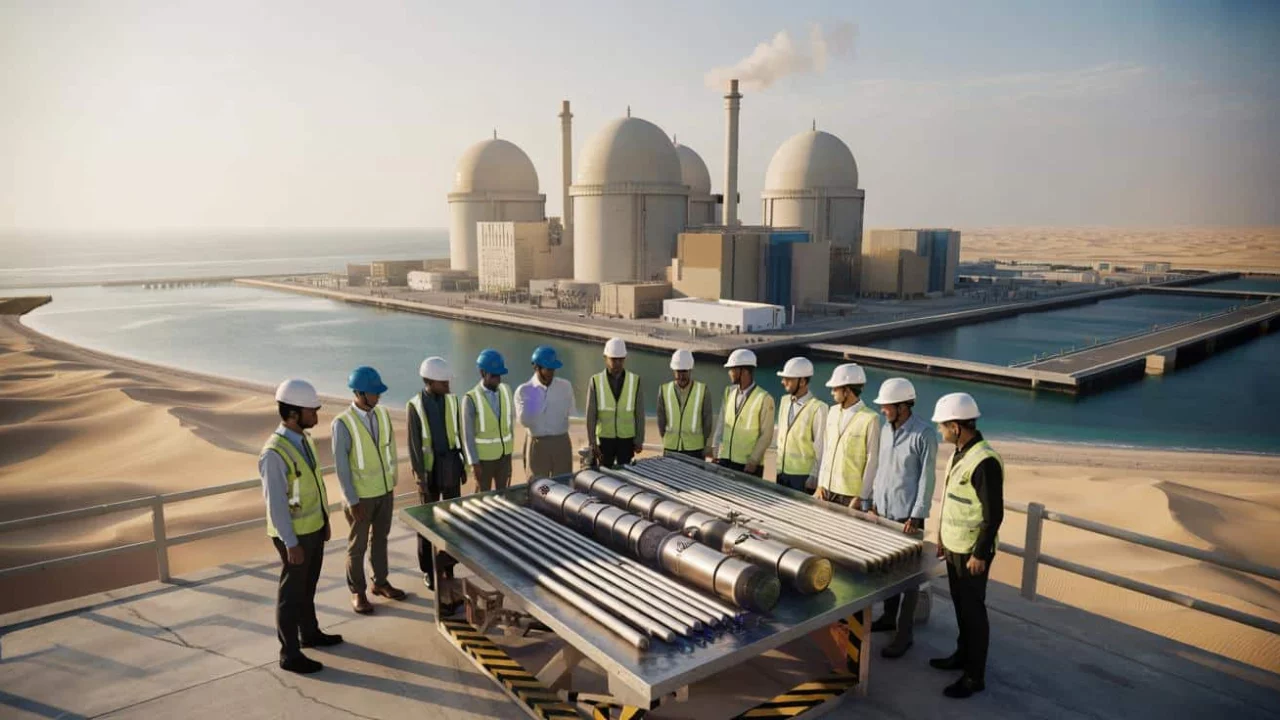
Enter Framatome, the French nuclear specialist that’s been powering reactors across the globe for decades. The company just completed a crucial delivery to Barakah – prototype fuel assemblies manufactured at their Richland, Washington facility.
The High-Stakes World of Nuclear Fuel Testing
These aren’t your typical fuel shipments. Framatome delivered what the industry calls “lead test assemblies” – essentially prototype fuel bundles designed to prove themselves under real operating conditions before any large-scale switch occurs.
Each assembly contains dozens of slim metallic tubes filled with uranium pellets, their geometry and materials specifically tailored to Barakah’s reactor design. The stakes couldn’t be higher in this precision game.
Here’s what makes this fuel technology so critical:
- Reliability Testing: Fuel failure can force expensive reactor shutdowns
- Supply Chain Security: Multiple suppliers reduce geopolitical risks
- Performance Optimization: Custom designs maximize efficiency and safety
- Cost Management: Better fuel means lower operational expenses
| Component | Function | Critical Factor |
|---|---|---|
| Fuel Rods | Contain uranium pellets | Heat resistance |
| Control Systems | Regulate nuclear reaction | Precision timing |
| Cooling Circuits | Remove excess heat | Water flow rates |
| Safety Systems | Emergency shutdown | Response speed |
“Modern nuclear plants can’t afford to gamble with unproven fuel,” notes Mark Richardson, former nuclear engineer with the International Atomic Energy Agency. “A single fuel assembly failure can cascade into weeks of downtime and millions in lost revenue.”
Before any Framatome fuel rod approaches the Barakah reactors, it endures a brutal testing regime at their Richland facility. Thermal tests simulate rapid power changes. Mechanical trials push assemblies to their physical limits. Hydraulic testing ensures proper coolant flow around every rod.
What This Means for Energy’s Future
The partnership between Framatome and Barakah signals something bigger than just another business deal. It’s reshaping how we think about energy security in an unstable world.
For the UAE, diversifying fuel suppliers means reducing dependence on any single country or company. That’s crucial insurance in today’s volatile geopolitical climate, where supply chains can snap overnight due to sanctions, conflicts, or trade disputes.
“Energy independence isn’t just about having your own oil wells anymore,” explains Dr. Chen. “It’s about building resilient supply networks that can weather any storm.”
The ripple effects extend far beyond the Gulf. Other oil-producing nations are watching Barakah’s success closely. Saudi Arabia has announced plans for 16 nuclear reactors. Egypt is building its first nuclear plant with Russian help. The entire Middle East is rethinking its energy strategy.
For families like Ahmed’s, the benefits are immediate and tangible. Lower electricity costs, more stable power supply, and cleaner air in their cities. The UAE’s electricity grid now relies less on expensive natural gas imports, keeping consumer prices in check even during regional supply disruptions.
The environmental impact extends globally too. Every kilowatt-hour generated at Barakah means less oil burned for domestic power, freeing up more crude for export or reducing the need to extract it altogether.
“This is how energy transitions actually happen,” notes Richardson. “Not through grand gestures or political announcements, but through practical partnerships that make clean energy cheaper and more reliable than the alternatives.”
Framatome’s success at Barakah could open doors across the region. The company’s proven ability to adapt its technology to Middle Eastern conditions – from extreme heat to challenging logistics – makes it an attractive partner for other nations planning nuclear programs.
The French firm’s strategic move also reflects broader changes in the global nuclear industry. With climate commitments pushing more countries toward clean energy, the market for advanced nuclear technology is expanding rapidly. Securing a foothold in the Middle East positions Framatome for decades of future growth.
FAQs
What makes the Barakah nuclear plant so significant?
It’s the Middle East’s first commercial nuclear power station, supplying 25% of the UAE’s electricity and avoiding 22.4 million tonnes of CO₂ emissions annually.
Why is Framatome testing fuel at Barakah instead of just supplying it?
Lead test assemblies allow the company to prove their fuel works safely in Barakah’s specific reactor design before committing to large-scale commercial supply contracts.
How does nuclear power help an oil-rich country like the UAE?
It reduces dependence on natural gas imports for electricity, stabilizes energy costs, and frees up more oil for profitable export rather than domestic consumption.
What happens if the fuel testing fails?
Failed tests would prevent Framatome from becoming a major fuel supplier to Barakah, forcing the UAE to rely on fewer suppliers and potentially higher costs.
Are other Middle Eastern countries planning similar nuclear programs?
Yes, Saudi Arabia plans 16 reactors, Egypt is building its first plant, and several other regional nations are exploring nuclear options for energy security.
How long does nuclear fuel testing typically take?
Lead test assemblies usually operate for 12-18 months under real conditions before engineers can fully evaluate their performance and approve commercial use.











Leave a Comment