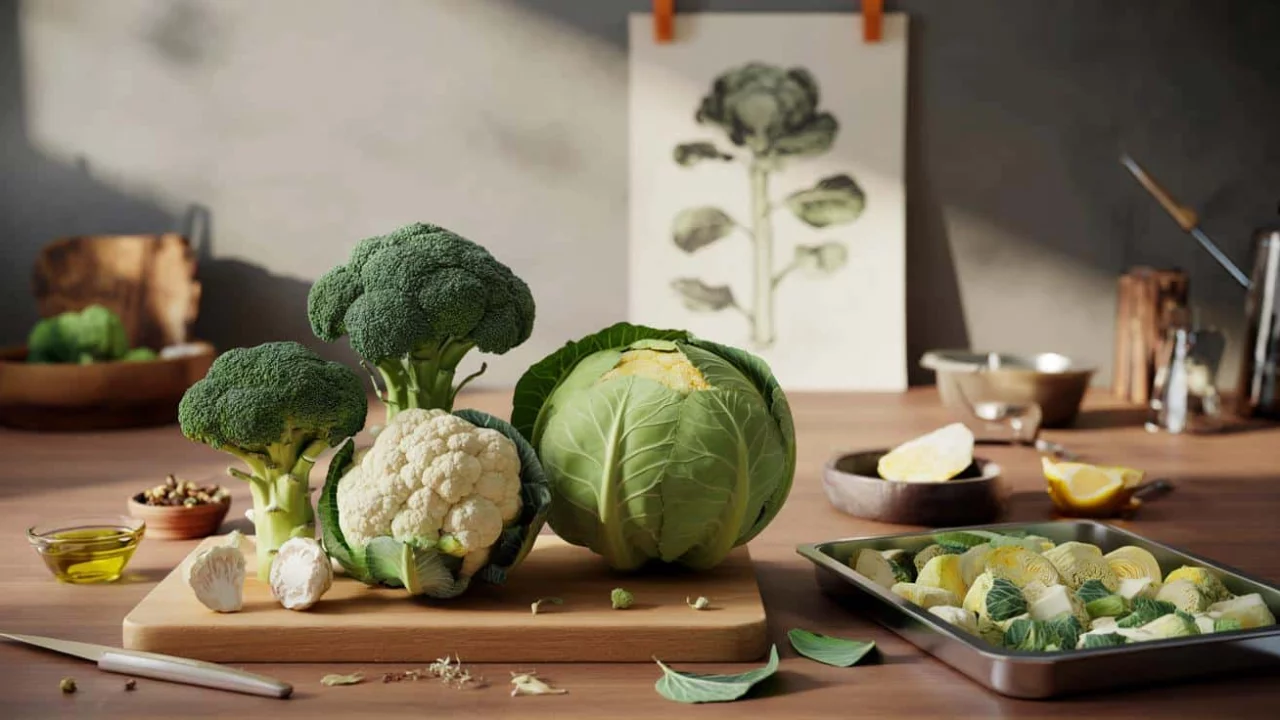
At the Saturday market, a little girl was arguing with her dad in front of a mountain of vegetables. “I want the tiny trees,” she said, pointing at the broccoli. He laughed and picked up a cauliflower. “This one’s from another planet,” he added. The stallholder, busy weighing cabbages, finally cut in with a smile: “Same family, same plant, different temperaments.”
The dad nodded politely, clearly not believing a word. Most of us would have reacted just like him. We see three vegetables, three shapes, three flavors. Three totally separate things.
Yet on that stall, in the soil beneath, a quiet truth was sitting in plain sight. Cauliflower, broccoli and cabbage are basically siblings from the same wild ancestor. And once you know that, your plate never looks quite the same again.
The Strange Family Secret Hiding in Your Crisper Drawer
Open your fridge door and look at the vegetable drawer. There’s probably a lonely half cabbage wrapped in cling film, maybe a forgotten head of broccoli, and a cauliflower waiting for inspiration. They seem like three unrelated characters in the same sad salad story. One for coleslaw, one for stir-fry, one for Sunday roast.
Yet botanists will tell you they’re all one thing: Brassica oleracea, the same species, patiently sculpted by humans over centuries. It’s as if we took one plant, pressed pause, zoomed in on different body parts, and decided, “Let’s grow this bit bigger.”
Picture the original ancestor: wild cabbage, a scruffy coastal plant growing on windy cliffs across Europe. Farmers noticed some plants with fuller leaves. Others with thicker stems. Others forming tight clusters of flower buds.
“What’s remarkable is that all these brassica oleracea varieties came from selective breeding, not genetic engineering,” explains Dr. Sarah Martinez, a plant geneticist at Cornell University. “Ancient farmers were essentially doing what we now call artificial selection, just very slowly and very patiently.”
Generation after generation, they saved seeds from the quirks they liked most. More leaf, less leaf. Bigger bud, tighter head. A long, slow experiment taking place in fields and backyards, not in laboratories.
That’s how we ended up with cabbage (boosted leaves), broccoli (enhanced flower buds and stems), cauliflower (densely packed flower structures) and later Brussels sprouts, kale and kohlrabi. All one species, just different versions of the same genetic story.
Think of it like dog breeds. A Great Dane and a Chihuahua look like they came from different planets, yet they’re both just dogs. Cauliflower and broccoli are the Great Dane and Chihuahua of the vegetable world. Same DNA base, wildly different vibe.
How Ancient Farmers Created Six Vegetables from One Wild Plant
What changed was which part of the plant farmers pampered and rewarded with seed. Focus on leaves long enough, you get cabbage. Favor weird dense buds, you get cauliflower. Encourage open, green florets on stems, you get broccoli.
Here’s how the major brassica oleracea varieties developed over thousands of years:
| Variety | Plant Part Enhanced | Origin Period | Main Use |
| Cabbage | Large overlapping leaves | 600 BCE | Raw eating, fermentation |
| Broccoli | Flower clusters and stems | Roman times | Cooking, steaming |
| Cauliflower | Dense white flower head | 12th century | Roasting, mashing |
| Brussels Sprouts | Tiny bud clusters | 16th century | Side dishes, roasting |
| Kale | Loose curly leaves | Ancient times | Salads, smoothies |
| Kohlrabi | Swollen stem base | 15th century | Raw snacking, cooking |
This slow, patient selection is called domestication. And we’re still doing it every time a grower chooses one plant over another for next year’s crop.
“The amazing thing is that farmers achieved this incredible diversity without understanding genetics at all,” notes Professor James Thompson, who studies crop evolution at UC Davis. “They just knew what looked good and tasted better.”
The process wasn’t random. Each variety emerged to solve specific problems:
- Cabbage provided long-term storage through fermentation
- Broccoli offered quick-cooking nutrition for busy Roman households
- Cauliflower created a mild, versatile base for various dishes
- Brussels sprouts maximized yield in small garden spaces
- Kale survived harsh winters when other greens died
- Kohlrabi combined root and leaf nutrition in one plant
Why This Changes Everything About How You Shop and Cook
Once you see brassica oleracea varieties as one big family, your kitchen strategy completely shifts. You start noticing the similarities instead of obsessing over differences.
They all love similar growing conditions. They share nutritional profiles. They can often substitute for each other in recipes with minor adjustments. That lonely cauliflower suddenly becomes a broccoli understudy. The forgotten cabbage transforms into a Brussels sprouts replacement.
“Understanding these relationships makes you a more flexible cook,” says chef Maria Rodriguez, who runs three farm-to-table restaurants in California. “When the market doesn’t have what your recipe calls for, you can make intelligent swaps within the same plant family.”
The health benefits stack up similarly too. All brassica oleracea varieties contain:
- High levels of vitamin C and vitamin K
- Powerful antioxidants called glucosinolates
- Fiber for digestive health
- Folate for cell function
- Cancer-fighting compounds
This knowledge also explains why these vegetables pair so well together. They’re not competing flavors—they’re complementary expressions of the same genetic theme. That’s why coleslaw with multiple brassicas tastes so harmonious. It’s literally a family reunion on your plate.
Modern plant breeders continue the ancient tradition, developing new varieties like purple cauliflower, broccolini, and rainbow kale. Each one represents another branch on the same family tree that started with that scrubby wild cabbage on European cliffs.
“We’re still discovering what this one plant can become,” explains Dr. Lisa Chen, who develops new vegetable varieties for seed companies. “Every year we push the boundaries a little further, just like farmers have been doing for thousands of years.”
The next time you’re at the grocery store, pause in the produce section. Look at the cauliflower, broccoli, and cabbage display. You’re not seeing three different plants. You’re witnessing thousands of years of human ingenuity, patience, and agricultural artistry—all focused on one incredibly adaptable species that keeps surprising us with what it can become.
FAQs
Are cauliflower, broccoli, and cabbage really the same plant?
Yes, they’re all varieties of Brassica oleracea, selectively bred over thousands of years to emphasize different plant parts.
Can you crossbreed different brassica varieties?
Absolutely, since they’re the same species. This is how we get hybrids like broccolini, which crosses broccoli with Chinese broccoli.
Why do they taste so different if they’re the same plant?
Different plant parts have different concentrations of nutrients and compounds. Leaves taste different from flower buds, which taste different from stems.
What was the original wild plant like?
Wild cabbage looks like loose, open kale growing on coastal cliffs. It’s much smaller and less dense than any modern variety.
Are there other vegetables in this same family?
Yes, Brussels sprouts, kale, kohlrabi, and collard greens are also Brassica oleracea varieties. Plus radishes, turnips, and mustard are related brassica species.
How long did it take to develop these different varieties?
Thousands of years of gradual selection. Cabbage appeared around 600 BCE, while Brussels sprouts weren’t developed until the 1500s in Belgium.





Leave a Comment