Standing in the produce section last Tuesday, I watched a mother explain vegetables to her toddler. “This is broccoli,” she said, holding up the green crown. Then the white cauliflower: “And this is completely different.” The kid nodded seriously, absorbing this fundamental truth about the world.
Except it’s not true at all.
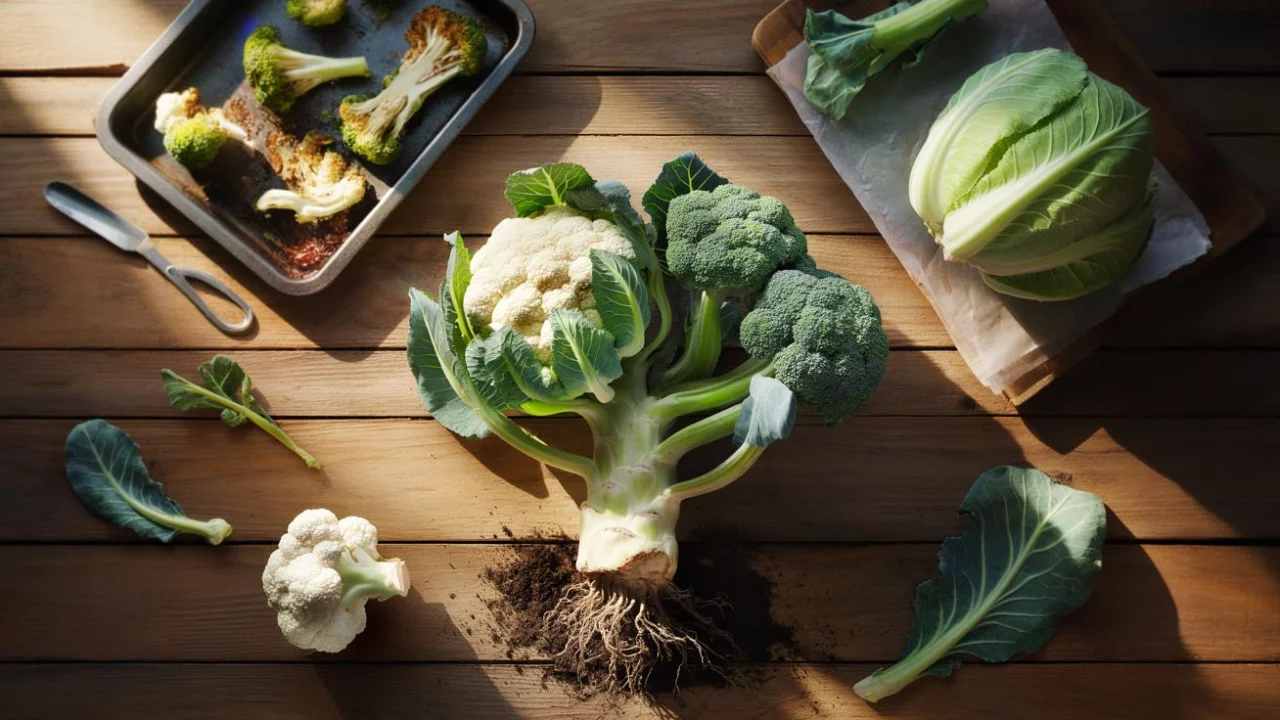
I used to make the same mistake. These vegetables seemed as unrelated as apples and oranges. But here’s what blew my mind when I finally looked it up: cauliflower, broccoli, cabbage, kale, Brussels sprouts, and kohlrabi are all the same plant. Not similar plants. The exact same species, just wearing different disguises.
The wild ancestor that fooled us all
Every single one of these brassica oleracea varieties started as the same scrubby weed growing on Mediterranean cliffs. Picture a tough, bitter plant clinging to rocky coastlines, nothing like the vegetables filling our grocery carts today.
“What happened next is one of agriculture’s most impressive magic tricks,” explains Dr. Sarah Chen, a plant geneticist at UC Davis. “Humans took this one wild species and turned it into six completely different-looking vegetables through selective breeding.”
The process took thousands of years. Ancient farmers noticed that some wild plants had slightly bigger leaves, others had thicker stems, and a few developed unusual flower clusters. They saved seeds from the most promising plants, generation after generation.
Slowly, that single species split into distinct paths:
- Cabbage – farmers selected for larger, tighter leaf clusters
- Broccoli – they focused on developing bigger flower heads
- Cauliflower – breeding emphasized dense, white flower clusters
- Brussels sprouts – selection favored plants with many small, cabbage-like buds
- Kale – farmers kept the plants with the most nutritious leaves
- Kohlrabi – they developed the swollen stem portion
The scientific proof hiding in plain sight
The evidence sits right there in every biology textbook, but somehow it never clicks for most people. All these vegetables share the same Latin name: Brassica oleracea. They’re not different species with similar names – they’re literally subspecies of one plant.
“I tell my students to think of it like dog breeds,” says Professor Mike Rodriguez, who teaches botany at Texas A&M. “A Chihuahua and a Great Dane look nothing alike, but they’re both the same species. That’s exactly what’s happening with these vegetables.”
Here’s how dramatically different these brassica oleracea varieties became:
| Variety | Part We Eat | Key Characteristic | First Developed |
|---|---|---|---|
| Cabbage | Leaves | Tight head formation | Ancient Rome |
| Broccoli | Flower buds | Large central head | Italy, 6th century |
| Cauliflower | Flower buds | White, dense clusters | Cyprus, 12th century |
| Brussels Sprouts | Leaf buds | Mini-cabbages on stalk | Belgium, 16th century |
| Kale | Leaves | Loose, frilly leaves | Greece, 4th century BC |
| Kohlrabi | Stem | Swollen stem base | Germany, 15th century |
What’s fascinating is how each culture focused on different parts of the same plant. Romans loved the leaves and created cabbage. Italians got obsessed with the flowers and gave us broccoli. The Germans went for the stems and developed kohlrabi.
“It’s like each civilization looked at this plant and asked, ‘What if we made this part bigger?'” notes Dr. Chen. “Then they spent centuries making it happen.”
Why this changes everything about how we eat
Understanding that these are all brassica oleracea varieties completely shifts how you think about nutrition and cooking. If you hate Brussels sprouts but love broccoli, you might just need to try Brussels sprouts prepared like broccoli. They’re the same plant, after all.
The nutritional profiles are surprisingly similar too. All these vegetables pack vitamin C, fiber, and cancer-fighting compounds called glucosinolates. The main differences come from which part of the plant we’re eating, not the plant itself.
This knowledge also explains why these vegetables often taste similar when prepared certain ways. Roasted Brussels sprouts develop the same nutty sweetness as roasted cauliflower. Raw kale has that same sharp bite as raw broccoli stems.
“Once people understand they’re all related, they start experimenting more,” says chef Maria Santos, who runs a farm-to-table restaurant in Portland. “They realize that if they like one, they might enjoy others prepared differently.”
For gardeners, this revelation is even more practical. These brassica oleracea varieties can cross-pollinate with each other if grown too close together. Plant broccoli next to cauliflower, and you might get some interesting hybrid offspring that look like neither parent.
The story of these six vegetables is really the story of human ingenuity. We took one tough, barely edible plant and turned it into half a produce section. Every time you bite into crispy coleslaw or steam some broccoli, you’re tasting thousands of years of careful selection and breeding.
Next time you’re at the grocery store, take a moment to really look at these vegetables. Under all their different shapes and colors, they’re family. They’re proof that with enough time and attention, one small wild plant can become a feast.
FAQs
Can you actually cross-breed these vegetables at home?
Yes, but it takes patience and the right conditions. If you let these brassica oleracea varieties flower and cross-pollinate, their offspring will show traits from both parents.
Why do they taste so different if they’re the same plant?
We’re eating different parts of the plant, and selective breeding emphasized different compounds in each variety. Leaves taste different from flowers, which taste different from stems.
Are there other vegetables that are secretly related like this?
Absolutely. Carrots, parsnips, and fennel are all in the same family. So are tomatoes, peppers, and eggplants. Plant families are full of surprises.
Which came first historically?
Kale is probably closest to the original wild plant, followed by cabbage. Broccoli and cauliflower came much later, developed through more intensive breeding programs.
Do they have the same nutritional benefits?
Very similar, though there are small differences. Kale has more vitamin A, broccoli has slightly more protein, and red cabbage has extra antioxidants from its purple color.
Can people allergic to one eat the others?
Usually not. If someone is allergic to brassica oleracea varieties, they typically react to all of them since they share the same basic proteins and compounds.










Leave a Comment