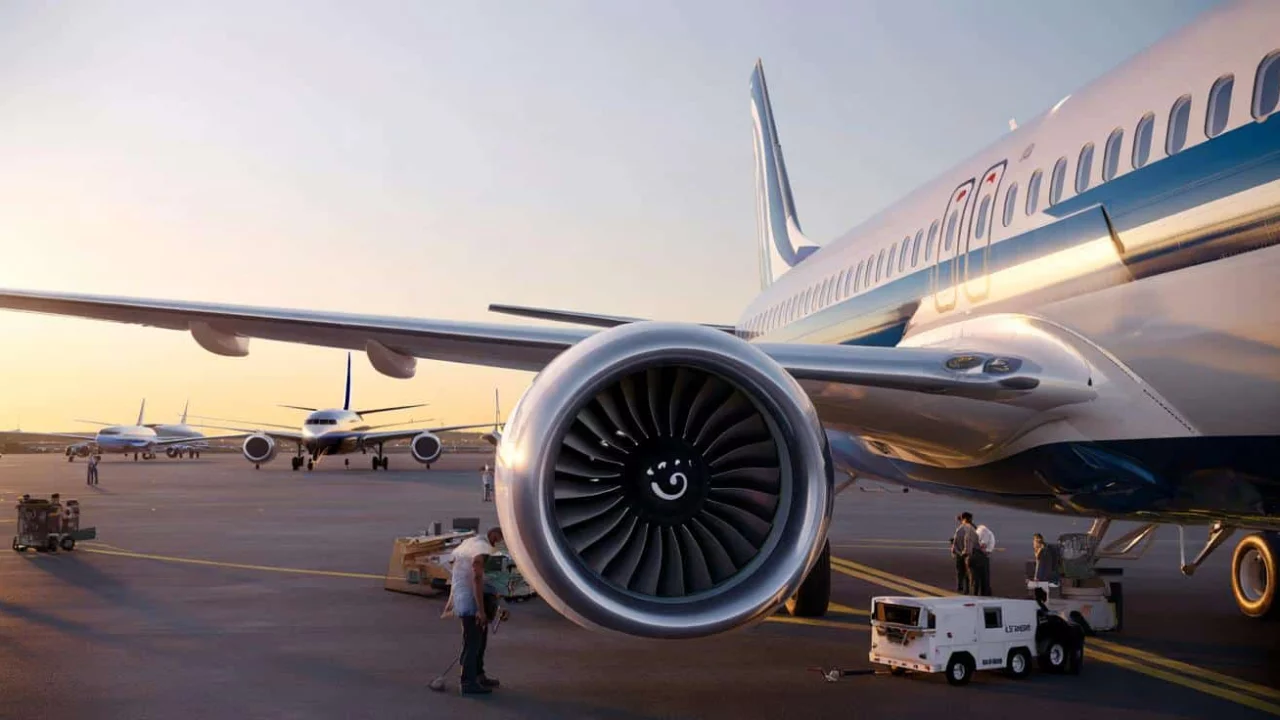
Maria Gonzalez never thought much about airplane engines until her budget airline flight got delayed for six hours. The captain’s apologetic voice crackled over the intercom: “We’re waiting for a replacement engine part.” As she sat in the cramped airport chair, watching mechanics work on the wing, she realized something profound – behind every smooth takeoff lies an invisible battle between engine manufacturers worth billions of euros.
That invisible battle just got more interesting. Turkey’s Pegasus Airlines has handed CFM International engines a massive victory, signing what could become a €5 billion deal that stretches decades into the future. This isn’t just about selling metal and bolts – it’s about locking in a relationship that will define how millions of passengers fly.
The deal centers around 300 LEAP-1B engines that will power Pegasus’s new fleet of Boeing 737-10 aircraft. But here’s where it gets fascinating: this agreement goes far beyond the initial hardware purchase, bundling in spare engines, long-term maintenance contracts, and support services that transform a simple transaction into a decades-long partnership.
Why This Deal Changes Everything for Budget Aviation
Pegasus Airlines just made the largest engine order in its history, and the timing couldn’t be more strategic. The Turkish carrier ordered 100 Boeing 737-10 jets in December 2024 – their biggest aircraft purchase ever. Now they’re ensuring those planes have the power to match their ambitious growth plans.
“For low-cost carriers, engine reliability isn’t just about performance – it’s about survival,” explains aviation analyst Rebecca Chen. “One unexpected grounding can wipe out the razor-thin margins these airlines depend on.”
CFM International engines, jointly owned by France’s Safran and America’s General Electric, have become the dominant force in single-aisle aviation. The LEAP-1B variant powering Boeing’s latest 737 MAX aircraft represents years of technological advancement designed specifically for the punishing schedules budget airlines demand.
The partnership between Pegasus and CFM isn’t new – it’s a relationship that spans decades. Pegasus actually became the first airline worldwide to operate LEAP engines in commercial service, with their debut flight taking off from Istanbul to Antalya in July 2016. That pioneering spirit has now evolved into a multi-billion euro commitment.
Breaking Down the Billion-Euro Numbers
The financial scope of this deal becomes clearer when you examine what’s actually included:
| Component | Quantity | Estimated Value |
|---|---|---|
| LEAP-1B Engines | 300 units | €2.4-3.0 billion |
| Spare Engines | Multiple units | €400-600 million |
| Long-term Maintenance | 20+ years | €1.2-1.4 billion |
| Support Services | Ongoing | €200-400 million |
These numbers reveal why engine manufacturers fight so fiercely for major airline contracts. The initial engine sale is just the beginning – the real money comes from decades of maintenance, parts, and support services.
“When airlines choose an engine supplier, they’re not just buying hardware – they’re entering a marriage,” notes industry consultant James Martinez. “The maintenance contracts alone can be worth more than the original engines over their operational lifetime.”
The LEAP-1B engines feature cutting-edge technology designed for intensive daily use:
- Carbon-fiber composite fan blades that reduce weight and improve efficiency
- Advanced ceramic matrix composites in the hottest engine sections
- Sophisticated digital monitoring systems that predict maintenance needs
- Fuel efficiency improvements of up to 15% compared to previous generation engines
What This Means for Passengers and Competition
For travelers, this deal promises more reliable flights and potentially lower ticket prices. The LEAP-1B’s improved fuel efficiency helps airlines reduce operating costs, savings that often get passed down to passengers through competitive pricing.
But the broader implications stretch far beyond individual flights. CFM International engines now power the majority of single-aisle aircraft worldwide, giving the Franco-American joint venture enormous influence over global aviation.
“CFM’s dominance in the single-aisle market is becoming almost monopolistic,” warns competition analyst David Thompson. “When one supplier controls this much of the market, it raises questions about pricing power and innovation incentives.”
The Pegasus deal also highlights how budget airlines are becoming increasingly sophisticated in their procurement strategies. Rather than simply chasing the lowest upfront price, Pegasus has prioritized long-term operational predictability and support quality.
This approach makes sense for several practical reasons:
- Maintenance teams already know CFM technology inside and out
- Spare parts can be shared across the entire fleet
- Pilot and engineer training requirements remain consistent
- Fuel performance and reliability patterns are well-established
The deal positions Pegasus for aggressive expansion across Europe, the Middle East, and beyond. With 100 new Boeing 737-10 aircraft powered by state-of-the-art engines, the airline can compete more effectively against both traditional carriers and other budget operators.
“This isn’t just about buying engines – it’s about buying market position,” explains aviation finance expert Sarah Kim. “Pegasus is betting that CFM’s technology advantage will translate into a competitive edge for decades to come.”
The timing also suggests confidence in post-pandemic aviation recovery. Airlines don’t commit billions to new equipment unless they expect strong passenger demand growth. Pegasus’s massive investment signals their belief that budget travel will continue expanding, particularly in emerging markets.
BREAKING: Pegasus Airlines signs historic €5bn engine deal with CFM International, securing 300 LEAP-1B engines for their Boeing 737-10 fleet. This could be the largest engine contract in Turkish aviation history. #Aviation#CFM
— Aviation Business (@AviationBiz) January 15, 2024
For CFM International, this victory reinforces their position as the world’s most successful commercial engine manufacturer. The company has delivered over 40,000 engines worldwide and shows no signs of slowing down.
The deal also demonstrates how modern aviation partnerships extend far beyond traditional buyer-seller relationships. CFM and Pegasus are essentially becoming business partners, with both companies’ success interlinked for decades to come.
FAQs
What makes CFM International engines so popular with airlines?
CFM engines offer proven reliability, excellent fuel efficiency, and comprehensive long-term support packages that help airlines reduce operating costs and improve schedule reliability.
How long will these engines operate on Pegasus flights?
Commercial aircraft engines typically operate for 20-30 years with proper maintenance, meaning these LEAP-1B engines could power Pegasus flights until the 2050s.
Why is engine choice so important for budget airlines?
Budget airlines operate on extremely thin profit margins, so engine reliability and fuel efficiency directly impact their ability to offer low ticket prices while remaining profitable.
What’s included in a €5 billion engine deal besides the engines themselves?
Modern engine contracts include spare engines, long-term maintenance agreements, parts supply guarantees, technical support, and sometimes pilot training programs.
How does this deal affect competition in the aviation industry?
Large exclusive deals like this strengthen CFM’s market dominance, potentially making it harder for competing engine manufacturers to win major airline contracts.
Will passengers notice any difference with these new engines?
Passengers typically experience quieter cabins, more reliable departure times, and potentially lower ticket prices thanks to improved fuel efficiency and reduced maintenance delays.











Leave a Comment