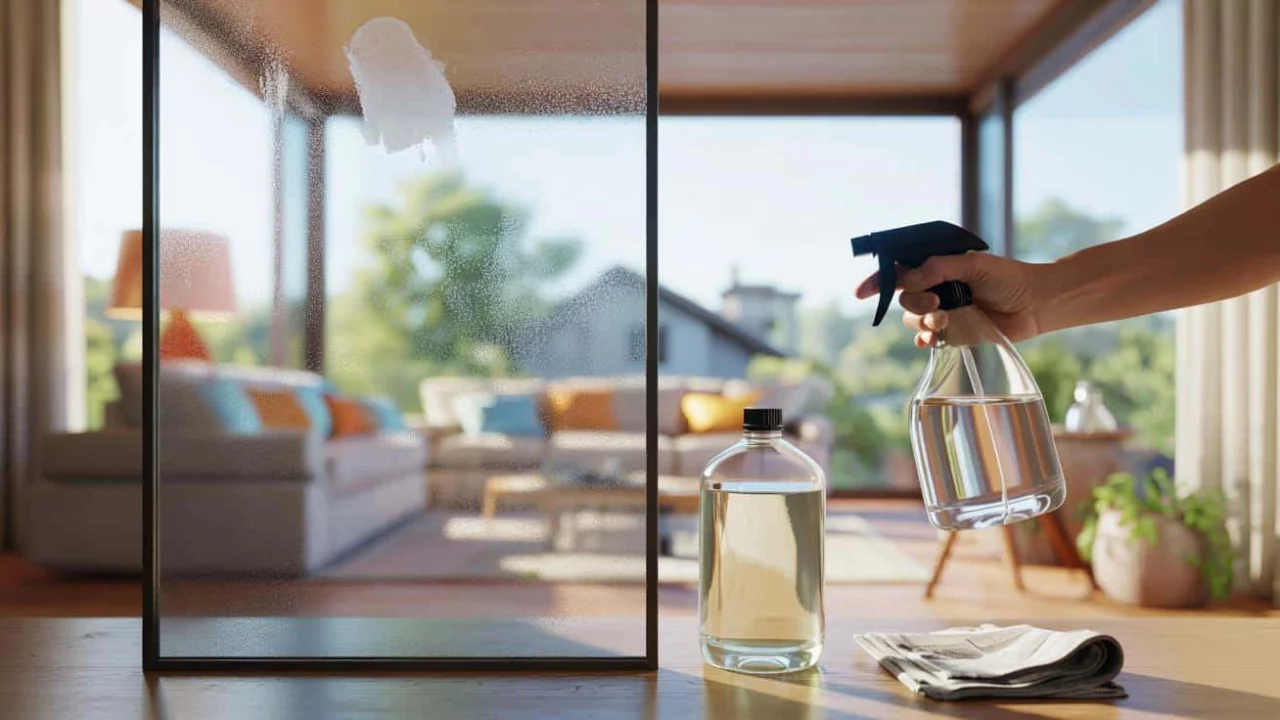
Last Saturday morning, I watched my neighbor Sarah through my kitchen window as she attacked her front windows with what looked like military precision. Spray bottle in one hand, paper towels in the other, she wiped and re-wiped the same spots over and over. Twenty minutes later, she threw her hands up in defeat and stormed back inside.
I recognized that frustration immediately. We’ve all been there, standing in front of a window that somehow looks worse after cleaning than before. The streaks mock you in the sunlight, turning what should be a simple task into an exercise in futility.
But what Sarah didn’t know—what most people don’t realize—is that the solution to clean windows without streaks was probably sitting in her kitchen cabinet the entire time.
Why expensive glass cleaners create more problems than they solve
Commercial window cleaners often contain surfactants, perfumes, and other additives that actually work against you. These ingredients can leave behind residue that attracts dirt and creates those stubborn streaks we all hate. The blue tint might make the product look professional, but it’s often just marketing.
“I see people spending fifteen to twenty dollars on specialty glass cleaners when white vinegar costs two dollars and works better,” says Maria Rodriguez, a professional house cleaner with over a decade of experience. “The fancy bottles are designed to make you think you need something special, but simple ingredients usually work best.”
The secret ingredient hiding in your kitchen is white vinegar. This humble pantry staple contains acetic acid, which cuts through grime, dissolves mineral deposits, and evaporates cleanly without leaving residue. Unlike commercial cleaners, vinegar doesn’t coat your windows with invisible films that attract dust and cause streaking.
But vinegar alone isn’t the complete solution. The method matters just as much as the cleaning solution.
The complete streak-free window cleaning system
To clean windows without streaks effectively, you need the right combination of solution, tools, and technique. Here’s everything you need to know:
The Perfect Cleaning Solution:
- 1 cup white vinegar
- 1 cup warm water
- 2 drops of liquid dish soap (optional, for extra-dirty windows)
- Mix in a spray bottle or bucket
Essential Tools:
- Microfiber cloth or lint-free cotton cloth
- Squeegee (for large windows)
- Old newspaper or coffee filters
- Spray bottle
The key to streak-free windows lies in the drying process. “Most people make the mistake of using paper towels, which leave tiny fibers behind,” explains Tom Peterson, a window cleaning professional. “Microfiber cloths or even old newspapers work much better because they don’t shed.”
| Cleaning Method | Streak Risk | Cost | Effectiveness |
|---|---|---|---|
| Commercial glass cleaner + paper towels | High | $8-15 | Moderate |
| Vinegar solution + microfiber cloth | Very Low | $3-5 | Excellent |
| Soap and water + squeegee | Low | $2-4 | Good |
| Newspaper + vinegar solution | Very Low | $2-3 | Excellent |
The Step-by-Step Process:
- Choose a cloudy day or clean windows when they’re in shade
- Remove loose dirt with a dry cloth first
- Spray the vinegar solution evenly across the glass
- Wipe in a Z-pattern from top to bottom
- Use a clean, dry microfiber cloth for final buffing
- Work quickly to prevent the solution from drying on the glass
What makes the difference between clear glass and streaky mess
Timing plays a crucial role when you clean windows without streaks. Hot, sunny days are your enemy because the cleaning solution evaporates too quickly, leaving mineral deposits behind. Early morning or late afternoon on overcast days provides the ideal conditions.
“Temperature and timing matter more than most people realize,” notes Jennifer Kim, a cleaning consultant who trains professional services. “I always tell my clients to avoid cleaning windows in direct sunlight. The heat causes the solution to dry before you can properly wipe it away.”
The direction of your wiping motion also affects the final result. Random circular motions tend to spread dirt around and create swirl marks. Instead, use systematic horizontal or vertical strokes, working from one side to the other in overlapping passes.
For heavily soiled windows, a two-stage process works best. First, use the vinegar solution to break down grime and mineral deposits. Then follow with a clean water rinse to remove any remaining residue. This approach prevents you from simply moving dirt around the glass surface.
Hard water areas present special challenges because mineral deposits from tap water can create their own streaking problems. In these regions, consider using distilled water in your cleaning solution, or add an extra tablespoon of vinegar to help dissolve mineral buildup.
The frequency of cleaning also impacts your results. Windows cleaned regularly require less aggressive solutions and come clean more easily. Monthly cleaning prevents the buildup of stubborn grime that requires harsh scrubbing.
Professional window cleaners often use squeegees for large surfaces, but the technique requires practice. For most homeowners, a high-quality microfiber cloth provides better results with less skill required. The key is using a cloth that’s completely clean and dry for the final buffing stage.
Weather conditions after cleaning can affect your results too. Rain within 24 hours can leave new water spots on freshly cleaned windows, especially if your local water contains high mineral content. Check the forecast before starting your window cleaning project.
Many people overlook the window frames and sills, but dirty frames can cause clean glass to look dingy. Include frame cleaning in your routine using the same vinegar solution, but be cautious with painted or wooden frames that might be sensitive to acidic cleaners.
Beyond basic cleaning: Advanced techniques for problem windows
Some windows present special challenges that require modified approaches. Textured glass, for example, traps dirt in its surface patterns and needs extra attention. Use a soft-bristled brush with your vinegar solution to work cleaning liquid into the textured areas before wiping clean.
Double-pane windows with condensation between the panes indicate seal failure and can’t be fixed with cleaning. However, you can still achieve crystal-clear results on the accessible surfaces using proper technique.
For windows that haven’t been cleaned in months or years, consider a pre-treatment with straight vinegar on the most stubborn spots. Let it sit for five minutes before proceeding with your regular cleaning routine.
“The biggest mistake I see is people giving up too quickly,” says Peterson. “Sometimes it takes two or three cleaning sessions to completely remove years of buildup, especially around window edges where grime accumulates.”
Interior windows often collect different types of dirt than exterior ones. Cooking grease, pet nose prints, and dust create films that require slightly different treatment. The vinegar solution works equally well, but you might need to spend extra time on initial wiping.
FAQs
Can I use apple cider vinegar instead of white vinegar?
White vinegar works best because it’s clear and doesn’t leave any tint. Apple cider vinegar might leave a slight color on the glass.
How often should I clean my windows to prevent streaking?
Monthly cleaning prevents heavy buildup that causes stubborn streaks. High-traffic areas or homes with pets might need bi-weekly attention.
Is it safe to use vinegar on tinted windows?
Yes, vinegar is safe for window tinting. Avoid ammonia-based cleaners, which can damage tint films.
What if my windows still streak after using vinegar?
Check your cloth—it might have fabric softener residue or be dirty. Also ensure you’re not cleaning in direct sunlight.
Can I add essential oils to make the vinegar smell better?
A few drops won’t hurt, but too much oil can leave residue. The vinegar smell disappears quickly as it dries.
Do I need different techniques for car windows?
The same vinegar solution works great on car windows. Just avoid getting it on painted surfaces and work in shade.











Leave a Comment