Picture this: you’re cruising down your local bike path on a sunny Saturday morning, feeling pretty good about your modest 30 km/h pace on your regular electric bike. You wave at other cyclists, maybe even overtake a few joggers. Then suddenly, a sleek machine whooshes past you at what looks like highway speed, leaving you wondering if you just witnessed a motorcycle or some kind of futuristic dream.
Well, that dream just became a reality – sort of. Decathlon, the French sporting goods giant known for making cycling accessible to everyone, has apparently lost their minds in the best possible way. They’ve just unveiled an electric bike concept that can theoretically hit 150 km/h. Yes, you read that right. We’re talking about speeds that would make most cars nervous on city streets.
This isn’t your typical commuter e-bike story. This is about what happens when engineers throw the rulebook out the window and ask a simple question: “What if we stopped playing it safe?”
When Decathlon Decided to Break Every Rule in the Book
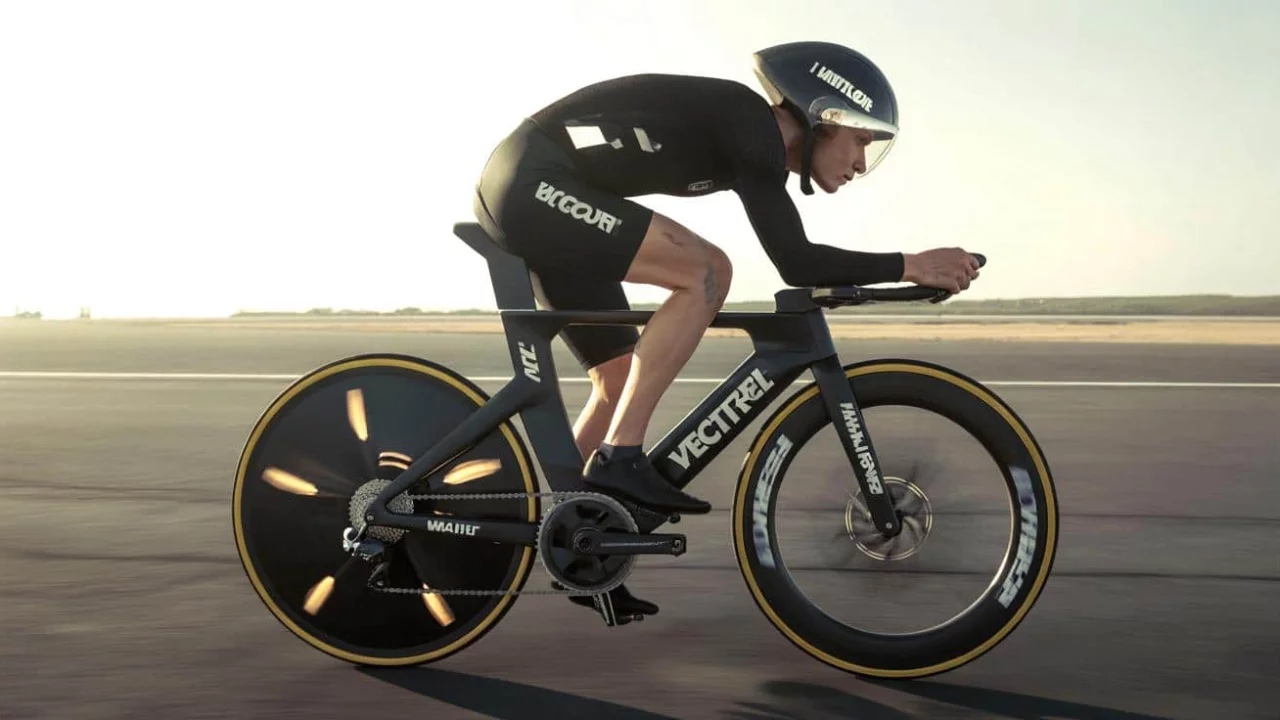
The machine causing all this fuss is called the FTP², and Decathlon isn’t even pretending it’s something you can buy at your local sports store. Unveiled at the VeloFollies show in Belgium, this Decathlon electric bike concept represents a complete departure from everything we know about e-bikes.
“We approached this project as if regulations didn’t exist,” explains project lead Wim Van Hoecke. “FTP² isn’t about getting to work – it’s about discovering what’s possible when you design purely for performance.”
The name itself tells the story. FTP stands for Functional Threshold Power – the maximum power a cyclist can sustain for about an hour. The little “²” symbol? That’s Decathlon’s ambitious way of saying they want to double what a strong amateur cyclist can produce.
Unlike regular e-bikes that simply bolt an electric motor to a standard frame, Van Hoecke and his team at Van Rysel (Decathlon’s performance brand) redesigned everything. We’re talking about a complete ecosystem where the drivetrain, cockpit, rider gear, and even specialized shoes all communicate through software and sensors.
“Every component talks to every other component,” notes cycling technology expert Sarah Chen. “It’s less like a bike with a motor and more like a computer that happens to have wheels.”
The Technical Marvel That Makes Highway Speeds Possible
The heart of this Decathlon electric bike beast is a specially developed Mahle M40 motor that makes your average e-bike motor look like a toy. While most European e-bikes are limited to 250W and cut assistance at 25 km/h, the FTP² throws those numbers into another universe entirely.
Here’s how this concept compares to what most of us are riding:
| Feature | Typical City E-bike | Van Rysel FTP² Concept |
|---|---|---|
| Motor Power | 250W nominal | Up to 850W peak |
| Speed Limit | 25 km/h assistance | 70-80 km/h on flats |
| Torque | 40-60 Nm | 105 Nm |
| Battery | 400-500 Wh | 580 Wh with cooling |
| Top Speed | ~45 km/h max | 150 km/h theoretical |
The key innovations that make these speeds possible include:
- Advanced thermal management: Cooling fins integrated into the 580 Wh battery prevent overheating during high-power efforts
- Software integration: Custom-developed software controls power delivery and optimizes human-machine interaction
- Aerodynamic obsession: Every surface designed to slice through air with minimal resistance
- Formula 1-inspired cockpit: Integrated displays and controls that work at extreme speeds
“The thermal management alone represents a breakthrough,” says electric vehicle engineer Mark Rodriguez. “At 850 watts of continuous output, you’re generating serious heat. Most systems would shut down or damage themselves.”
The theoretical 150 km/h top speed comes with a massive caveat – it requires perfect conditions, a steep descent, and frankly, more courage than most humans possess. Even Decathlon admits the main limiting factor at those speeds isn’t the bike’s capability, but the rider’s ability to stay in an aerodynamic position while hurtling down a hill faster than most people drive to work.
What This Means for the Future of Electric Cycling
Before you start planning your highway commute, remember that the FTP² isn’t road legal anywhere, nor is it intended to be. This is pure research and development – a rolling laboratory designed to push boundaries and inspire future innovations.
But the implications ripple far beyond this single prototype. This Decathlon electric bike concept represents a fundamental shift in thinking about what e-bikes can become. Instead of focusing on regulations and practical limitations, it asks what’s technically possible when you remove all constraints.
“This project will influence every e-bike Decathlon designs for the next decade,” predicts industry analyst Jennifer Walsh. “Even if 99% of these innovations never reach consumer products, the 1% that does will transform how we think about electric cycling.”
The real-world applications are already obvious. Better thermal management could extend the range and reliability of everyday e-bikes. Advanced software integration could make rides smoother and more efficient. Even the aerodynamic lessons learned could trickle down to more affordable models.
For competitive cycling, the FTP² hints at a future where human and machine integration reaches Formula 1 levels of sophistication. Imagine racing where every pedal stroke, every gear change, and every tactical decision is informed by real-time data and assisted by perfectly tuned electric power.
The concept also raises fascinating questions about the future of transportation. As urban areas grapple with congestion and pollution, could ultra-high-performance e-bikes like this become a legitimate alternative to cars for longer commutes? Obviously, safety and infrastructure would need dramatic overhauls, but the technical foundation is clearly being laid.
“We’re witnessing the birth of a new category,” suggests transportation planner David Kim. “This isn’t just an e-bike anymore – it’s something entirely different.”
🚴♂️ BREAKING: Decathlon’s FTP² concept bike can theoretically hit 150 km/h! This isn’t your average e-bike – it’s a glimpse into the future of human-powered transportation. When regulations don’t apply, engineers get creative 🔥 #ElectricBike#Innovation
— Tech Cycling News (@TechCyclingNews) January 15, 2026
While most of us will never ride anything approaching 150 km/h on two wheels, the FTP² represents something more important than speed records. It’s proof that the cycling industry isn’t afraid to dream big and push boundaries. In a world where most innovation feels incremental, Decathlon has reminded us that sometimes the best way forward is to completely ignore the rules and see what becomes possible.
The future of cycling just got a lot more interesting – and a lot faster.
FAQs
Can I buy the Decathlon FTP² electric bike?
No, the FTP² is a pure concept vehicle designed for research and development, not for sale to consumers.
Is the 150 km/h speed realistic for everyday riding?
Not at all. This theoretical top speed would only be possible on steep descents with perfect conditions and an extremely skilled rider.
Will any of this technology make it to regular Decathlon electric bikes?
While the extreme performance won’t, innovations in thermal management, software integration, and aerodynamics will likely influence future consumer models.
Is the FTP² legal to ride on public roads?
No, this concept bike far exceeds power and speed limits for legal e-bikes in virtually every country.
How much would something like this cost if it were available?
Given the advanced technology and specialized components, a production version would likely cost tens of thousands of dollars.
What makes this different from just putting a motorcycle engine on a bike?
The FTP² is designed as an integrated human-machine system where the rider’s power is amplified and optimized, rather than replaced by a motor.











Leave a Comment