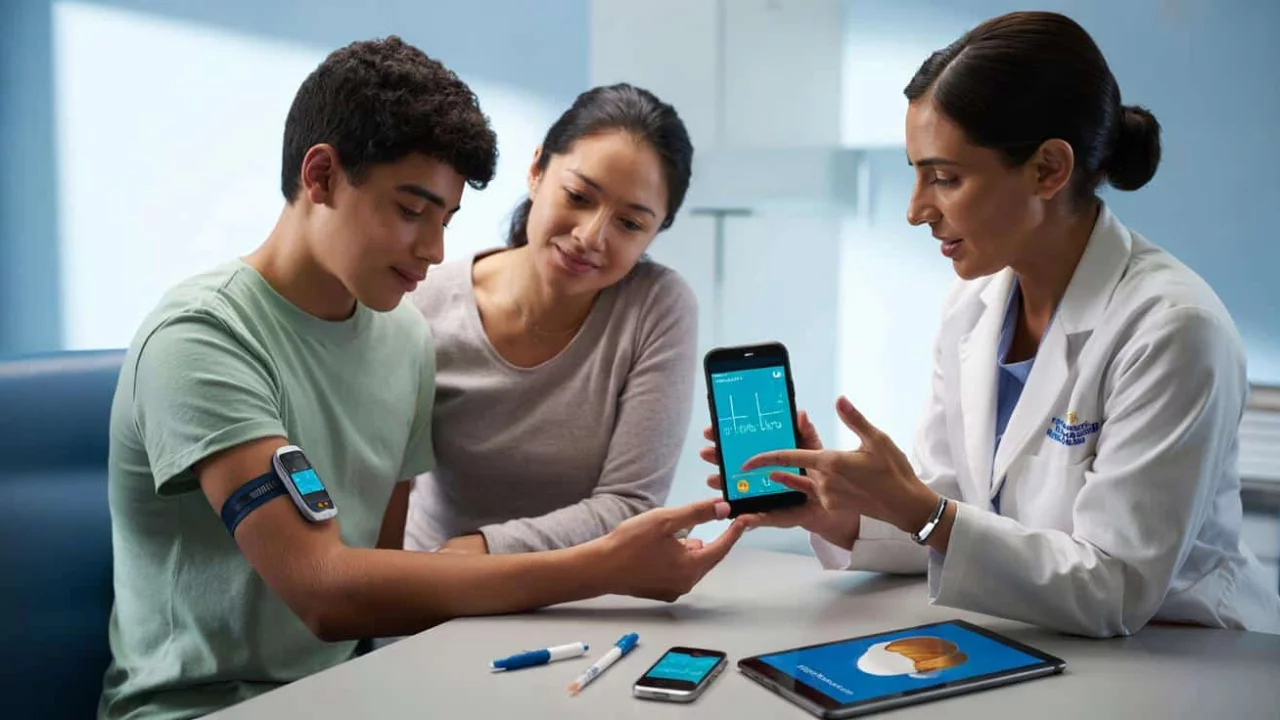
Maria Santos stared at the small device in her trembling hands, hardly believing what her doctor had just told her. After fifteen years of painful finger pricks, emergency room visits, and sleepless nights worrying about her teenage son’s blood sugar crashes, this tiny sensor would change everything. No more guessing games. No more middle-of-the-night panic checks. Just real-time data streaming quietly to her phone, keeping watch while they finally got some rest.
Across town, David Chen was having his own revelation. The 34-year-old teacher had been managing type 2 diabetes for eight years, but his new continuous glucose monitor was showing him patterns he never knew existed. His morning coffee wasn’t the problem—it was the stress of his commute that spiked his levels every day at 8:15 AM. For the first time, he felt like he was solving a puzzle instead of fighting a losing battle.
These aren’t isolated stories anymore. Across hospitals and clinics worldwide, patients and doctors are witnessing what many experts are calling a historic turning point in diabetes care—one that’s transforming not just how we treat the condition, but how people live with it.
Revolutionary Technology Transforms Daily Diabetes Management
The transformation in diabetes treatment is happening at lightning speed, driven by breakthrough technologies that were unimaginable just a decade ago. Continuous glucose monitors (CGMs) have evolved from bulky, hospital-only devices to sleek, coin-sized sensors that provide real-time blood sugar readings every few minutes.
“We’re seeing patients go from checking their blood sugar 4-6 times a day with painful finger sticks to getting over 280 data points daily,” explains Dr. Sarah Mitchell, an endocrinologist at Johns Hopkins. “It’s like going from taking snapshots to watching a live video of what’s happening in their body.”
These devices aren’t just collecting data—they’re predicting problems before they happen. Modern CGMs can alert users 20 minutes before a dangerous low blood sugar episode, giving them time to take action instead of experiencing the confusion, shakiness, and potential loss of consciousness that comes with hypoglycemia.
The integration with smartphones has been equally game-changing. Parents can now monitor their children’s glucose levels from work, teachers can be alerted when a student needs attention, and emergency contacts receive automatic notifications during crisis situations. The technology is breaking down the isolation that diabetes often creates.
Breakthrough Developments Reshaping Treatment Approaches
The current wave of innovations extends far beyond monitoring devices. Here are the key breakthroughs revolutionizing diabetes treatment:
Hybrid Closed-Loop Systems: Often called “artificial pancreas” technology, these systems automatically adjust insulin delivery based on CGM readings. Patients report dramatically improved overnight glucose control and fewer dangerous episodes.
Smart Insulin Pens: These connected devices track insulin doses automatically and can calculate optimal timing and amounts based on current glucose levels and recent meals.
Advanced Insulin Formulations: New rapid-acting insulins work in as little as 15 minutes, while ultra-long-acting versions provide consistent coverage for up to 42 hours with a single injection.
AI-Powered Analytics: Machine learning algorithms analyze glucose patterns to predict optimal meal timing, exercise routines, and medication adjustments personalized to each individual.
Cellular Regeneration Research: Scientists are using stem cells to grow new insulin-producing beta cells in laboratories, with early trials showing promising results for type 1 diabetes patients.
Dr. Ahmed Hassan, a diabetes researcher at Stanford University, notes: “We’re moving from a one-size-fits-all approach to truly personalized medicine. The same diagnosis of diabetes might have completely different treatment plans based on an individual’s unique metabolic patterns.”
Life-Changing Impact on Patients and Families
The real measure of these breakthroughs isn’t in the technology specifications—it’s in the transformed lives of millions of people living with diabetes. Sleep quality has dramatically improved for families dealing with type 1 diabetes, as parents no longer need to wake up multiple times nightly for blood sugar checks.
Children with diabetes are participating more fully in sports, sleepovers, and school activities. The discrete nature of modern CGMs means fewer interruptions and less stigma. Teachers report that students with diabetes are missing fewer classes due to blood sugar emergencies.
For adults, the impact extends to career decisions and life planning. Many professionals who previously avoided travel or irregular work schedules now feel confident taking on new opportunities. The predictive capabilities of modern systems allow for proactive rather than reactive management.
“I used to plan my entire day around my diabetes,” shares Jennifer Walsh, a 28-year-old marketing executive from Chicago. “Now my diabetes fits into my day instead of controlling it.”
Emergency room visits for severe hypoglycemia have decreased by up to 40% in some regions where CGM adoption is widespread. This reduction represents not just cost savings for healthcare systems, but countless avoided medical emergencies for patients and their families.
Breaking: FDA approves first-ever hybrid closed-loop insulin delivery system for patients as young as 14. This “artificial pancreas” technology automatically adjusts insulin based on real-time glucose readings. Game-changer for diabetes care. #DiabetesCare #MedicalBreakthrough
— Medical News Today (@MedicalNewsToday) January 15, 2024
The psychological benefits may be equally significant. Many patients report feeling like they’ve regained control over their lives. The constant fear and uncertainty that often accompanies diabetes is being replaced by confidence and predictability.
Dr. Lisa Rodriguez, a pediatric endocrinologist in Miami, observes: “Parents come into our clinic with dark circles under their eyes from years of worry. Six months after starting CGM therapy, they look like different people—rested, optimistic, talking about their child’s future instead of just surviving today.”
Frequently Asked Questions About New Diabetes Treatments
How accurate are continuous glucose monitors compared to traditional finger stick tests?
Modern CGMs are highly accurate, typically within 9% of laboratory blood glucose values. While finger stick confirmation is still recommended for treatment decisions during the first 24 hours, CGMs provide reliable trends and patterns that finger sticks simply cannot capture.
Are these new diabetes technologies covered by insurance?
Coverage varies by insurance plan and region, but most major insurers now cover CGMs for people with type 1 diabetes and many with type 2 diabetes requiring insulin. Hybrid closed-loop systems are increasingly covered as well, with many plans recognizing their cost-effectiveness in preventing emergency interventions.
Can people with type 2 diabetes benefit from continuous glucose monitoring?
Absolutely. CGMs help type 2 diabetes patients understand how different foods, exercise, stress, and medications affect their blood sugar. Many patients discover unexpected patterns that lead to significant improvements in their management without medication changes.
What’s the difference between a CGM and an artificial pancreas system?
A CGM only monitors blood sugar levels, while an artificial pancreas (hybrid closed-loop) system combines a CGM with an insulin pump that automatically adjusts insulin delivery. The artificial pancreas system takes action based on the CGM readings, while a CGM alone requires the user to respond to the information.
How long do continuous glucose monitor sensors last?
Most CGM sensors are approved for 10-14 days of continuous wear and are waterproof for swimming and showering. Some newer sensors can last up to 15 days and require no finger stick calibrations.
Are there any side effects or risks with these new diabetes technologies?
Side effects are generally minimal. Some users experience mild skin irritation from adhesive sensors. The main risk is over-reliance on technology without understanding diabetes management fundamentals. Users should maintain backup supplies and know how to manage their condition if devices fail.











Leave a Comment