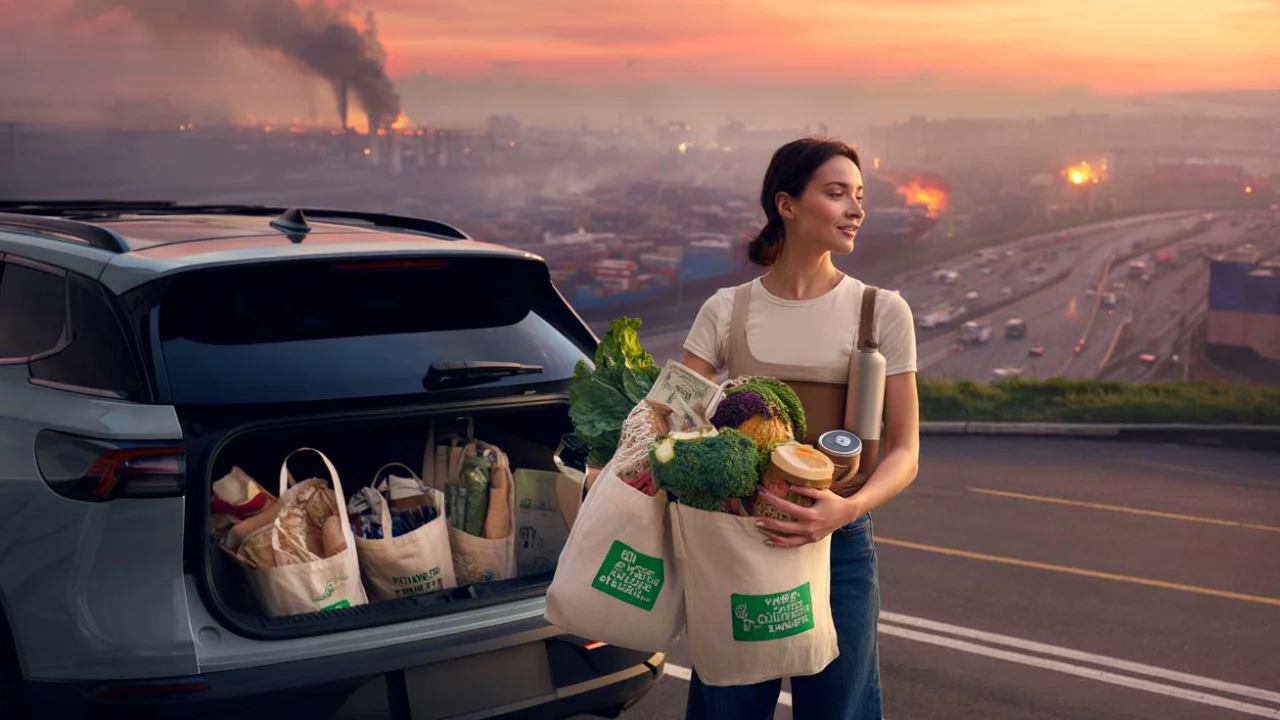
Sarah stands in her kitchen at 6:30 AM, rinsing out a yogurt container with warm water. She scrapes every last bit of strawberry residue, peels off the label, and places it carefully in the blue recycling bin. Her Tesla sits in the driveway, charged overnight with solar panels. Organic vegetables from the farmer’s market fill her fridge. She feels good about her choices.
But Dr. Elena Rodriguez, a climate scientist at Stanford’s Woods Institute, would tell Sarah she’s living in a dangerous fantasy. After studying consumer behavior and emissions data for over a decade, Rodriguez has reached a startling conclusion: our most cherished ecofriendly habits might be creating more harm than good.
“We’ve turned climate action into a personal shopping experience,” Rodriguez tells me during our video call, her voice carrying a mix of frustration and genuine concern. “While people debate whether to buy bamboo toothbrushes, we’ve lost three more years in the fight that actually matters.”
The uncomfortable truth about green consumerism
The numbers tell a story that most of us don’t want to hear. Despite decades of recycling campaigns, organic food growth, and electric vehicle adoption, global carbon emissions have continued their relentless climb. In 2023, they hit another record high.
Rodriguez’s research reveals something even more troubling: our ecofriendly habits often provide psychological permission to consume more elsewhere. It’s called “moral licensing” – when doing one good thing makes us feel justified in doing something harmful.
“I’ve seen people drive their Prius to buy organic blueberries flown in from Chile,” she explains. “They feel so good about the car and the organic label that they completely ignore the 5,000-mile carbon footprint of their breakfast.”
The data backs up her concerns. Studies show that households identifying as “environmentally conscious” often have higher overall carbon footprints than average families. Why? Because environmental concern correlates with higher income, and higher income means more travel, bigger homes, and more consumption – even if it’s “green” consumption.
What the numbers actually show
Looking at the real impact of popular ecofriendly habits reveals some uncomfortable truths. Here’s what the latest research shows about actions millions of people take daily:
| Popular Eco Habit | Annual CO2 Reduction | What Cancels It Out |
|---|---|---|
| Switching to LED bulbs | 0.1 tons | One round-trip flight to Europe |
| Comprehensive recycling | 0.2 tons | Two weeks of SUV driving |
| Buying all organic food | 0.3 tons | Half a transatlantic flight |
| Using reusable bags/bottles | 0.05 tons | Three days of home heating |
The most shocking finding? The carbon footprint of manufacturing and shipping organic products often exceeds conventional alternatives. That organic apple from New Zealand has traveled 8,000 miles to reach your local store, generating more emissions than a conventional apple from 200 miles away.
Electric vehicles present another complex picture. While they produce zero direct emissions, the manufacturing process for EV batteries is incredibly carbon-intensive. A new electric SUV has roughly the same lifetime carbon footprint as a well-maintained used hybrid car driven for ten years.
Key problems with current ecofriendly habits include:
- They focus on individual actions while ignoring systemic issues
- They create a false sense of progress and accomplishment
- They often involve more consumption, not less
- They distract from high-impact changes like reducing flights and meat consumption
- They allow corporations to shift responsibility to consumers
Who profits from green guilt?
Dr. Michael Chen, who studies environmental marketing at UC Berkeley, has spent years tracking how companies exploit our climate anxiety. His findings are eye-opening.
“The entire ‘personal carbon footprint’ concept was popularized by BP – an oil company,” Chen explains. “They wanted to shift focus away from industrial emissions toward individual responsibility. It worked perfectly.”
The organic food industry alone generates over $50 billion annually by charging premium prices for products that aren’t necessarily better for the planet. Meanwhile, companies continue operating massive supply chains that dwarf any individual environmental impact.
Chen points to a disturbing trend: “Green” products often require more packaging, more processing, and more transportation than conventional alternatives. The bamboo toilet paper shipped from China has a larger carbon footprint than recycled paper made locally.
“We’ve created a guilt-driven marketplace where people pay extra to feel better about consumption they should probably reduce instead,” Chen notes.
The real winners aren’t the planet or even consumers – they’re companies that have figured out how to monetize environmental anxiety. Tesla sells $80,000 SUVs to people who want to “save the planet.” Whole Foods charges double for organic produce that often travels further than conventional food.
Rodriguez’s research shows that the most effective climate actions are actually the ones that involve consuming less, not consuming differently:
- Having one fewer child: 58 tons CO2 reduction annually
- Living car-free: 2.3 tons reduction annually
- Avoiding one transatlantic flight: 1.6 tons reduction
- Eating a plant-based diet: 0.8 tons reduction annually
Compare those numbers to the table above, and the disconnect becomes clear. The actions that actually matter are the ones we’re least likely to take – because they require real sacrifice, not just different shopping choices.
“The hardest truth,” Rodriguez says, “is that fixing climate change requires using less energy, eating less meat, flying less, and having smaller families. But that message doesn’t sell products, so we get told to buy different products instead.”
She’s not advocating for giving up entirely. But she believes our current approach is worse than doing nothing because it provides false comfort while time runs out.
“Every hour spent researching the best eco-friendly laundry detergent is an hour not spent demanding real policy changes,” she argues. “We’re rearranging deck chairs on the Titanic and calling it climate action.”
The path forward isn’t about perfect consumption – it’s about consuming less while demanding that governments and corporations take responsibility for the systemic changes that actually move the needle on emissions.
FAQs
Are you saying I should stop recycling and buying organic food?
Not necessarily, but don’t expect these actions to significantly impact climate change. Focus on high-impact changes like reducing flights and meat consumption instead.
Is driving an electric car really pointless for the environment?
Electric cars are better than gas cars, but buying a new EV often has a higher carbon footprint than keeping an efficient used car longer. The manufacturing process is very energy-intensive.
What actions actually make a meaningful difference for climate change?
The biggest impacts come from having fewer children, living without a car, avoiding flights, and eating plant-based. These reduce emissions by tons, not ounces.
Why do companies promote personal carbon footprints if they don’t matter much?
Because it shifts responsibility away from corporations and governments toward individual consumers. It’s easier to sell “green” products than to change industrial systems.
Should I feel guilty about my eco-friendly habits?
Don’t feel guilty, but recognize that real climate action requires systemic change and policy reform, not just different purchasing decisions.
How can I make a real difference on climate change?
Vote for leaders who support aggressive climate policies, reduce your consumption overall, and advocate for systemic changes rather than focusing solely on personal habits.











Leave a Comment