Marie Dupont watched from her kitchen window as yet another convoy of construction trucks rumbled past her Mardyck home, heading toward what locals call “the new steel plant.” For months, the 67-year-old retiree wondered what all the fuss was about on the old industrial site near Dunkirk. “My late husband worked the blast furnaces here for thirty years,” she says, adjusting her reading glasses. “Now they tell me this new factory will help power the cars of tomorrow.”
What Marie doesn’t fully grasp yet is that she’s witnessing the birth of Europe’s electric future. The €500 million facility rising from the coastal plains of northern France represents ArcelorMittal’s boldest bet on electric steel – a specialized material that could revolutionize everything from electric vehicles to wind turbines. By 2032, this seemingly niche market is projected to explode into a €57 billion global industry.
The transformation happening in this quiet corner of France reflects a broader shift reshaping European manufacturing. As the continent races to reduce carbon emissions and compete with Asian rivals, companies like ArcelorMittal are reimagining what steel production means in an electrified world.
ArcelorMittal’s €500 Million Electric Steel Gamble
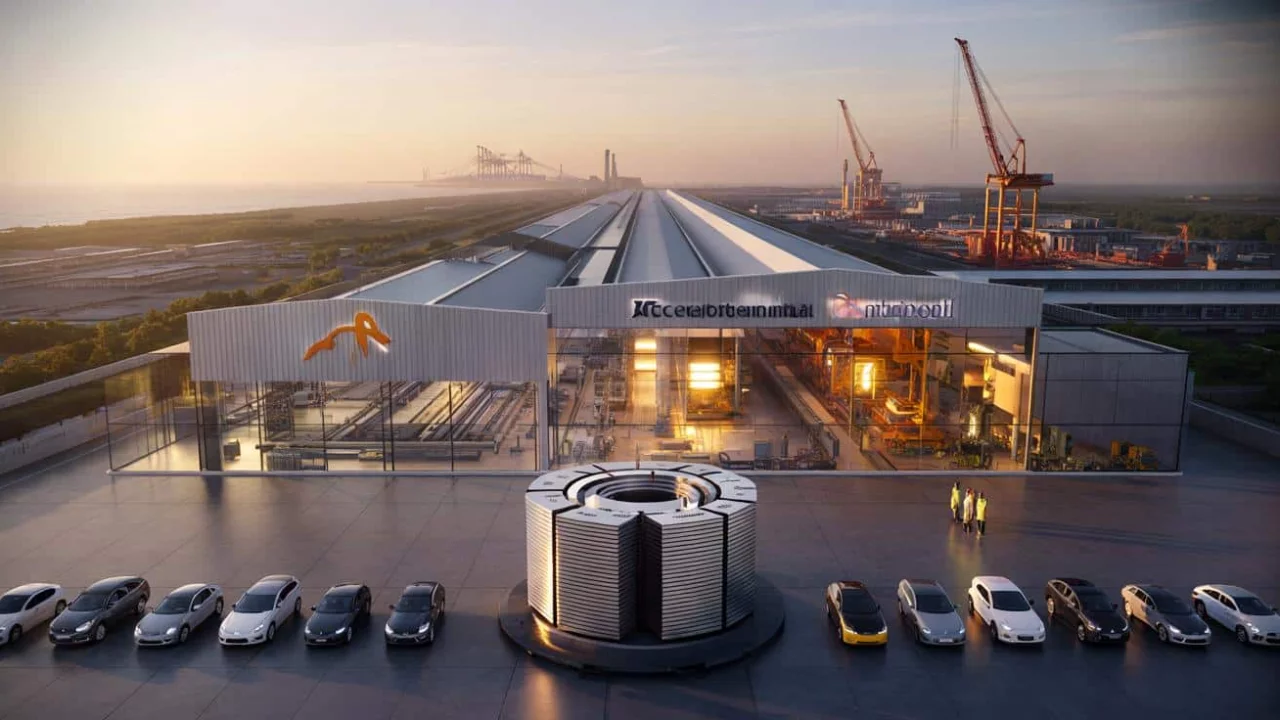
At Mardyck, just kilometers from Dunkirk’s bustling port, ArcelorMittal is constructing one of Europe’s most ambitious steel projects in a decade. The €500 million production facility represents a dramatic departure from traditional steelmaking, focusing instead on the precision manufacturing of electric steel – the metallic heart of modern electrical equipment.
“This isn’t your grandfather’s steel mill,” explains Dr. Jean-Pierre Laurent, a materials science professor at the University of Lille. “We’re talking about manufacturing tolerances measured in micrometers, not millimeters. The precision required here rivals semiconductor fabrication.”
The project timeline is aggressive: three production lines operational by end of 2025, with five complete lines planned by 2027. This expansion positions ArcelorMittal to capture a significant share of the global electric steel market, which analysts project will reach €57 billion by 2032, driven primarily by electric vehicle adoption and smart grid infrastructure.
For ArcelorMittal, once the world’s largest steelmaker but now under intense pressure from Chinese competitors, the Mardyck facility represents both technological evolution and strategic repositioning. By moving closer to European automotive and renewable energy customers, the company aims to rebuild its competitive edge through specialization rather than scale.
Understanding Electric Steel: The Science Behind the Revolution
Electric steel bears little resemblance to the massive structural beams most people associate with steel production. Instead, this highly specialized material consists of extremely thin, precisely processed strips designed to control magnetic fields and minimize energy losses in electrical equipment.
The manufacturing process involves several critical steps:
- Preparation: Conventional steel coils undergo initial processing
- Continuous annealing: Heat treatment modifies the crystal structure for optimal magnetic properties
- Coating application: Insulating varnish prevents electrical short-circuits between layers
- Slitting and finishing: Final precision cutting to customer specifications
“Think of electric steel as the conductor in an orchestra,” says Maria Rodriguez, senior analyst at European Steel Association. “It doesn’t make the music itself, but without it, you can’t have harmony between all the electrical components.”
The material’s unique properties enable dramatic efficiency improvements across applications. In electric vehicle motors, high-grade electric steel can increase range by reducing energy losses during power conversion. Industrial motors equipped with premium electric steel consume significantly less electricity for equivalent output, potentially reducing national peak power demand by gigawatts.
| Application | Efficiency Gain | Market Impact |
|---|---|---|
| Electric Vehicle Motors | 5-15% range extension | €28 billion by 2032 |
| Wind Turbine Generators | 3-8% power output increase | €12 billion by 2032 |
| Industrial Transformers | 2-5% loss reduction | €17 billion by 2032 |
Impact on Communities and Industries
The Mardyck facility promises to transform the local economy while supporting Europe’s broader decarbonization goals. The project will create approximately 300 direct jobs, ranging from skilled technicians to process engineers, with additional indirect employment throughout the regional supply chain.
“We’re seeing young people return to the area for the first time in decades,” notes Philippe Moreau, mayor of nearby Loon-Plage. “These aren’t the dangerous, physically demanding jobs of the old steel industry. We’re talking about high-tech manufacturing that requires education and training.”
The facility’s strategic location near Dunkirk’s port provides crucial logistics advantages, enabling efficient raw material imports and finished product exports throughout Europe. This positioning becomes increasingly important as European automotive manufacturers seek to reduce dependence on Asian suppliers for critical components.
Beyond local impact, the Mardyck plant represents Europe’s broader industrial strategy. By developing domestic electric steel production capacity, the continent aims to secure supply chain independence for strategic technologies while creating high-value manufacturing jobs that cannot be easily outsourced.
🏭 BREAKING: ArcelorMittal's €500M electric steel plant in France marks Europe's bid to compete in the growing €57B market. This specialized steel is crucial for EV motors, wind turbines & smart grids. Another step toward European tech independence! #ElectricSteel#GreenTech
— European Industry News (@EuropeIndustry) December 2024
The timing aligns perfectly with European Union regulations requiring higher efficiency standards for electric motors and transformers. Starting in 2025, new efficiency classes will mandate premium electric steel in many applications, creating immediate demand for ArcelorMittal’s production.
“This isn’t just about making steel differently,” emphasizes Dr. Laurent. “It’s about positioning Europe to lead in the technologies that will define the next century of manufacturing and energy systems.”
Frequently Asked Questions
What exactly makes electric steel different from regular steel?
Electric steel is engineered specifically for magnetic properties rather than mechanical strength. It features extremely thin layers, specialized grain structure, and insulating coatings that minimize energy losses in electrical equipment. Regular steel focuses on structural strength and durability.
Why is the electric steel market expected to reach €57 billion by 2032?
The explosive growth is driven by the global transition to electric vehicles, renewable energy expansion, and smart grid infrastructure development. As these technologies require high-efficiency electric motors and transformers, demand for premium electric steel is skyrocketing across multiple industries.
How does electric steel improve electric vehicle performance?
High-grade electric steel in EV motors reduces energy losses during power conversion, directly translating to extended driving range from the same battery capacity. It can improve efficiency by 5-15%, making electric vehicles more practical and competitive with conventional cars.
Will this plant help reduce Europe’s dependence on Asian steel suppliers?
Yes, the Mardyck facility is part of Europe’s strategy to develop domestic production capacity for critical materials. By producing electric steel locally, European manufacturers can reduce supply chain risks and shipping costs while supporting the continent’s industrial sovereignty goals.
What environmental benefits does electric steel provide?
Beyond enabling cleaner technologies like EVs and wind turbines, electric steel directly reduces global energy consumption by making electrical equipment more efficient. Industrial motors using premium electric steel consume significantly less electricity, helping reduce overall carbon emissions.
When will the Mardyck plant reach full production capacity?
ArcelorMittal plans to have three production lines operational by the end of 2025, with the complete five-line facility running by 2027. This phased approach allows the company to refine processes while meeting growing customer demand throughout the ramp-up period.











Leave a Comment