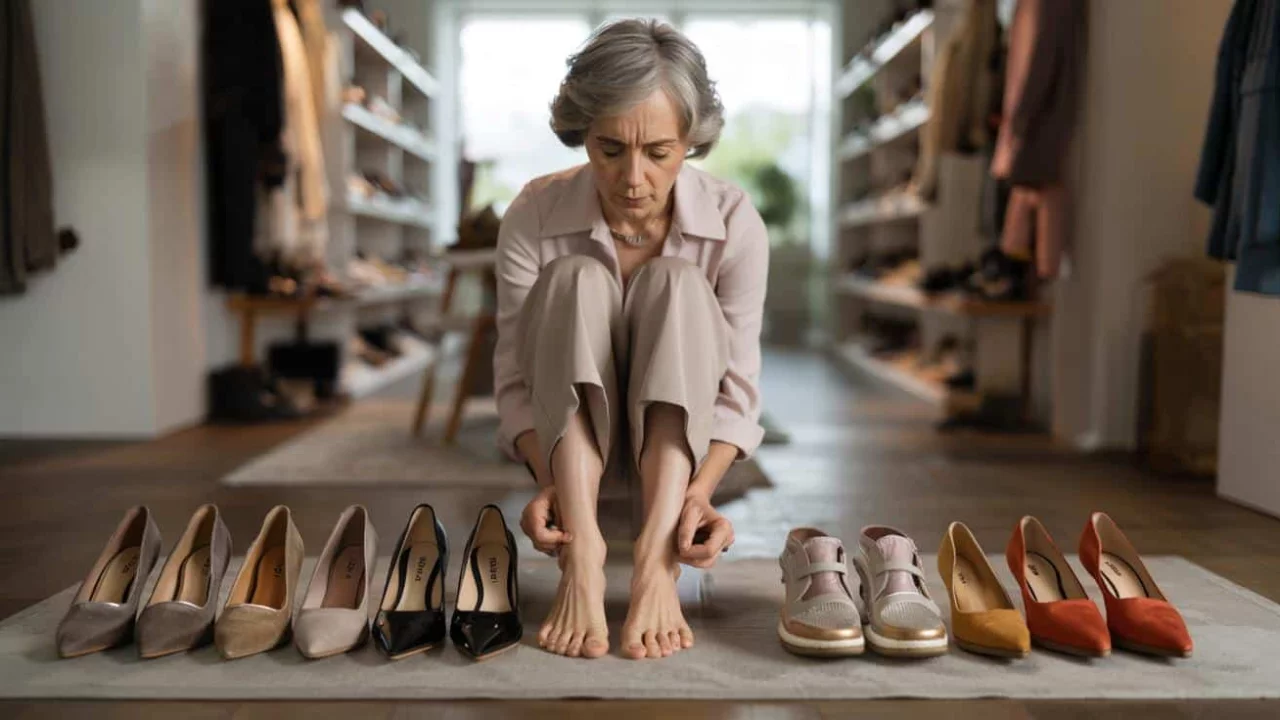
Margaret discovered the truth about aging feet during a routine shoe shopping trip. At 63, she walked into her favorite department store, confident in her lifelong size 7.5. Two hours later, she left empty-handed and confused, having tried on dozens of pairs that either pinched her toes or gaped at the heel.
“I thought every shoe brand had suddenly changed their sizing,” she laughs now, three years later. “I was ready to write angry letters to manufacturers. It never occurred to me that my feet had changed.”
Margaret’s experience echoes that of millions of people over 60 who discover that their feet have quietly transformed. The shoes that carried them through decades of life suddenly become uncomfortable strangers.
The silent transformation happening to your feet after 60
Feet changes after 60 don’t announce themselves with fanfare. There’s no sudden moment when your foot grows two sizes overnight. Instead, it’s a gradual process that catches most people off guard.
Dr. Sarah Chen, a podiatrist with 25 years of experience, explains it simply: “After 60, the structural support systems in your feet begin to weaken. Ligaments become less elastic, tendons stretch, and the fat pads that cushion your feet start to thin out.”
The arch, which has been your foot’s natural shock absorber for decades, begins to flatten. This isn’t just about comfort – it changes the entire shape and length of your foot. A foot that measured 9.5 inches at age 45 might measure 10 inches at age 65.
But length isn’t the only change. Feet also become wider as the bones spread slightly and the arch drops. What podiatrists call the “splay” of the foot increases, meaning your foot literally takes up more horizontal space in your shoe.
What exactly changes and when
The transformation of aging feet follows predictable patterns, though the timeline varies for each person. Here’s what research shows about the most common changes:
- Arch flattening – Usually begins in the late 50s and progresses gradually
- Foot lengthening – Can add up to half a size every decade after 60
- Width increase – Often requires going up one width size (from medium to wide)
- Fat pad thinning – Reduces natural cushioning, especially under the heel and ball of foot
- Bone spreading – Metatarsal bones gradually spread apart
- Skin changes – Feet become drier and less elastic
“I see patients who insist their shoe size hasn’t changed in 30 years,” notes Dr. Michael Rodriguez, a foot and ankle specialist. “When I measure their feet, they’re often a full size longer and significantly wider than they think.”
| Age Range | Common Changes | Impact on Shoe Size |
|---|---|---|
| 60-65 | Slight arch flattening, early fat pad thinning | May need wider width or half size up |
| 65-70 | Noticeable foot spreading, continued arch drop | Often need full size up and wide width |
| 70+ | Significant structural changes, possible bunions | May need 1-2 sizes up, extra-wide options |
Why this matters more than you think
Wearing ill-fitting shoes after 60 isn’t just about comfort – it can seriously impact your health and mobility. Shoes that are too tight can cause bunions, hammertoes, and ingrown toenails. Shoes that are too loose can lead to falls and balance problems.
Physical therapist Amanda Torres has seen the consequences firsthand: “I’ve worked with seniors who developed chronic foot pain, altered their gait to compensate, and ended up with knee and hip problems. All because they refused to accept that their shoe size had changed.”
The psychological impact shouldn’t be underestimated either. Many people feel frustrated or even embarrassed about needing larger shoes. Some continue cramming their feet into too-small shoes rather than admit the change.
Balance becomes a critical concern as well. Feet that don’t fit properly in shoes can affect your stability and confidence when walking. This can lead to a more sedentary lifestyle, which creates its own health problems.
For active seniors, the wrong shoes can mean giving up activities they love. Hiking, dancing, or even long walks become uncomfortable or impossible when your feet are constantly in pain.
The good news is that acknowledging these changes opens up solutions. Shoe manufacturers now offer more options for older adults, including:
- Adjustable straps and laces for swelling
- Extra depth for orthotics or foot deformities
- Multiple width options in the same style
- Superior arch support and cushioning
- Non-slip soles for better stability
Dr. Lisa Park, who specializes in geriatric foot care, offers this advice: “Get your feet measured every two years after age 60. Shop for shoes in the afternoon when your feet are at their largest. And remember – the number on the shoe box doesn’t define you. Comfort and proper fit do.”
The key is recognizing that feet changes after 60 are completely normal. Your feet have carried you through decades of life, and they deserve shoes that work with their new reality, not against it.
Rather than mourning the loss of your old shoe size, think of it as an opportunity to discover better comfort and support. Many people find that once they embrace properly fitting shoes, they’re more active and comfortable than they’ve been in years.
FAQs
How often should I have my feet measured after 60?
Every two years is recommended, as feet can continue changing gradually throughout your 60s and beyond.
Can exercises prevent my feet from changing shape?
While you can’t stop all age-related changes, foot exercises can help maintain flexibility and strength, potentially slowing some structural changes.
Should I throw away all my old shoes?
Not necessarily. Keep shoes that still fit comfortably, but be honest about which ones cause pain or discomfort and donate those.
Are expensive orthotic shoes necessary?
Not always. Many people find relief with well-fitting regular shoes and over-the-counter arch supports, though severe foot problems may require custom orthotics.
Why do my feet hurt more in the evening?
Feet naturally swell throughout the day due to gravity and activity. This swelling is more pronounced after 60, making shoes feel tighter by evening.
Is it normal for one foot to change more than the other?
Yes, it’s very common for feet to age differently. Always fit shoes to your larger foot and use padding if needed for the smaller one.











Leave a Comment