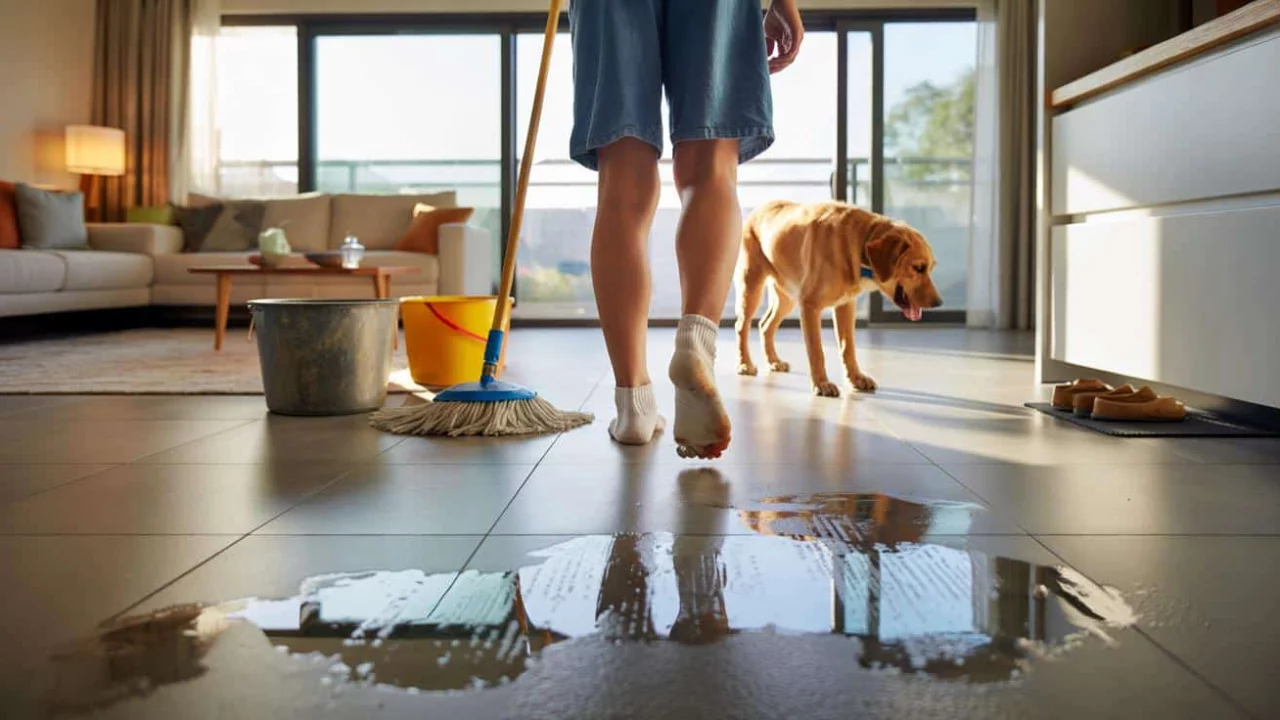
Last Tuesday, Sarah finished mopping her kitchen floor and stepped back with genuine satisfaction. The tiles gleamed under the afternoon light, reflecting her careful work. She’d used her favorite pine-scented cleaner and spent twenty minutes making sure every corner sparkled.
By evening, when she walked barefoot to grab a midnight snack, her feet came away slightly gray. The next morning, dog hair clung stubbornly to spots she’d scrubbed just hours before. The floor that had looked hotel-clean was somehow attracting dirt faster than ever.
If this sounds familiar, you’re not alone. Millions of people face the same mystery: floors never stay clean no matter how much effort goes into mopping them. The problem runs deeper than technique or products, rooted in chemistry and habits most of us never question.
The invisible film that ruins everything
The real enemy isn’t the dust you can see. It’s the microscopic residue layer that forms every time you mop, creating a magnet for new dirt and grime.
When you mix cleaning products with water, then drag that mixture across your floor, you’re essentially painting on a thin chemical film. This residue comes from soap molecules, detergent compounds, and dissolved minerals in your tap water. As the floor dries, this mixture hardens into an almost invisible coating.
“Most homeowners use way too much cleaning product,” explains residential cleaning specialist Maria Rodriguez, who’s worked in the industry for fifteen years. “They think more soap means cleaner floors, but it actually creates a sticky trap for new dirt.”
This residue layer explains why floors never stay clean after mopping. Dust particles, pet hair, and everyday debris stick to this film like glue. Footsteps activate the residue, causing it to grab onto sock fibers and bare skin. The result is floors that look dirty again within hours.
Hard water makes everything worse. Calcium and magnesium deposits mix with your cleaning products to form an even stickier film. Areas with hard water often struggle with floors that feel tacky or look cloudy no matter how often they’re cleaned.
The dirty mop water cycle nobody talks about
Here’s what happens in most homes: you fill a bucket with water and cleaner, start mopping in one room, and continue through the entire house with that same water. By room three, you’re essentially painting dirt from previous rooms onto clean surfaces.
| Room Order | Water Quality | What Gets Transferred |
|---|---|---|
| First room (cleanest) | Fresh and clear | Just cleaning product residue |
| Second room | Slightly cloudy | First room’s dirt plus residue |
| Third room | Visibly dirty | Accumulated dirt from all previous rooms |
| Fourth room and beyond | Muddy gray | A cocktail of dirt, hair, grease, and residue |
The problem compounds when people rinse their mops in the same dirty water they’ve been using to clean. Professional cleaners use a two-bucket system for good reason: one for cleaning solution, one for rinsing the mop clean between sections.
Your mop itself becomes part of the problem too. Traditional string mops trap dirt deep in their fibers, releasing it slowly as you work. Even after wringing, they carry contaminated water and debris from room to room.
“I see people using the same mop for months without properly cleaning it,” notes building maintenance expert James Chen. “That mop head becomes a bacteria farm that spreads germs and grime instead of removing them.”
Why some floors show dirt faster than others
The type of flooring in your home dramatically affects how quickly dirt becomes visible after mopping. Dark floors reveal every speck of dust, pet hair, and footprint. Light-colored floors hide dust better but show stains and sticky residue more clearly.
Textured surfaces create additional challenges. Tiles with grout lines trap dirt and cleaning product residue in tiny crevices. Laminate flooring with embossed patterns holds onto dust in ways smooth surfaces don’t. These hidden dirt pockets become visible when light hits them at certain angles.
- High-gloss finishes show water spots and streaks immediately
- Matte finishes hide streaks but reveal dust and hair more clearly
- Textured surfaces trap debris in microscopic valleys
- Sealed floors resist stains but show residue buildup
- Unsealed surfaces absorb cleaning products, creating permanent sticky spots
Traffic patterns matter enormously. The path from your front door to the kitchen gets walked on dozens of times daily, grinding dirt deeper into any residue film. Pet areas accumulate oils from paws and fur, creating zones where dirt sticks more aggressively.
Environmental factors play a role too. Homes near busy roads deal with more airborne dust. Houses with forced-air heating systems circulate particles constantly. Humid climates slow floor drying, giving residue more time to attract debris before hardening.
“The cleanest-looking floor can be the dirtiest if there’s residue buildup,” explains commercial cleaning contractor Lisa Park. “I’ve walked into offices where the floors looked decent but felt tacky underfoot. That stickiness was trapping everything that walked across it.”
The hidden costs when floors never stay clean
Beyond the frustration, dirty floors create real problems for households. Family members track grime throughout the house on their socks and bare feet. Pets pick up more dirt on their paws, spreading it to furniture and bedding. Children playing on floors get dirtier faster, requiring more frequent baths and laundry.
Residue buildup can damage flooring over time. The sticky film traps abrasive particles that scratch surfaces with every footstep. Cleaning products left on floors can break down protective coatings on hardwood and laminate, leading to permanent damage.
There’s also the time and money factor. People who struggle with floors that never stay clean often mop more frequently, using more products and spending more hours on a task that shouldn’t require daily attention. Some resort to expensive professional cleanings or replacement flooring when the real solution is addressing the residue problem.
The psychological impact matters too. A home that always feels dirty affects mood and stress levels. Guests notice tacky floors and visible dirt quickly, creating embarrassment for homeowners who work hard to maintain clean spaces.
Professional cleaning services report that residue removal is their most requested service after initial cleaning. Homeowners realize their floors never stay clean because of buildup that regular mopping can’t address. Steam cleaning or specialized residue-removal treatments can reset floors to their original condition, breaking the dirty-clean-dirty cycle.
FAQs
Why do my floors feel sticky after mopping?
Sticky floors result from cleaning product residue that didn’t get properly rinsed away. Using too much cleaner or failing to rinse with clean water creates this tacky film.
How often should I change my mop water?
Change your mop water after cleaning two rooms maximum, or whenever the water looks visibly dirty. Professional cleaners often change water after each room.
Do expensive floor cleaners work better?
Price doesn’t determine effectiveness. Many expensive cleaners contain more additives that can increase residue buildup, making floors never stay clean longer.
Should I rinse my floors after mopping?
Yes, rinsing with clean water removes cleaning product residue that attracts dirt. This extra step prevents the sticky film that makes floors dirty again quickly.
Can hard water make floors dirtier?
Hard water contains minerals that combine with cleaning products to create more residue buildup. Consider using distilled water for mopping or installing a water softener.
How do I know if my floors have residue buildup?
Run a clean white cloth across a dry floor. If it picks up gray or colored residue, or if your floors feel tacky or sticky, buildup is present.











Leave a Comment