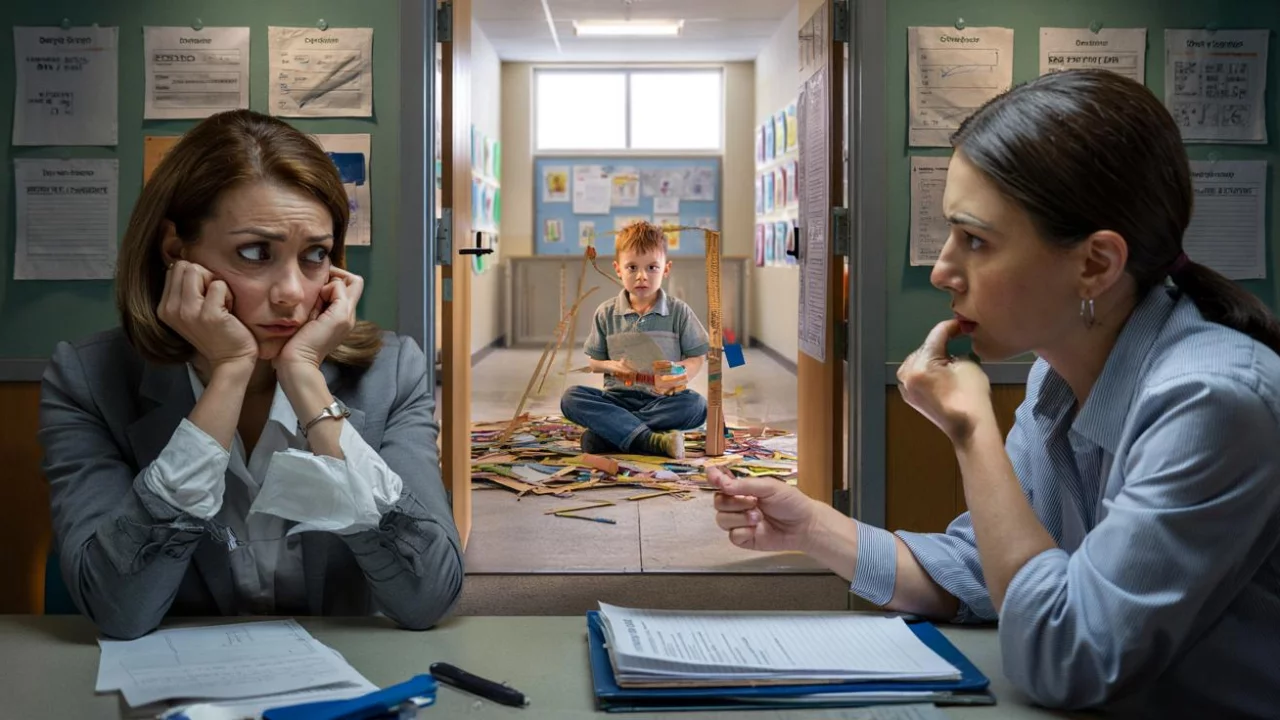
The teacher’s voice is calm, almost rehearsed. Across the small table, a mother twists a crumpled notice from school between her fingers. “He’s clearly bright,” the teacher says, “but he refuses to work. He’s disruptive. We can’t keep going like this.” The boy they’re talking about is down the hall, bored out of his mind, building an elaborate spaceship out of scrap cardboard in the corridor.
At home, he recites obscure science facts and asks questions that stump adults. At school, he “forgets” homework, rolls his eyes, picks fights with group projects.
Two worlds. One child. The label changes from “gifted” to “lazy” in the time it takes to sign a disciplinary form. And something starts to crack—not just in the child, but in entire families.
When brilliance looks like sabotage
Across the country, parents of gifted struggling children are living this nightmare daily. Their kids test off the charts, solve complex puzzles for fun, then completely shut down when asked to show their work on basic math problems.
“These children often appear lazy or defiant because the work isn’t challenging enough to engage their minds,” explains Dr. Sarah Chen, a developmental psychologist who specializes in twice-exceptional students. “When you’re intellectually capable of calculus but forced to do repetitive addition, your brain literally rebels.”
The pattern is devastatingly consistent. Bright children enter school excited to learn, only to discover that “learning” means sitting still, following directions, and completing tasks they mastered years ago. Their natural curiosity gets labeled as disruption. Their need for complexity gets dismissed as attention-seeking.
What makes this worse is how quickly everyone—teachers, parents, even the kids themselves—start believing the “lazy” narrative. A child who can explain quantum physics concepts suddenly believes they’re just not good at school. The disconnect between ability and performance creates a toxic cycle of frustration and failure.
The devastating signs parents miss
Most families don’t realize they’re dealing with a gifted struggling child until the problems become severe. The signs hide in plain sight, disguised as normal childhood behavior or simple defiance.
Here are the warning signals that parents and teachers often overlook:
- Intense interest in specific topics while showing zero motivation for schoolwork
- Perfectionism that leads to avoiding tasks rather than risking failure
- Emotional outbursts over seemingly simple assignments
- Advanced reasoning skills paired with poor organizational abilities
- Exceptional creativity that doesn’t fit traditional academic molds
- Social difficulties with same-age peers but easy connections with adults
- Hypersensitivity to criticism or perceived unfairness
“The tragedy is that we’re often punishing these children for having minds that work differently,” notes educational consultant Mark Rodriguez. “They’re not being difficult on purpose—they’re drowning in an environment that doesn’t match their intellectual needs.”
The academic struggles create a ripple effect that tears families apart. Parents argue about discipline strategies. Siblings feel neglected while the “problem child” consumes family energy. Everyone walks on eggshells, never knowing what will trigger the next meltdown.
| Common Behaviors | What Parents Think | What’s Really Happening |
|---|---|---|
| Refuses to do homework | Being lazy or defiant | Work is too easy and unstimulating |
| Argues with teachers | Disrespectful attitude | Frustrated by rigid thinking or incorrect information |
| Incomplete assignments | Poor work ethic | Perfectionism or executive function challenges |
| Daydreaming in class | Attention problems | Mind operating faster than lesson pace |
| Social conflicts | Poor social skills | Intellectual mismatch with peer group |
How families and schools fall apart
The damage extends far beyond report cards. When gifted struggling children don’t get proper support, entire family systems begin to break down.
Parents find themselves in impossible positions. They know their child is brilliant, but they can’t explain the failing grades and behavioral problems to concerned relatives, frustrated teachers, or themselves. The constant school meetings, phone calls about disruptions, and homework battles exhaust everyone.
Marriages suffer under the strain. One parent might blame the other’s parenting style, while both feel like failures for not being able to “fix” their obviously capable child. Siblings develop resentment toward the child who monopolizes parental attention and family stress.
“I’ve seen families completely implode over this,” shares family therapist Dr. Amanda Foster. “The child feels misunderstood and acts out more, parents feel helpless and fight more, schools get frustrated and exclude more. It’s a downward spiral that destroys everyone involved.”
Schools face their own challenges. Teachers trained to work with average learners struggle to understand why a child who can discuss complex topics can’t complete basic worksheets. Administrators often view these students as behavioral problems rather than educational challenges requiring specialized approaches.
The cost of misunderstanding these children is enormous. Gifted struggling children have higher rates of depression, anxiety, and suicide attempts. They’re more likely to drop out of school despite their intellectual capabilities. Many never reach their potential because their unique needs were never recognized or addressed.
Without intervention, these bright minds often turn their intelligence against themselves. They become experts at avoiding challenge, masters of underachievement, convinced that they’re fundamentally flawed despite evidence of their capabilities.
The solution isn’t simple, but it starts with recognition. These children need educational environments that match their intellectual intensity while providing support for their emotional and organizational challenges. They need adults who understand that giftedness doesn’t always look like straight A’s and perfect behavior.
Most importantly, they need families and schools willing to look beyond surface behaviors to understand the complex, brilliant minds struggling underneath. Because when we get it right, these children don’t just survive—they transform their communities with their unique perspectives and capabilities.
FAQs
How can I tell if my child is gifted but struggling rather than just lazy?
Look for inconsistencies—advanced thinking paired with poor performance, intense interests in some areas but total disengagement in others, and emotional intensity around schoolwork that seems disproportionate.
What should I do if teachers don’t believe my child is gifted?
Request formal testing through your school district or seek private evaluation. Document examples of your child’s advanced thinking and abilities outside of school settings.
Can medication help gifted struggling children?
Sometimes, especially if there are underlying attention or anxiety issues, but medication alone won’t address the educational mismatch that’s often the root cause of their struggles.
Are there special schools for these children?
Some areas have schools specifically designed for twice-exceptional students, but many families find success with individualized accommodations in regular schools or homeschooling approaches.
Will my child outgrow these problems?
Without proper support, problems often worsen over time as the gap between ability and school demands widens. Early intervention and appropriate educational placement are crucial.
How do I help my other children who feel neglected?
Be honest about the family situation in age-appropriate ways, ensure each child gets individual attention, and consider family counseling to help everyone develop coping strategies.











Leave a Comment