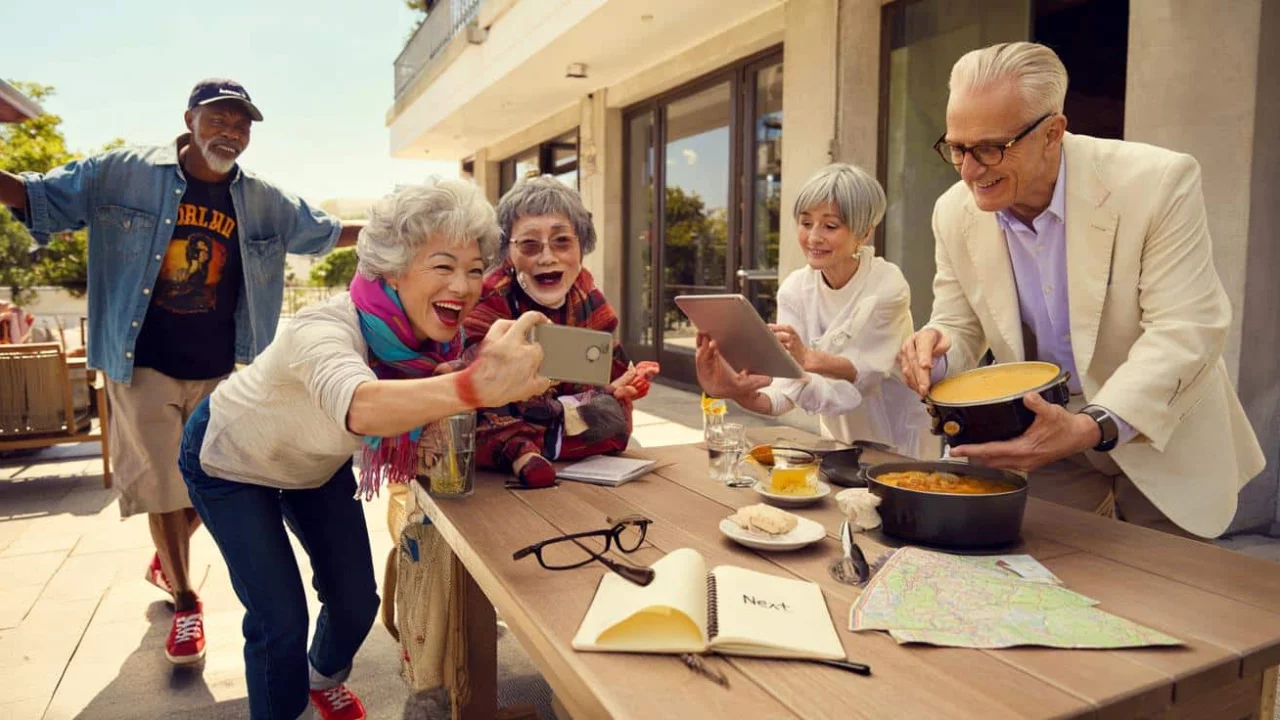
At a crowded Sunday brunch, I watched a silver-haired woman in red sneakers teach her grandson how to take a selfie. She was laughing so hard her glasses fogged up, and the kid kept saying, “Grandma, you’re cooler than my friends.” A few tables away, another woman, probably the same age, sat staring at her phone, scrolling, not really seeing anything.
Same decade of life. Completely different energy. We’ve all been there—that moment when you spot someone older and think, half in awe and half in envy, “I hope I’m like that when I’m their age.” That reaction isn’t magic. It’s built, quietly, by habits that define healthy aging at 70.
Here are nine things people still do at 70 that make everyone else whisper that sentence.
The Curiosity Factor That Keeps People Magnetic
Nothing ages a person faster than the sentence “I already know how the world works.” At 70, the people who seem almost ageless are the ones still asking questions, still trying the new coffee place, still clicking on articles about topics they don’t understand.
Curiosity shows in tiny daily choices. Choosing a documentary over yet another crime rerun. Asking your neighbor about the plant on their windowsill instead of just nodding in the hallway. Saying “Explain this to me like I’m five” to your grandchild about their favorite game instead of zoning out.
Denis, 72, started learning Korean at the exact age most of his friends stopped driving at night. He downloaded an app, joined a beginner class full of twenty-somethings, and practiced by watching K-dramas with subtitles. His accent is terrible, his vocabulary small. But he keeps trying.
When his granddaughter visited, she couldn’t believe he knew a few phrases from her favorite show. She filmed him saying them and posted the clip. The comments were full of variations of the same line: “I hope I’m still learning new stuff at his age.”
“Curiosity is like mental hygiene,” says Dr. Sarah Martinez, a geriatric psychologist. “Just as muscles stiffen when they’re not used, the mind calcifies when nothing new enters.”
Nine Habits That Define Healthy Aging at 70
The people who inspire others at 70 share specific behaviors that keep them vibrant and engaged. Here’s what sets them apart:
- Stay physically active with purpose – They carry their own groceries, stretch while the kettle boils, and walk to the next bus stop just because the weather is nice
- Maintain genuine curiosity – They ask questions, try new restaurants, and learn skills their peers consider “too late to start”
- Keep their social circles diverse – They befriend people of different ages and backgrounds, not just their generation
- Adapt to technology gradually – They don’t fear new devices but embrace them as tools to stay connected
- Continue setting small goals – They plan trips, start projects, and look forward rather than backward
- Practice emotional resilience – They process losses without becoming bitter or withdrawn
- Maintain their appearance with confidence – They dress for themselves, not to hide their age
- Share knowledge without lecturing – They offer wisdom when asked but don’t force unsolicited advice
- Stay financially engaged – They manage their money actively and make informed decisions about their future
| Habit | Daily Practice | Long-term Benefit |
|---|---|---|
| Physical Movement | Walk 15 minutes, do basic stretches | Maintains independence and energy |
| Mental Stimulation | Read varied content, try new activities | Keeps mind sharp and engaged |
| Social Connection | Have meaningful conversations daily | Prevents isolation and depression |
| Goal Setting | Plan something to look forward to | Maintains sense of purpose |
| Adaptability | Try one new thing weekly | Builds resilience and confidence |
“The most inspiring 70-year-olds I know treat their age as a starting point, not a finish line,” notes gerontologist Dr. Michael Chen. “They understand that healthy aging at 70 isn’t about denying their age—it’s about maximizing what this stage of life offers.”
What Makes the Difference in Real Life
The gap between thriving at 70 and merely surviving often comes down to mindset shifts that happen much earlier. People who inspire others at this age typically started making small changes in their 50s and 60s.
Take movement, for example. The 70-year-olds who seem unstoppable aren’t necessarily gym enthusiasts. They’re the ones who never stopped treating their bodies as tools. They take stairs when available, park further away by choice, and stretch during TV commercials.
Margaret, 74, still goes dancing every Friday night. Not because she’s exceptionally fit, but because she never stopped. “I’m not the best dancer in the room,” she says, “but I’m probably having the most fun.”
Her secret isn’t talent or genetics. She simply refused to let age become an excuse to stop doing things she enjoyed.
Social connections matter just as much. The 70-year-olds who make younger people think “relationship goals” are those who’ve maintained friendships across generations. They text their nieces about TV shows, ask their neighbor’s teenager about college plans, and treat service workers like human beings worth knowing.
“Age becomes invisible when someone is genuinely interested in you,” explains social psychologist Dr. Jennifer Wu. “These people stay magnetic because they never stopped being curious about others.”
Technology adaptation plays a bigger role than most people realize. The inspiring 70-year-olds aren’t necessarily tech wizards, but they’re willing to learn. They video call grandchildren, use GPS without shame, and ask for help with new apps without apologizing for their age.
Financial engagement also separates those who thrive from those who merely survive. They stay involved in managing their money, make informed decisions about healthcare, and plan actively for their future needs.
My 72-year-old neighbor just started a TikTok account to share her bread recipes. She has 10k followers and calls them her "flour children." This is the energy I want at every age. #HealthyAging#NeverTooLate
— Sarah Mitchell (@SarahM_Wellness) March 15, 2024
The most important factor might be emotional resilience. Everyone faces losses in their 70s—friends, spouses, independence in some areas. The people who inspire others are those who process grief without becoming defined by it. They honor their losses while remaining open to new experiences and relationships.
“Resilience at 70 isn’t about bouncing back to who you were,” says Dr. Martinez. “It’s about bouncing forward to who you’re becoming.”
Perhaps most critically, these inspiring 70-year-olds share their wisdom without forcing it. They offer perspective when asked but don’t lecture every young person they meet about “how things used to be.” They understand that being heard requires first being willing to listen.
The truth about healthy aging at 70 is surprisingly simple: it’s not about having perfect health, unlimited energy, or avoiding all of life’s challenges. It’s about approaching this decade with the same curiosity, purpose, and openness to growth that defined the best versions of yourself at any age.
These nine habits aren’t magic formulas. They’re daily choices that compound over time, creating the kind of person others admire and aspire to become.
FAQs
Is it too late to start these habits if I’m already 70?
Absolutely not. Many of the most inspiring changes happen when people decide to try something new at any age, including 70 and beyond.
Do I need to be physically fit to age well at 70?
Perfect fitness isn’t required, but staying as active as your body allows makes a huge difference in how you feel and how others perceive your vitality.
How important is technology for healthy aging?
While not essential, basic tech skills help you stay connected with family and access resources that improve quality of life.
What if I’ve lost interest in trying new things?
Start incredibly small—try a new flavor of tea, take a different walking route, or watch one documentary on a topic you’ve never explored.
How do I maintain friendships across generations?
Show genuine interest in what younger people care about, ask questions without judgment, and share your experiences only when invited.
What’s the most important factor for inspiring others at 70?
Curiosity combined with emotional resilience—staying interested in life while handling its challenges with grace.









Leave a Comment