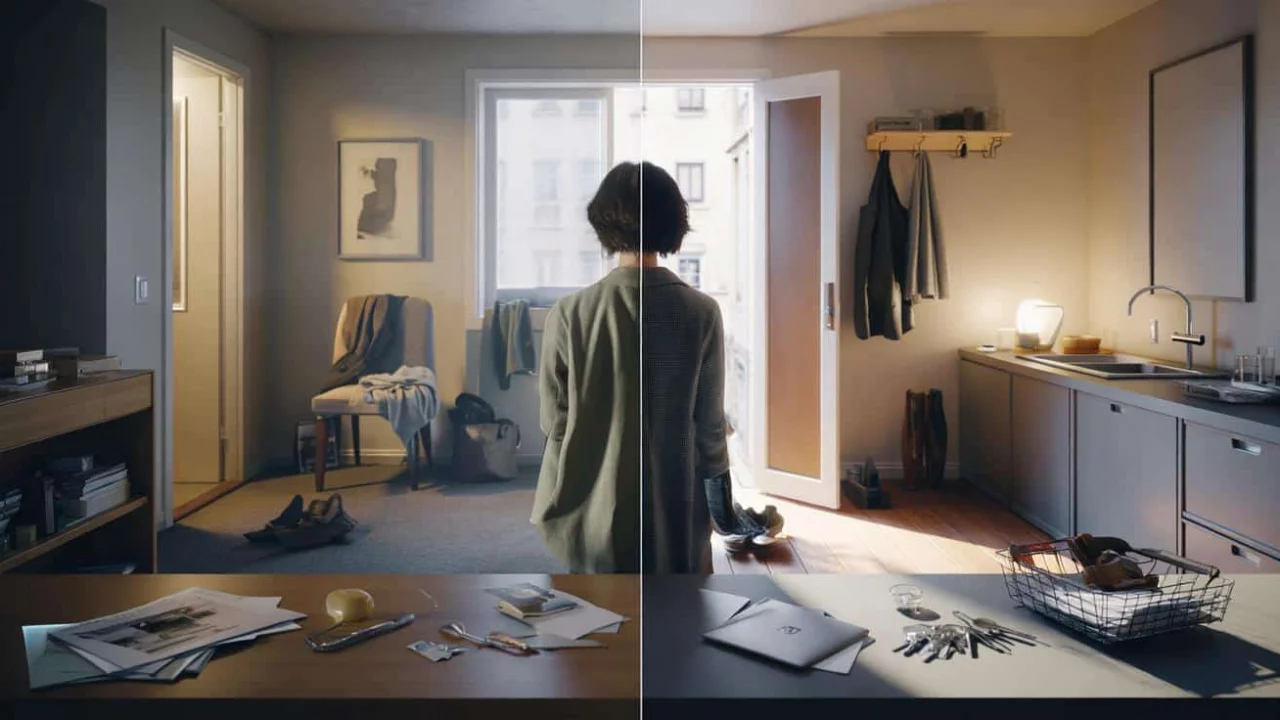
It was 7:43 AM on a Thursday when I found myself digging through three different bags, looking for my phone charger. I was already running late for a client meeting, and there I was, frantically emptying tote bags onto my kitchen counter like some kind of organizational disaster movie.
The charger was in the fourth bag I checked. Of course it was.
Standing there, surrounded by the contents of my entire mobile life scattered across the counter, something clicked. I had spent exactly 8 minutes looking for that charger. The same 8 minutes I could have used the night before to actually put it in the same place every time. I realized I wasn’t a victim of “no time” — I was the architect of my own chaos.
The real cost of blaming time for our mess
Most of us have convinced ourselves that our cluttered homes are a direct result of busy schedules. We tell ourselves we’re too exhausted to put things away, too overwhelmed to organize, too time-strapped to maintain order.
But here’s what I discovered when I started paying attention: home organization isn’t about having more time. It’s about recognizing where our time actually goes.
“People often think organizing takes enormous blocks of time, but the reality is that clutter creates far more time waste than prevention ever could,” explains professional organizer Sarah Martinez, who has worked with over 500 clients. “Most people spend more time looking for things than they would spend putting them away.”
The math is brutal when you actually track it. That daily hunt for keys? Three minutes here, five minutes there. Searching for important documents in paper piles? Another seven minutes. Looking for clean clothes in laundry baskets because you never folded them? Five more minutes.
By the end of a typical week, most people lose 30-45 minutes to clutter-related searches. That’s not counting the mental energy drain or the stress of always feeling behind.
What effective home organization actually looks like
Real home organization isn’t about perfect magazine spreads or color-coordinated everything. It’s about creating systems that save you time, not cost you time.
Here are the core principles that actually work:
- The 2-minute rule: If something takes less than 2 minutes to put away properly, do it immediately rather than setting it down “temporarily”
- Designated homes: Every frequently used item needs one specific place it always goes
- Exit routines: Spend 5 minutes before bed putting things back where they belong
- Entry systems: Create a designated spot near your door for keys, bags, and daily essentials
- One-touch rule: Handle items once when possible instead of moving them multiple times
“The biggest breakthrough for my clients comes when they realize that organization is actually a time-saving investment, not a time-consuming chore,” notes decluttering specialist Michael Chen. “Once you have systems in place, maintenance takes less time than searching ever did.”
| Daily Task | Time Spent Searching (Disorganized) | Time Spent Organizing (System in Place) | Weekly Time Saved |
|---|---|---|---|
| Finding keys | 3 minutes | 10 seconds | 17 minutes |
| Locating documents | 7 minutes | 30 seconds | 38 minutes |
| Getting dressed | 5 minutes | 2 minutes | 21 minutes |
| Preparing to leave | 8 minutes | 3 minutes | 35 minutes |
The numbers don’t lie. A few minutes of daily maintenance can save hours of weekly frustration.
How this changes your relationship with your space
When you stop using “no time” as an excuse for mess, something interesting happens. You start seeing your home as a partner in your daily life rather than an obstacle to it.
Instead of walking past that pile of mail for the fifth day in a row, you spend 30 seconds sorting it. Instead of throwing your jacket on the chair, you hang it up immediately. These aren’t massive lifestyle overhauls — they’re tiny habit shifts that compound over time.
“The mindset shift is everything,” explains residential organizer Lisa Rodriguez. “Once people understand that their ‘lack of time’ is actually created by their own disorganization, they become incredibly motivated to change.”
The psychological benefits extend far beyond saved minutes. When your space works for you instead of against you, decision fatigue decreases. Morning stress drops. That constant low-level anxiety about forgetting something important starts to fade.
You begin to trust your environment and, by extension, trust yourself to maintain the systems that keep life flowing smoothly.
After three months of consistent home organization practices, most people report feeling more in control of their schedules, even though they’re spending the same amount of time on household tasks.
“It’s not about perfection,” Rodriguez adds. “It’s about creating predictability in your daily routines so you can focus your mental energy on things that actually matter to you.”
The reality is stark: every item without a proper home becomes a small time thief. Every surface that collects random objects becomes a daily treasure hunt. Every “I’ll deal with this later” decision becomes a future interruption to your actual priorities.
But here’s the good news. Once you see this pattern, you can’t unsee it. And once you start making different choices — tiny, two-minute choices — your relationship with both time and space begins to shift in ways that feel almost magical.
Your home stops being the source of daily friction and starts being the foundation that supports everything else you want to accomplish.
FAQs
How long does it take to organize a messy home?
Initial organization might take a weekend, but maintaining systems only requires 10-15 minutes daily once established.
What’s the first step to better home organization?
Start by designating specific homes for your five most-used daily items: keys, phone, wallet, glasses, and bag.
Can home organization really save time if I’m already extremely busy?
Yes, because searching for misplaced items typically wastes more time than putting things away properly in the first place.
What if I live with people who don’t organize?
Focus on your own items and spaces first, then gradually introduce shared systems that benefit everyone in the household.
Do I need to buy organizational products to get started?
No, most effective home organization uses items you already have and focuses on creating consistent habits rather than purchasing storage solutions.
How do I maintain organization when life gets hectic?
Build simple daily routines like the 2-minute rule and 5-minute evening pickup that work even during your busiest periods.











Leave a Comment