The retired admiral slid that grainy photo across the café table like he was passing state secrets. His weathered fingers lingered on the black-and-white image of what looked like a ghost ship breaking the surface of the Barents Sea. “That’s her,” he whispered, barely audible over the coffee shop chatter. “K-222. The fastest thing that ever moved underwater.”
I’d heard whispers about this submarine before, but seeing that photo changed everything. Here was a machine that didn’t just break speed records—it shattered our understanding of what was possible beneath the waves. The way the old admiral’s eyes lit up when he talked about her told me this wasn’t just another Cold War relic. This was something that still haunts the dreams of naval engineers today.
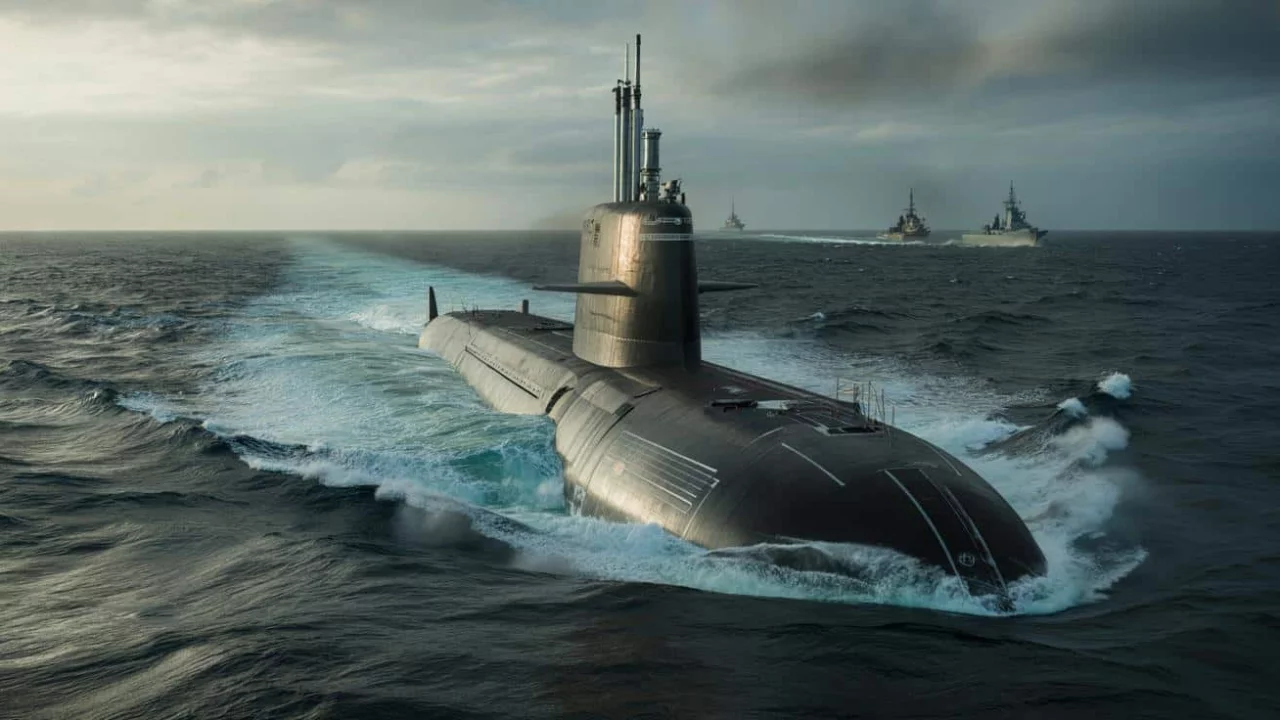
The K-222 submarine represents one of the most audacious engineering experiments in maritime history, yet most people have never heard of it. Built by the Soviet Union in the 1960s, this titanium-hulled monster could slice through ocean depths at speeds that made NATO admirals lose sleep. But the real story isn’t just about speed—it’s about the price of pushing technology beyond all reasonable limits.
When the Ocean Became a Racetrack
Picture this: it’s 1971, somewhere in the North Atlantic. NATO sonar operators are staring at their screens, tracking what they think is a normal Soviet submarine. Then something impossible happens. The target accelerates to 44.7 knots—that’s roughly 83 kilometers per hour underwater. For perspective, most modern submarines cruise at around 20 knots submerged.
“The first time we detected Papa at full speed, half our team thought the equipment was malfunctioning,” recalls former NATO sonar analyst James Mitchell. “Nothing should move that fast underwater without wings.”
The K-222’s speed came from a revolutionary design philosophy that prioritized raw power over everything else. Two liquid-metal-cooled reactors pumped incredible amounts of energy into the propulsion system, while the titanium hull reduced weight and increased structural integrity. The result was a submarine that could outrun most torpedoes of its era.
But speed came with a terrifying cost. Crew members described the experience of high-speed runs as riding inside a washing machine during an earthquake. The entire 107-meter hull would vibrate violently, pipes would rattle loose, and the sound of rushing water became deafening. Some sailors reported that diving at maximum velocity felt like being inside a controlled explosion.
The Hidden Price of Maritime Supremacy
The technical specifications of the K-222 submarine reveal just how extreme this experiment really was:
| Specification | K-222 “Papa” | Typical Nuclear Sub |
|---|---|---|
| Max Speed (submerged) | 44.7 knots | 20-25 knots |
| Hull Material | Titanium alloy | Steel |
| Construction Cost | $2.8 billion (today’s money) | $800 million |
| Reactor Type | Liquid metal cooled | Pressurized water |
| Operational Depth | 1,000+ meters | 400 meters |
The numbers tell a stark story, but they don’t capture the human drama behind this machine. Soviet engineers worked with materials and techniques that barely existed outside of experimental labs. Welding titanium required completely new methods, specialized equipment, and workers who could maintain precision under impossible conditions.
“Every bolt, every weld, every component had to be perfect,” explains maritime engineer Dr. Sarah Chen. “One small flaw at those speeds and pressures would have been catastrophic. The margin for error was essentially zero.”
The submarine’s liquid-metal-cooled reactors were equally problematic. While they provided enormous power, they also required constant maintenance and posed radiation risks that kept crews on edge. The entire propulsion system was so complex that only a handful of technicians really understood how it worked.
Here’s what made the K-222 truly revolutionary:
- Titanium hull construction that was 40% lighter than steel equivalents
- Advanced reactor cooling system that generated unprecedented power
- Hydrodynamic design optimized purely for speed
- Sophisticated ballast systems to handle extreme velocity changes
- Reinforced internal structures to withstand massive G-forces
The Reality Check That Sank a Dream
For all its technological brilliance, the K-222 submarine had a fatal flaw: it was incredibly loud. At maximum speed, the cavitation around the propeller and the vibrations from the hull made it detectable from hundreds of kilometers away. In a world increasingly focused on stealth, this speed demon was essentially a submarine with a megaphone strapped to it.
“Speed without stealth is just a very expensive target,” notes retired submarine commander Captain David Rodriguez. “K-222 could outrun anything, but she couldn’t hide from anyone.”
The submarine’s operational history reflects this contradiction. After initial trials proved the speed records, K-222 spent most of her career as a test platform rather than a front-line weapon. The Soviet Navy realized they had built an engineering marvel that was tactically obsolete before it even entered service.
Cost overruns plagued the program from day one. The titanium hull alone cost more than three conventional submarines. Special tools, training programs, and maintenance facilities had to be built from scratch. By the time K-222 was commissioned, the budget had ballooned to levels that made Soviet admirals question whether speed was worth bankrupting the navy.
The submarine’s brief operational period revealed other problems. The extreme speeds put enormous stress on every component, leading to frequent breakdowns. Crews needed extensive medical monitoring due to the intense vibrations and G-forces experienced during high-speed maneuvers. What looked like a super-weapon on paper became a maintenance nightmare in reality.
Modern submarine warfare has largely vindicated the critics. Today’s nuclear submarines prioritize stealth, endurance, and multi-mission capability over raw speed. The Virginia-class submarines used by the U.S. Navy can’t match K-222’s sprint speed, but they can operate undetected for months while carrying out complex missions.
Yet the K-222’s legacy lives on in unexpected ways. The titanium construction techniques developed for the project influenced everything from aerospace manufacturing to medical implants. The lessons learned about high-speed underwater propulsion continue to inform research into advanced marine vehicles.
“K-222 taught us the absolute limits of what’s possible underwater,” reflects naval historian Dr. Michael Thompson. “Sometimes you have to build something impossible to understand why it shouldn’t exist.”
The K-222 submarine remains a fascinating footnote in Cold War history—a machine that achieved the impossible while proving why the impossible sometimes should stay that way. Her speed records still stand today, a testament to human engineering ambition and a reminder that not every technological mountain needs to be climbed.
FAQs
What made the K-222 submarine so fast?
The K-222 used liquid-metal-cooled nuclear reactors and a lightweight titanium hull to achieve unprecedented underwater speeds. Its design prioritized pure velocity over stealth or operational practicality.
How fast was the K-222 compared to modern submarines?
The K-222 reached 44.7 knots (83 km/h) underwater, while most modern nuclear submarines cruise at 20-25 knots. No submarine has matched its speed record since.
Why was the K-222 submarine so expensive?
The titanium hull construction, experimental reactor design, and specialized manufacturing techniques made K-222 cost roughly three times more than conventional submarines of its era.
What happened to the K-222 submarine?
After proving its speed capabilities, K-222 served primarily as a test platform before being decommissioned. Only one was ever built due to the enormous costs and operational limitations.
Could a submarine like K-222 be built today?
Modern technology could theoretically build faster submarines, but military priorities have shifted toward stealth and multi-mission capability rather than pure speed.
Was the K-222 actually effective as a weapon?
Despite its impressive speed, K-222 was extremely loud and detectable, making it tactically ineffective. It served more as an engineering experiment than a practical weapon system.











Leave a Comment