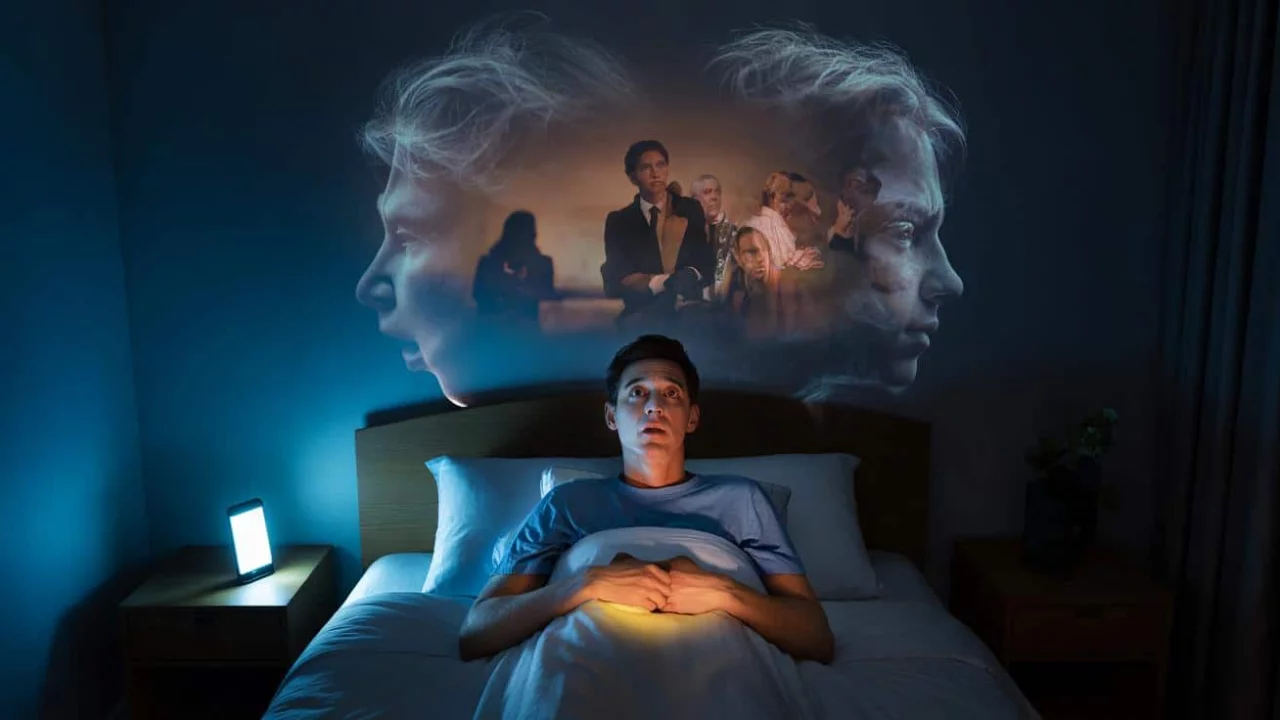
Sarah stared at the ceiling for the third hour straight, her mind replaying a conversation from work like a broken record. During the meeting, she’d felt confident about her presentation. Her boss nodded, her colleagues asked thoughtful questions, and she walked away feeling accomplished.
But now, at 2:47 a.m., that same presentation had transformed into a disaster movie in her head. Every pause became evidence of confusion. Every polite smile turned into pity. Her brain was spinning an entirely different story, and somehow this midnight version felt more “real” than what actually happened.
When her alarm went off six hours later, Sarah dragged herself to the coffee machine and shrugged off her roommate’s question about looking tired. “Just couldn’t sleep,” she said. She’d never admit that her brain had spent the night convincing her she was a fraud.
Your brain becomes a master manipulator after dark
Overthinking at night isn’t just annoying—it’s your brain actively lying to you about reality. When the distractions of the day fade away, your mind doesn’t get clearer. It gets sneakier.
Dr. Matthew Walker, a sleep researcher, explains it simply: “When we’re tired, our prefrontal cortex—the rational part of our brain—goes offline first. What’s left is the emotional center running wild without supervision.”
Your nighttime thoughts feel urgent and true because your brain’s fact-checker has clocked out for the day. That leaves the drama department in charge, and drama departments love to exaggerate everything.
Think about it: have you ever had a “breakthrough realization” at 3 a.m. that seemed ridiculous by breakfast? That’s not because morning you is in denial. Night you was simply getting bad information from a brain running on fumes.
The real patterns behind midnight anxiety spirals
When you’re overthinking at night, your brain follows predictable patterns that have nothing to do with what you’re actually feeling during the day. These mental loops create false narratives that feel completely real in the moment.
| Nighttime Thought Pattern | What’s Really Happening | Daylight Reality Check |
|---|---|---|
| Everyone thinks I’m incompetent | Brain magnifying one small mistake | Most people barely noticed or forgot |
| My relationship is doomed | Exhaustion making normal conflicts feel catastrophic | Minor issues that couples work through daily |
| I’m behind in life | Social media comparisons mixing with fatigue | Everyone moves at their own pace |
| I made the wrong career choice | Daily stress being reinterpreted as fundamental failure | Normal job challenges that require practical solutions |
The most telling sign that overthinking at night is unreliable? You’d never make major life decisions based on how you feel at 2 a.m., yet you let those thoughts torture you for hours.
Clinical psychologist Dr. Sarah Chen notes, “Night thoughts aren’t deeper truths—they’re distorted emotions. When patients track their nighttime worries against daylight reality, the mismatch is striking.”
Here are the key signs your brain is lying to you after dark:
- Problems that felt manageable during the day suddenly seem impossible
- You “remember” conversations differently than they actually happened
- Small social interactions get replayed as major rejections
- Future scenarios play out in worst-case-scenario detail
- Past mistakes feel fresh and unforgivable
- You become convinced others are thinking about you negatively
Why most people refuse to admit this is happening
Here’s the uncomfortable truth: acknowledging that overthinking at night is mostly fiction means admitting you can’t trust your own thoughts when you’re tired. That’s terrifying for most people.
We want to believe our emotions are reliable guides, especially when they feel so intense. When your chest is tight and your mind is racing, it doesn’t feel like a tired brain misfiring. It feels like urgent truth.
Therapist Michael Rodriguez has seen this resistance countless times: “Clients will say, ‘But it felt so real!’ They’d rather believe their nighttime thoughts are accurate than accept that their brain was basically drunk on exhaustion.”
There’s also social pressure at play. Admitting that your 2 a.m. insights are unreliable feels like admitting weakness. We’re supposed to “know ourselves,” right? But knowing yourself includes knowing when your brain isn’t working properly.
The people who break free from nighttime overthinking are the ones who get comfortable with this reality: your tired brain is not your friend. It’s not revealing hidden truths about your relationships, your worth, or your future. It’s just tired.
Some practical signs you’re dealing with exhausted-brain lies rather than genuine insights:
- The problems feel urgent but you’ve never acted on them during daylight hours
- You cycle through the same worries night after night without resolution
- Your nighttime conclusions don’t match your daytime feelings about the same situations
- You feel embarrassed about your 3 a.m. revelations the next morning
- The intensity of your emotions doesn’t match the actual importance of the trigger
Dr. James Peterson, who studies circadian rhythms and emotional regulation, puts it bluntly: “Your brain at 2 a.m. has about as much credibility as your brain after three drinks. You wouldn’t make major life decisions while tipsy, so why trust the insights of an exhausted mind?”
Breaking the cycle starts with a simple acknowledgment: when you’re lying in bed overthinking, you’re not having profound realizations. You’re just tired. Your real feelings—the ones that matter—show up when you’re rested, grounded, and thinking clearly.
The next time your brain starts its midnight theater performance, remember that the show isn’t real. The emotions feel authentic because they’re happening to you, but the stories behind them are fiction written by a brain that needs sleep, not drama.
FAQs
Why does overthinking always seem worse at night?
Your brain’s rational thinking center shuts down when you’re tired, leaving the emotional center to run wild without any fact-checking.
Are my nighttime thoughts ever accurate?
They might contain grains of truth, but they’re usually wildly exaggerated and distorted by exhaustion and lack of distractions.
How can I tell if my concerns are real or just overthinking?
Real concerns persist when you’re well-rested and can be addressed with concrete actions. Overthinking creates problems that feel urgent but never lead to solutions.
Is it normal to feel completely different about problems in the morning?
Absolutely. If your nighttime worries seem less important or less accurate in daylight, that’s your brain working properly again.
What should I do when I catch myself overthinking at night?
Acknowledge that your tired brain isn’t reliable right now. Write down your concerns to deal with when you’re rested, then focus on getting sleep.
Why do I keep falling into the same overthinking patterns?
Because tired brains follow predictable loops. Breaking the pattern requires recognizing when it’s happening and choosing not to engage with unreliable thoughts.











Leave a Comment