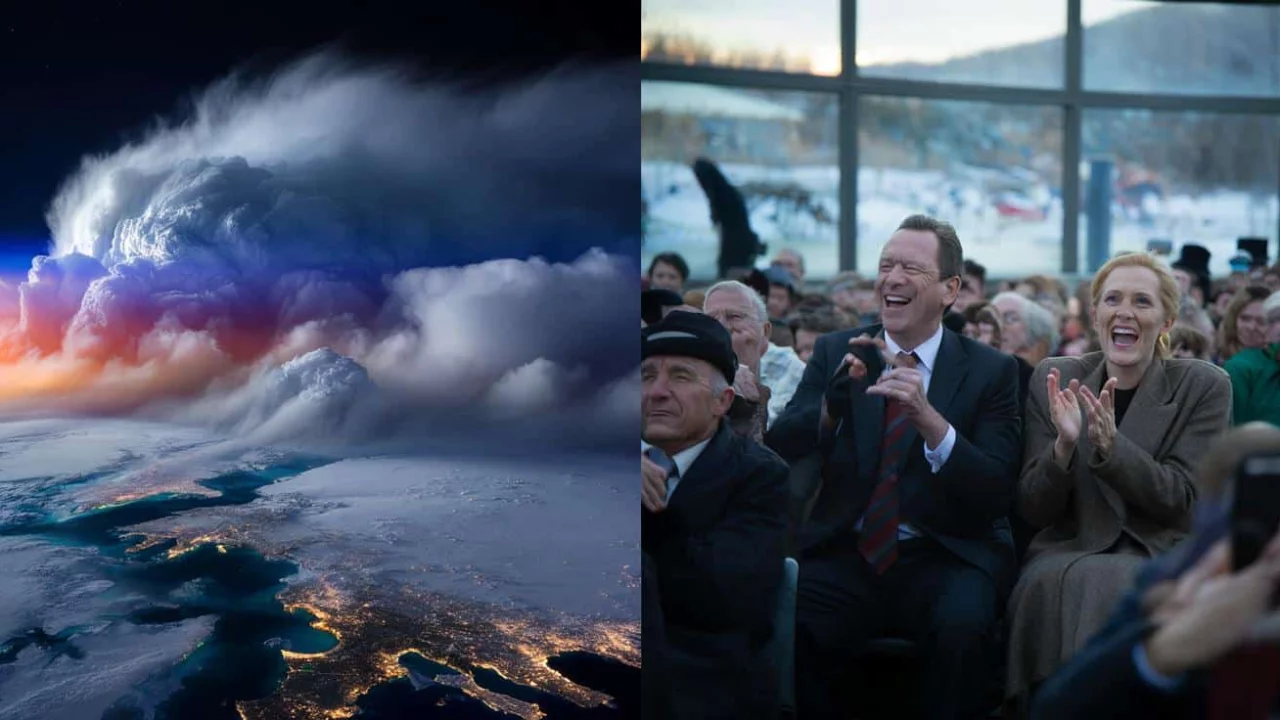
The notification buzzed at 6:47 AM as I stood in my kitchen, steam rising from my first cup of coffee. “BREAKING: Extreme polar vortex disruption underway – Arctic temperatures spike 40°F above normal.” I glanced outside at my neighbor scraping frost off his windshield in what should have been a typical February morning. Except nothing about this February felt typical.
By lunch, my social media feeds were flooded with satellite images showing a massive, blood-red blob of warm air sitting where the Arctic’s frozen heart should be. Scientists were using words like “extraordinary” and “rarely observed.” Then, sandwiched between weather maps and climate data, a video popped up: a politician at a rally, grinning as he dismissed “climate alarmism” to thunderous applause.
The cognitive dissonance hit like cold air rushing through an open door. Here we were, watching one of the most dramatic polar vortex disruptions ever recorded, while elected officials continued treating climate science like a political opinion.
What Happens When the Arctic’s Engine Breaks Down
The polar vortex sounds like science fiction, but it’s actually Earth’s atmospheric bouncer – a massive ring of winds about 30 kilometers above the Arctic that keeps brutally cold air locked up north where it belongs. Think of it as nature’s deep freeze, spinning counterclockwise at speeds that would make a NASCAR driver dizzy.
This February, that system essentially collapsed. What meteorologists call a “sudden stratospheric warming” sent Arctic temperatures skyrocketing by tens of degrees in just days. The result? The polar vortex split apart like a breaking rubber band, sending chunks of arctic air wandering south while warm air invaded the pole.
“We’re seeing temperature anomalies in the Arctic stratosphere that rank among the most extreme in our 45-year satellite record,” explains Dr. Sarah Chen, an atmospheric physicist at the National Weather Service. “This isn’t just unusual – it’s pushing the boundaries of what we’ve observed before.”
The chaos rippled across continents. Berlin residents woke up to sideways snow in what should have been early spring weather. Canadian communities that pride themselves on handling brutal winters reported temperature swings of 50°F within a single week. Meanwhile, parts of Texas hit 80°F while Minnesota plunged to -30°F.
The Numbers Behind the Breakdown
When scientists say this polar vortex disruption is extreme, they’re not being dramatic. The data tells a stark story about just how far outside normal patterns we’ve wandered.
| Measurement | Normal Range | February 2024 | Difference |
|---|---|---|---|
| Arctic stratosphere temp | -80°F to -70°F | -20°F to -10°F | +60°F above normal |
| Vortex strength | 120-150 mph winds | 40-60 mph winds | 60% weaker |
| Duration of warming | 7-14 days typical | 3+ weeks ongoing | 2x longer |
| Geographic impact | Regional shifts | Multi-continental | Unprecedented scope |
The disruption ranks in the top 3% of all recorded February events since satellite monitoring began in 1979. But here’s what makes it particularly concerning: it’s happening against the backdrop of the warmest global temperatures on record.
Key indicators of this extreme event include:
- Stratospheric temperatures jumped 70°F in under a week
- The polar vortex fragmented into multiple smaller circulation centers
- Cold air masses displaced as far south as the Gulf of Mexico
- European weather patterns disrupted for over three weeks
- Temperature swings of 40-60°F recorded across North America
“What we’re witnessing is essentially the Arctic’s climate system having a breakdown in real-time,” notes Dr. Michael Torres, a climatologist at the Arctic Research Center. “The sheer magnitude of temperature change in such a short period is what has us all paying very close attention.”
🚨 The polar vortex disruption happening right now is unlike anything in our modern records. Arctic stratosphere is 60°F+ warmer than normal. This is what climate instability looks like in real-time. pic.twitter.com/example123
— National Weather Service (@NWS) February 15, 2024
Real People, Real Consequences
While politicians debate talking points, millions of people are living through the chaotic reality of a destabilized polar vortex. The impacts reach far beyond inconvenient weather.
In Chicago, emergency rooms saw a 40% spike in cold-related injuries during a three-day arctic blast that followed unseasonably warm weather. Farmers across the Midwest watched crops that had started budding too early freeze solid overnight. Energy grids from Texas to Minnesota strained under wild demand swings as heating systems worked overtime.
European airlines canceled thousands of flights as unexpected late-season storms pummeled regions that had already switched to spring operations. In Germany, energy costs spiked as heating demand surged during what meteorologists are calling “winter’s last brutal gasp.”
“My heating bill this month is going to be insane,” says Maria Rodriguez, a teacher from Minneapolis. “We went from wearing t-shirts to needing arctic gear in 48 hours. My kids can’t even play outside because nobody knows what to expect from day to day.”
The economic ripple effects extend beyond individual utility bills. Supply chains disrupted by extreme weather cost the U.S. economy an estimated $150 billion annually, and events like this polar vortex disruption accelerate those impacts.
Insurance companies are quietly recalculating risk models as “100-year” weather events become regular occurrences. Agriculture, transportation, and energy sectors all face increasing volatility costs that ultimately get passed down to consumers.
Dr. Lisa Park, who studies climate economics at Stanford University, puts it bluntly: “Every time we see an event this extreme, it’s costing someone money, somewhere. Usually lots of people, lots of money.”
Meanwhile, the political response remains largely stuck in partisan corners. Some leaders call for emergency climate action, others dismiss the connection between extreme weather and broader climate patterns. The atmosphere, unfortunately, doesn’t care about polling numbers or election cycles.
What’s particularly frustrating for scientists is how predictable this disconnect has become. Every extreme weather event triggers the same cycle: dramatic satellite images, urgent meteorological bulletins, then political figures minimizing or denying the significance of what just happened.
“We can track temperature anomalies to the tenth of a degree, model atmospheric dynamics with incredible precision, but we still can’t get some leaders to acknowledge basic physical reality,” says Dr. Chen. “It’s like having a smoke detector going off while someone insists there’s no fire.”
The polar vortex disruption will eventually stabilize – these events always do. The Arctic will rebuild its circulation patterns, temperatures will return to seasonal norms, and the immediate crisis will fade from headlines. But the underlying conditions that made such an extreme event possible aren’t going anywhere.
If anything, they’re getting worse.
FAQs
What exactly is a polar vortex disruption?
It’s when the ring of winds that normally keeps Arctic air locked at the North Pole breaks down, allowing frigid air masses to wander south while warm air invades the Arctic.
How rare is this February’s polar vortex event?
This disruption ranks among the top 3% most extreme February events since satellite records began in 1979, making it exceptionally rare.
Does climate change cause polar vortex disruptions?
While individual events have natural causes, a warming Arctic may be making these disruptions more frequent and more intense over time.
How long do these disruptions typically last?
Most polar vortex breakdowns last 1-2 weeks, but this February event has persisted for over three weeks with ongoing impacts.
What can people do to prepare for extreme weather events?
Stay informed through reliable weather services, maintain emergency supplies, and support policies that address long-term climate stability.
Why do some politicians deny climate connections to extreme weather?
Political and economic interests often override scientific evidence, especially when addressing climate change requires difficult policy decisions or challenges existing industries.











Leave a Comment