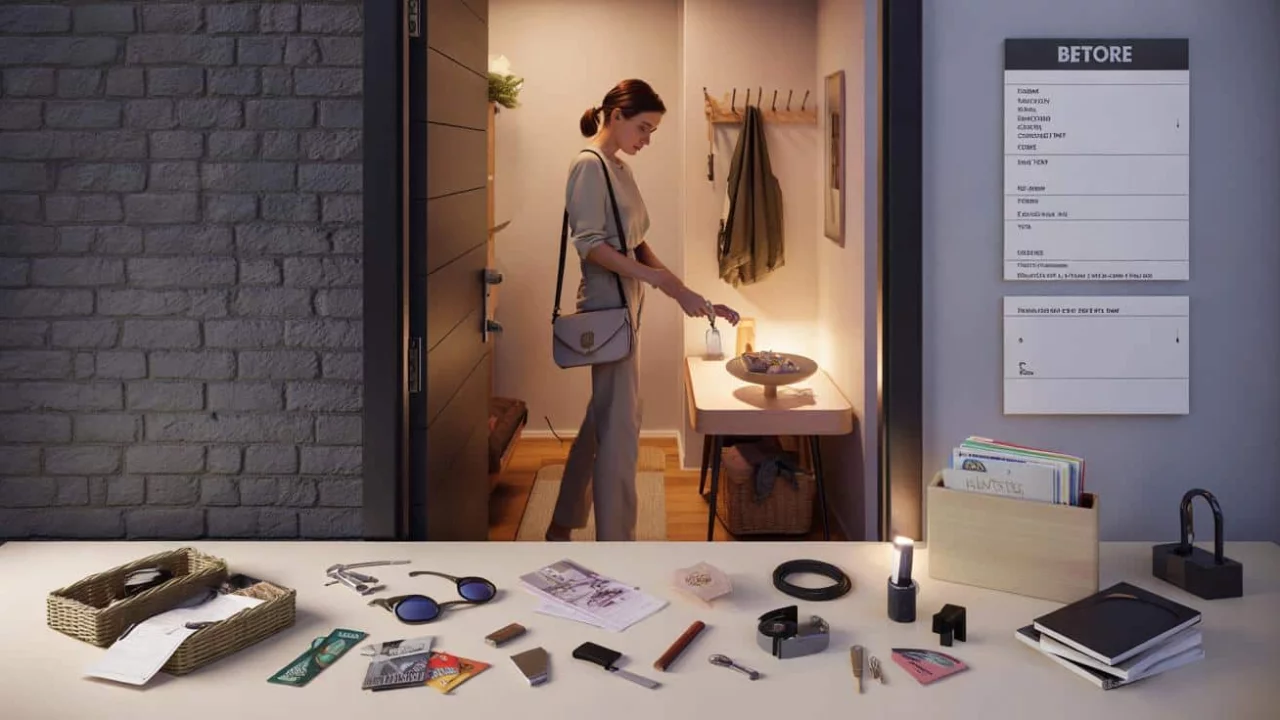
The basket was supposed to be temporary. A small woven catch-all by the front door, “just for keys and mail.” For a week, it worked perfectly. Then a pair of sunglasses landed in there. Then a phone charger. Then a lipstick, three loyalty cards, a broken pen, a mysterious screw, and a receipt from a cafe you don’t even remember visiting.
One evening you tip the whole thing out on the table and feel that familiar sting of guilt. How did it get this bad again? The basket quietly swelled into a mini black hole of clutter, swallowing anything that didn’t have a real home.
The truth is, clutter rarely arrives in big, dramatic waves. It creeps in, one harmless little object at a time, until suddenly your entire home feels chaotic and overwhelming.
The One-Minute Rule That Changes Everything
There’s an everyday trick professional organizers swear by, and it’s deceptively simple. They call it the “one-minute rule”: if something takes less than a minute to put away properly, do it now instead of dropping it “just for later.”
“Most people think organization requires hours of dedicated time,” says Marie Chen, a professional organizer with fifteen years of experience. “But the real magic happens in those tiny moments throughout the day.”
Hang the coat instead of tossing it on the chair. Put the mug in the dishwasher, not the sink. File the letter instead of adding it to that wobbling paper pile on the counter. Each action takes thirty seconds or less, but the cumulative effect is remarkable.
On its own, this sounds almost too basic to matter. Yet repeated ten, twenty, fifty times a day, it quietly rewires how your home feels, looks, and even how heavy your brain feels at the end of each day.
Picture Sofia, a 32-year-old marketing coordinator, coming home on a Monday night. Old Sofia used to drop everything on the first flat surface: keys on the table, tote bag on the floor, receipts in her coat pocket, shoes half-kicked off in the hallway. By Friday, her living room looked like a lost-and-found box had exploded.
New Sofia follows the one-minute rule. Keys go in the bowl by the door (fifteen seconds). Shoes get lined up in the closet (twenty seconds). Mail gets sorted immediately into three piles: action, file, recycle (forty-five seconds). Her Friday evening feels completely different now.
How Small Actions Prevent Unnecessary Clutter
The beauty of this approach lies in understanding how clutter actually accumulates. Most people think they need marathon organizing sessions, but research shows that small, consistent actions are far more effective at maintaining order.
Here’s how to implement the one-minute rule in different areas of your home:
- Kitchen: Wash dishes as you cook, wipe counters after each meal, return items to designated spots immediately
- Living room: Fold and put away throw blankets, return remote controls to their holder, clear coffee table surfaces
- Bedroom: Make the bed upon waking, hang clothes instead of chair-dumping, clear nightstand surfaces nightly
- Bathroom: Return toiletries to their spots, hang towels properly, clear sink area after use
- Office space: File documents immediately, clear desk surface daily, return supplies to designated drawers
“The one-minute rule works because it removes the mental barrier,” explains organizing consultant David Rodriguez. “When tasks feel quick and manageable, we’re much more likely to actually do them.”
| Common Clutter Spot | One-Minute Solution | Time Required |
|---|---|---|
| Kitchen counter papers | Sort into action/file/recycle | 45 seconds |
| Clothes on bedroom chair | Hang or put in hamper | 30 seconds |
| Shoes by front door | Place in designated spots | 20 seconds |
| Dishes in sink | Load directly into dishwasher | 40 seconds |
| Mail on entry table | Immediate sorting | 60 seconds |
Why This Simple Strategy Actually Works
The psychological impact of preventing unnecessary clutter goes far beyond having a tidy home. When our physical space is organized, our mental space feels clearer too. There’s actual science behind this connection.
UCLA researchers found that people living in cluttered homes had higher levels of cortisol, the stress hormone, throughout the day. Their brains were constantly processing the visual chaos, even when they weren’t consciously aware of it.
“Every item without a home creates a tiny decision point,” notes productivity expert Jessica Martinez. “Multiply that by hundreds of objects, and you’re mentally exhausted before you even realize why.”
The one-minute rule eliminates these decision points. Instead of seeing a coat and thinking “I should hang this up, but I’m tired, maybe later,” you automatically hang it up. The decision is already made.
Families who adopt this approach report significant changes within just two weeks. Children start putting toys away without being asked. Partners stop leaving dishes in the sink. The home begins to maintain itself.
But here’s the crucial part: this isn’t about perfection. Some days you’ll be too tired, too rushed, or too overwhelmed to follow the rule. That’s completely normal. The goal is consistency, not perfection.
Start with just one area of your home. Maybe it’s your kitchen counter or your bedroom dresser. Practice the one-minute rule there until it becomes automatic, then gradually expand to other spaces.
The ripple effects are remarkable. When you’re not constantly battling clutter, you have more mental energy for things that actually matter. Your home becomes a place that supports you instead of stressing you out.
“I used to spend entire weekends trying to get my house under control,” says Sarah Thompson, who’s been using this method for six months. “Now I spend maybe ten extra minutes throughout my day, but my weekends are completely free.”
The one-minute rule isn’t revolutionary because it’s complex or innovative. It’s revolutionary because it’s so simple that anyone can do it, starting right now. And in a world that often feels chaotic and overwhelming, sometimes the most powerful changes come from the smallest, most consistent actions.
FAQs
What if I forget to follow the one-minute rule?
Start small and be patient with yourself. Focus on one area first, like your kitchen counter, until it becomes automatic.
Does this rule work with kids in the house?
Absolutely. Children actually adapt to this system quickly when they see adults modeling it consistently.
What about items that take longer than a minute to put away?
Set those aside for designated organizing time. The rule focuses on preventing small clutter accumulation, not solving major organizing projects.
How do I know if something really takes less than a minute?
Most daily items like dishes, clothes, mail, and personal belongings fall into this category. When in doubt, time yourself once.
Can this method work in small spaces?
Small spaces actually benefit more from this approach because clutter accumulates faster and feels more overwhelming in limited square footage.
What’s the biggest mistake people make with this rule?
Trying to apply it everywhere at once instead of starting with one area and building the habit gradually.











Leave a Comment