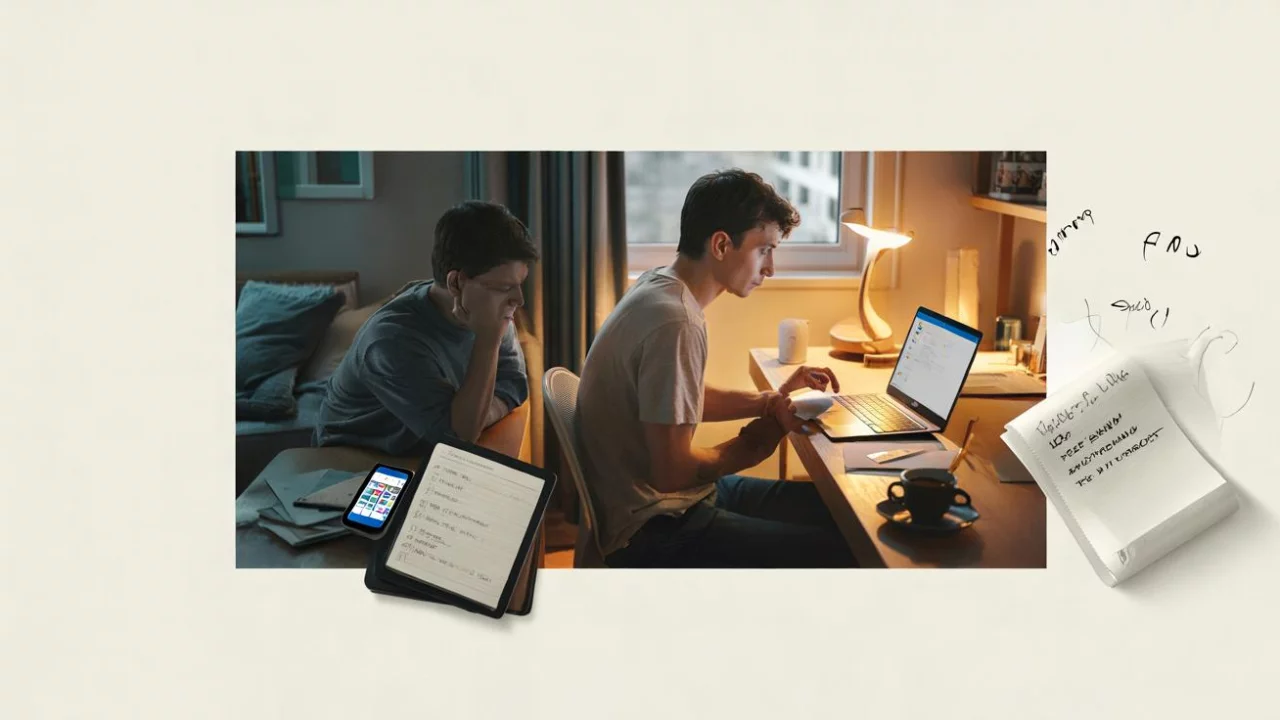
Sarah’s laptop screen glowed at 2:47 AM as she stared at the same paragraph she’d been “editing” for forty minutes. Her novel sat there, mocking her with its half-finished chapters and ambitious outline. She’d watched three productivity videos that evening, bookmarked five articles about writer’s discipline, and even bought a fancy journal for “morning pages.” Yet here she was, stuck again, scrolling through social media instead of writing.
The familiar weight settled in her chest – that heavy, sticky feeling she’d learned to call “writer’s block.” But what if it wasn’t writer’s block at all? What if the real problem wasn’t her lack of motivation, but something far more sneaky?
That night, Sarah discovered what millions of people struggle with daily: resistance. And more importantly, she learned the simple trick that dissolves it.
Why motivation fails when you need it most
We’ve been sold a lie about motivation. The self-help industry wants us to believe that success comes from finding that perfect motivational video, the right morning routine, or the magical mindset shift. But here’s what actually happens: motivation shows up when we don’t need it and vanishes when we do.
Dr. James Clear, author of Atomic Habits, puts it simply: “Motivation is what gets you started. Systems are what keep you going.” But even systems can feel overwhelming when resistance kicks in.
Resistance isn’t laziness or lack of willpower. It’s your brain’s sophisticated defense system, designed to keep you safe from potential failure, judgment, or discomfort. The moment you think about doing something that matters to you, resistance activates like a security alarm.
Think about it: when was the last time you felt resistance about scrolling social media or watching Netflix? Never. But mention starting that business, going to the gym, or having a difficult conversation, and suddenly your brain generates a thousand reasons why “later” would be better.
The simple trick that removes resistance instantly
The breakthrough comes from understanding one crucial truth: resistance thrives on the size of the commitment, not the importance of the task. The bigger the step you’re contemplating, the louder resistance screams.
Here’s the trick that changed everything for Sarah and thousands of others: make the step so small that resistance can’t grab onto it.
Instead of “write for an hour,” she committed to opening her laptop and typing one sentence. Instead of “finish the chapter,” she aimed to write one paragraph. The resistance that had paralyzed her for months simply… disappeared.
- The 2-Minute Rule: Make your desired action take less than two minutes to complete
- The Single Action Method: Focus on just the very next physical action, not the entire project
- The Permission to Stop: Give yourself explicit permission to quit after the tiny step
- The Celebration Technique: Acknowledge completion of the micro-step as a real victory
Behavioral scientist BJ Fogg from Stanford University explains: “The biggest mistake people make is starting too big. When you start tiny, you bypass the part of your brain that creates resistance.”
This approach works because resistance operates like a bouncer at an exclusive club. It stops big, threatening actions at the door. But tiny actions? They slip past unnoticed.
| Traditional Approach | Resistance-Free Approach |
|---|---|
| Write for 2 hours daily | Open document and write one sentence |
| Go to gym for 90 minutes | Put on workout clothes |
| Launch complete business | Write down one business idea |
| Clean entire house | Put one item in its proper place |
| Learn new language fluently | Download language app and do one lesson |
What happens when resistance disappears
The magic isn’t in the tiny action itself – it’s in what happens next. When Sarah committed to writing just one sentence, something unexpected occurred. Most days, she kept writing. The hardest part wasn’t the writing; it was starting. Once she removed that barrier, momentum took over naturally.
This creates what psychologists call the “activation effect.” Starting any version of the behavior you want makes continuing that behavior significantly more likely. Your brain shifts from “avoiding the task” to “already doing the task.”
People using this approach report remarkable changes:
- A marketing manager who couldn’t start his podcast for eight months launched it within two weeks
- A teacher afraid of learning Spanish completed her first lesson in three years – on the same day she tried this method
- A programmer paralyzed by a complex project finished it in half the expected time
Productivity expert David Allen notes: “The key is not to prioritize what’s on your schedule, but to schedule your priorities. But first, you have to be able to start.”
The approach works because it targets the root of procrastination: the emotional resistance we feel when facing meaningful tasks. By removing the emotional weight, we remove the primary obstacle to action.
But here’s the crucial part – you must give yourself genuine permission to stop after the tiny step. This isn’t reverse psychology. You’re not trying to trick yourself into doing more. You’re building trust with your own mind that starting doesn’t always mean committing to a massive effort.
Life coach Marie Forleo emphasizes this point: “The goal isn’t to do more. The goal is to remove the friction between you and the work that matters to you.”
Once you’ve practiced this for a few weeks, something shifts. The tasks that once felt impossible become… ordinary. Your brain learns that starting isn’t dangerous. The resistance that once controlled your choices weakens with each tiny victory.
Sarah finished her novel four months later. Not through massive daily writing sessions, but through countless tiny steps that added up to something meaningful. She learned that she didn’t need more motivation – she needed less resistance.
The next time you find yourself stuck, watching motivational videos instead of taking action, try this instead: make your next step so small that resistance has nothing to fight. You might be surprised at how much easier everything becomes when you stop fighting the wrong battle.
FAQs
What if I feel silly taking such tiny steps?
Feeling silly is normal, but results matter more than appearance. The people achieving their biggest goals often started with the smallest steps.
Will I actually accomplish anything meaningful with such small actions?
Small, consistent actions compound over time into significant results. Most people overestimate what they can do in a day and underestimate what they can do in a year.
What if I stop after the tiny step and don’t continue?
That’s perfectly fine and expected sometimes. The goal is building the habit of starting, not forcing yourself to do more than feels natural.
How long does it take for this approach to feel natural?
Most people notice reduced resistance within a week and feel comfortable with the approach within 2-3 weeks of consistent practice.
Can this work for really big, complex projects?
Yes, especially for complex projects. Breaking them down into tiny next actions makes them manageable and reduces overwhelm significantly.
What’s the difference between this and regular goal-setting advice?
Traditional goal-setting focuses on the end result, which can trigger resistance. This approach focuses solely on removing friction from the next immediate action.











Leave a Comment