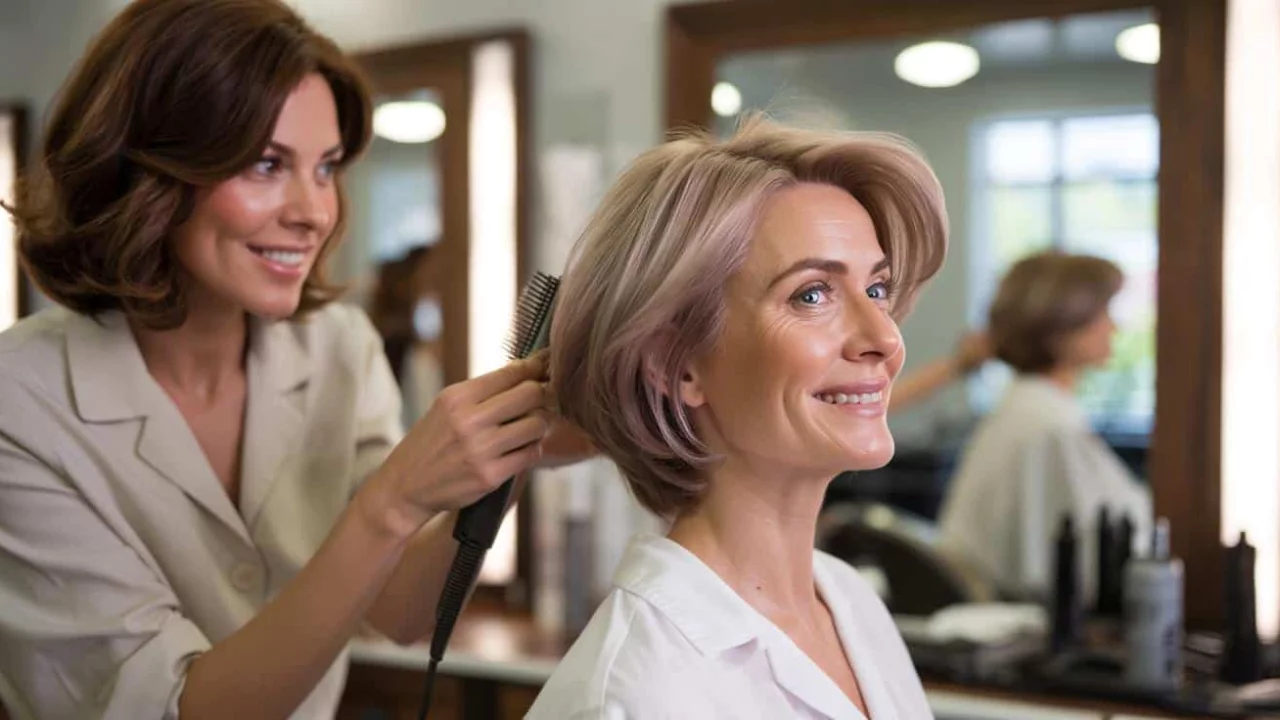
The woman in my chair twisted her fingers together as if they were strands of hair. “Be honest,” she said, “am I destined to have flat, sad hair forever now that I’m over 50?”
The salon was quiet, just the hum of the dryer in the background and the slight embarrassment in her voice. I’ve heard that same question, in dozens of versions, for more than twenty years as a hairdresser.
Her hair was fine, soft, and starting to recede slightly at the temples. Classic post-50 texture. Classic “I don’t recognize myself anymore” feeling. She wanted volume, lightness, and something that didn’t take an hour and three products every morning. She expected me to pull out a magazine and talk about layers. Instead, I talked about one specific cut. And her whole expression changed.
The pixie-bob: my go-to short haircut for fine hair after 50
When a client over 50 with fine hair sits down and asks for a fresh start, my answer is almost always the same: a softly layered pixie-bob hybrid. Not the super-short, shaved-at-the-nape pixie that scares half my clients. A gentle blend between a pixie and a bob, with a bit of length around the ears and softness at the nape.
“The pixie-bob is transformative because it works with fine hair’s natural tendencies instead of fighting them,” explains master stylist Jennifer Rodriguez, who’s been cutting hair for over 15 years. “Fine hair wants to lie close to the head, so we embrace that and create shape that enhances rather than overwhelms.”
This shape hugs the head, gives the illusion of density, and lifts the face. The hair doesn’t hang. It floats. On fine hair, that single detail changes everything. Suddenly the jawline looks sharper, the neck lighter, the eyes brighter. You’re not hiding under your hair anymore. You’re framed by it.
One of my regulars, Catherine, 58, arrived one day with a photo of herself at 30. Shoulder-length blowout, thick fringe, the whole volume fantasy. “I want this back,” she said. Her current hair barely covered her collar and looked limp no matter what she tried. Six weeks later, sporting her new pixie-bob, she sent me a selfie with the caption: “I look like myself again.”
Why this short haircut works so well for fine hair
Fine hair faces unique challenges after 50. Hormonal changes reduce hair density, individual strands become thinner, and the scalp often becomes more visible. Traditional long styles can emphasize these issues, making hair appear stringy or lifeless.
The pixie-bob addresses these concerns through strategic design:
- Concentrated volume: Shorter length means hair doesn’t get weighed down by its own weight
- Strategic layering: Multiple lengths create the illusion of thickness and movement
- Face-framing angles: Softly graduated layers around the face provide lift and structure
- Manageable styling: Less hair means faster morning routines and better hold for styling products
- Growth-friendly shape: The cut maintains its integrity even as hair grows out
“I see women transform their entire presence with this cut,” says celebrity stylist Marcus Chen. “It’s not just about the hair—it’s about reclaiming confidence and embracing a new chapter.”
| Hair Length | Styling Time | Product Needed | Volume Achievement |
|---|---|---|---|
| Shoulder-length | 15-25 minutes | 3-4 products | Minimal |
| Bob (chin-length) | 10-15 minutes | 2-3 products | Moderate |
| Pixie-bob | 5-10 minutes | 1-2 products | Maximum |
The key is in the execution. I start with damp hair, creating soft layers that graduate from about two inches at the crown to slightly longer pieces around the perimeter. The nape gets textured but not buzzed, maintaining femininity while removing weight.
Real transformations I’ve witnessed in my chair
Maria walked into my salon last spring looking defeated. At 52, she’d been growing out a failed attempt at long layers for eight months. Her fine hair hung flat against her head, making her face appear drawn and tired.
“I used to have such thick hair,” she told me, running her fingers through the sparse ends. “Now I feel invisible.”
Three hours later, she was taking selfies in the salon mirror. The pixie-bob had revealed cheekbones she’d forgotten she had and gave her hair more apparent volume than she’d seen in years. But more than that, she looked vibrant again.
“The psychological impact of the right short haircut for fine hair cannot be overstated,” notes hair psychology expert Dr. Sarah Williams. “When women feel good about their hair, it affects their posture, their confidence, their entire interaction with the world.”
I’ve watched this transformation hundreds of times. Linda, 61, hadn’t cut her hair above her shoulders in thirty years. She emerged from my chair looking ten years younger. Janet, 54, finally stopped wearing hats everywhere. Susan, 49, started dating again after her divorce.
The cut works because it’s honest about what fine hair can and cannot do. Instead of trying to create volume where none exists naturally, it redistributes existing hair to maximum effect. Every strand has a purpose, a direction, a role in the overall shape.
Styling becomes intuitive. A small amount of mousse worked through damp hair, a quick blow-dry with a round brush, maybe a light mist of texture spray. That’s it. The shape does the work.
“I recommend this cut to about 80% of my clients over 50 with fine hair,” says veteran stylist Rebecca Martinez, who’s been in the industry for 25 years. “It’s incredibly versatile and ages beautifully. Plus, it grows out gracefully, which is crucial for busy women.”
The woman from my opening story? Three months later, she booked her daughter for the same cut. “I want to look as confident as my mom,” the daughter said. That’s when you know you’ve found the right style.
Fine hair after 50 doesn’t have to mean compromising on style or settling for “practical” cuts that leave you feeling invisible. The right short haircut can be the most liberating decision you make for yourself. It’s not about giving up on beautiful hair—it’s about discovering what beautiful hair actually looks like on you, right now, exactly as you are.
FAQs
How often do I need to trim a pixie-bob to maintain its shape?
Every 4-6 weeks for optimal shape, though it looks good growing out for up to 8 weeks.
Can I still wear headbands and hair accessories with this cut?
Absolutely. Short hair actually showcases accessories better than long hair, and headbands can add variety to your styling.
What if I have cowlicks or unusual growth patterns?
A skilled stylist will work with your natural growth patterns, not against them. The pixie-bob is actually great for camouflaging cowlicks.
Will this cut work if I have curly fine hair?
Yes, but the approach changes slightly. Curly fine hair benefits from different layering techniques that enhance natural texture rather than fighting it.
How do I find a stylist who understands fine hair?
Look for stylists who specialize in mature women’s hair or who have experience with fine textures. Ask to see photos of their work on similar hair types.
What’s the biggest mistake people make when styling this cut?
Using too much product. Fine hair gets weighed down easily, so less is always more with styling products.











Leave a Comment