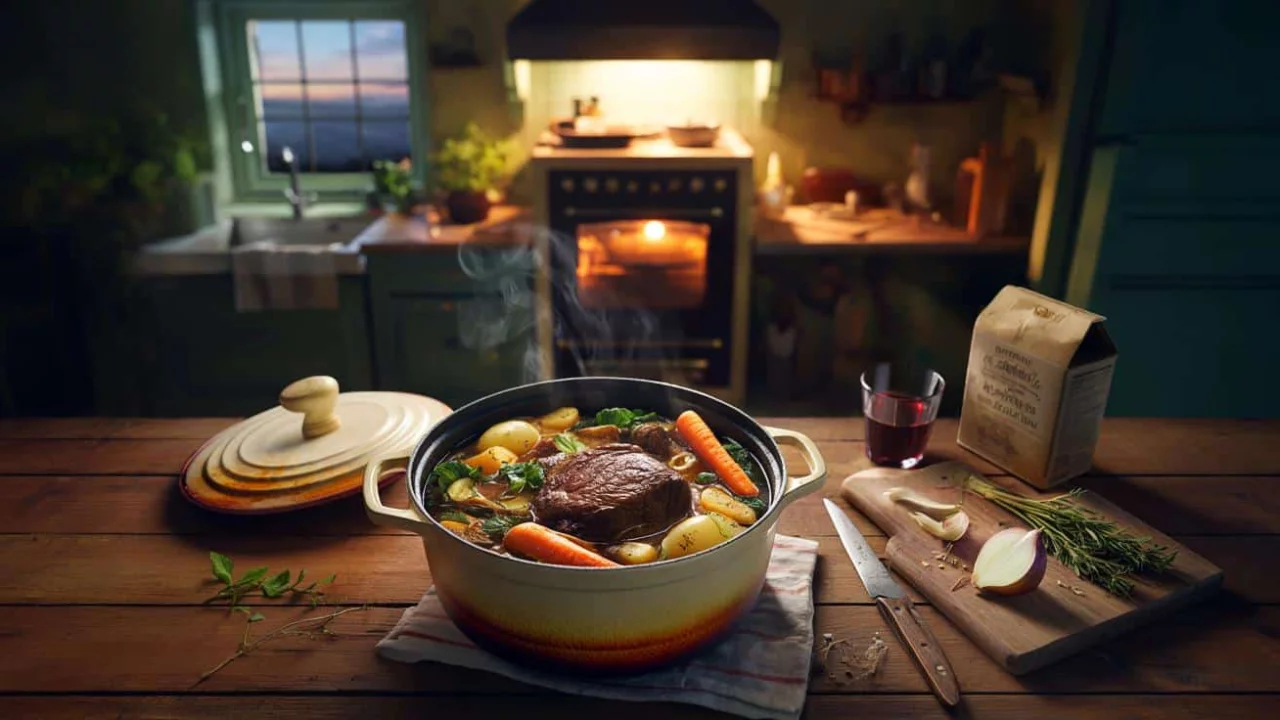
Sarah learned about slow oven cooking the hard way. After a brutal week of takeout dinners and microwave meals, she came home on Friday evening feeling completely drained. Her grandmother’s old Dutch oven sat unused in the cupboard, a wedding gift she’d barely touched in two years of marriage. That night, something made her pull it out.
She threw in whatever she had: some chicken thighs, half a bag of baby potatoes, an onion that was starting to sprout. Three hours later, her tiny apartment smelled like home for the first time since moving in. Her neighbor knocked on the door just to ask what was cooking.
That’s when Sarah discovered what thousands of home cooks already know: a slow oven dish doesn’t just feed you. It changes your entire evening, your whole weekend, sometimes your whole approach to cooking.
Why slow oven dishes create unforgettable comfort
A slow oven dish works differently than any other cooking method. While stovetop cooking demands constant attention and grilling requires perfect timing, slow oven cooking operates on patience and trust. You set the temperature low, usually between 140°C to 180°C (285°F to 350°F), and let time do the heavy lifting.
“The magic happens in that sweet spot between 150°C and 160°C,” explains culinary instructor Maria Rodriguez. “That’s where tough collagen breaks down into gelatin, where flavors meld instead of competing, where even the most basic ingredients transform into something special.”
The science behind this transformation is fascinating. Low, steady heat allows proteins to break down gradually without seizing up. Root vegetables slowly release their starches, creating natural thickeners. Aromatics like onions and garlic become sweet and mellow rather than sharp.
But the real comfort comes from the process itself. There’s something deeply satisfying about preparing ingredients in the afternoon, sliding the pot into the oven, and knowing dinner is essentially done. No last-minute scrambling. No burnt pans. No stress.
Essential elements that make every slow oven dish successful
Creating a memorable slow oven dish isn’t about following complex recipes. It’s about understanding a few key principles that work every time. Here’s what separates good slow cooking from great slow cooking:
- Choose the right cuts: Tough, inexpensive cuts like chuck roast, pork shoulder, or chicken thighs work best
- Build layers of flavor: Brown meat first, sauté aromatics, deglaze the pan
- Use enough liquid: Stock, wine, or even water prevents burning and creates steam
- Size matters: Cut vegetables uniformly so they cook evenly
- Keep the lid on: Every peek releases heat and adds 15 minutes to cooking time
The beauty of slow oven cooking lies in its flexibility. You can start with a basic formula and adapt it endlessly based on what’s in your fridge.
| Base Ingredient | Cooking Time | Internal Temperature | Best Vegetables |
|---|---|---|---|
| Beef chuck | 3-4 hours | 90°C (195°F) | Carrots, potatoes, onions |
| Pork shoulder | 4-5 hours | 88°C (190°F) | Apples, sweet potatoes, fennel |
| Chicken thighs | 2-3 hours | 74°C (165°F) | Root vegetables, tomatoes |
| Lamb shoulder | 3-4 hours | 85°C (185°F) | Potatoes, rosemary, garlic |
“I tell my students to think of slow oven cooking as organized procrastination,” says chef David Chen, who teaches weekend cooking classes. “You do a little work upfront, then the oven does everything else while you live your life.”
How slow cooking transforms ordinary ingredients into memories
The real magic of a slow oven dish happens in those final thirty minutes. The house fills with aroma that’s impossible to replicate any other way. It’s not just the smell of food cooking – it’s the scent of time itself, of patience rewarded, of comfort being created molecule by molecule.
This transformation extends beyond the kitchen. Families naturally gather when something’s been slow-cooking all day. Conversations happen over the anticipation. Kids learn that good things take time. Adults remember why they fell in love with cooking in the first place.
“There’s something primal about slow cooking,” notes food anthropologist Dr. Linda Park. “It connects us to thousands of years of human cooking traditions. Before gas ranges and microwave ovens, this was simply how people cooked.”
The nutritional benefits are remarkable too. Slow, moist heat preserves more vitamins than high-heat cooking methods. The gelatin released from bones and connective tissue supports joint health. The process itself requires minimal added fats since ingredients cook in their own juices.
But perhaps most importantly, slow oven dishes teach us about delayed gratification in a world obsessed with instant everything. They remind us that some pleasures are worth waiting for, that the best comfort food isn’t fast food – it’s slow food, made with intention and enjoyed with gratitude.
The leftovers tell their own story. A slow oven dish often tastes even better the next day, after flavors have had more time to meld. These are the meals that fill containers in freezers, the dishes that get passed down through generations, the recipes that become family legends.
Home cook Jennifer Walsh puts it perfectly: “My grandmother’s pot roast recipe isn’t just about the ingredients. It’s about the Sunday afternoons we spent together while it cooked, the stories she told while we waited, the way the whole house felt warm and safe. That’s what a real slow oven dish gives you – not just dinner, but a feeling you carry with you.”
FAQs
What temperature should I use for slow oven cooking?
Most slow oven dishes work best between 140°C to 180°C (285°F to 350°F), with 160°C (325°F) being the sweet spot for most recipes.
How do I know when a slow oven dish is done?
The meat should easily pull apart with a fork, and vegetables should be tender throughout. Internal temperature should reach safe levels for your protein.
Can I prep slow oven dishes ahead of time?
Yes, you can prep ingredients the night before and refrigerate, but add an extra 30 minutes to cooking time if starting from cold.
What’s the best type of pot for slow oven cooking?
Heavy-bottomed pots with tight-fitting lids work best. Cast iron, enameled cast iron, or heavy ceramic dishes retain and distribute heat evenly.
Why does my slow oven dish come out dry?
Usually from too high heat or not enough liquid. Keep temperature under 180°C and ensure there’s enough stock or wine to create steam.
Can I open the oven to check on my dish?
Try to resist – every time you open the oven, you lose heat and extend cooking time. Trust the process and check only after the minimum cooking time has passed.









Leave a Comment