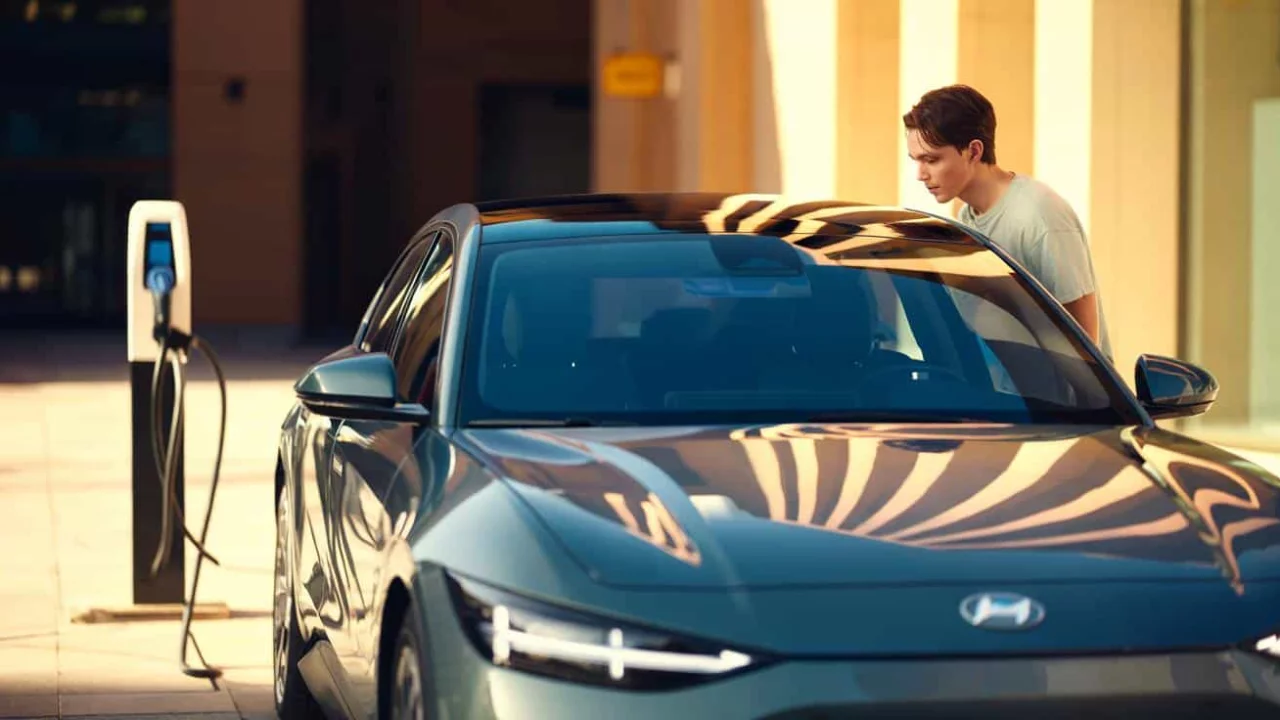
Mark watched his neighbor Dave installing solar panels on his newly purchased electric car with a mix of admiration and envy. “That’s it,” Dave announced proudly, wiping his hands after the afternoon installation. “No more charging stations for me. Pure sunshine power from here on out.”
Six months later, Mark noticed Dave’s car plugged into the same charging cable every evening. When he asked about the solar setup, Dave’s enthusiasm had dimmed considerably. “Well, it helps a bit,” he admitted sheepishly. “But nowhere near what I expected.”
Dave’s experience mirrors that of countless drivers who believed solar panels on electric cars would revolutionize their daily commute. The reality, however, tells a very different story about the limits of physics and the power of marketing promises.
When Solar Dreams Meet Mathematical Reality
The concept sounds absolutely brilliant in theory. Sleek photovoltaic cells integrated into your car’s bodywork, silently converting sunlight into miles of free driving. Car manufacturers have embraced this vision with glossy promotional materials showing vehicles basking in golden hour light, promising “unlimited range” and “freedom from charging infrastructure.”
But here’s where the numbers get uncomfortable. Take the popular Hyundai Ioniq 5, which consumes roughly 17 kWh per 100 kilometers of driving. To gain just 80 kilometers of additional range, you’d need about 13.6 kWh of energy stored in your battery.
Now imagine your car has a 500-watt solar panel system on the roof – that’s actually quite generous for most installations. For those panels to generate 13.6 kWh of power, they would need to operate at full capacity for nearly 28 continuous hours of perfect sunshine. In a single day.
“The harsh truth is that Earth only gives us about 12 hours of daylight, and maybe five of those hours provide strong, direct sunlight,” explains renewable energy consultant Sarah Mitchell. “Even in the most optimistic scenarios, you’re looking at 2.5 kWh per day, which translates to less than 15 kilometers of actual driving range.”
The Power Gap Nobody Talks About
The disappointment becomes crystal clear when you compare solar panels on electric cars to other charging methods. The difference in power delivery is staggering:
| Charging Method | Power Output | Time to Add 100km Range |
|---|---|---|
| Car roof solar panels | 0.5-1.2 kW | 14-28 hours |
| Home wall socket | 2.3 kW | 7 hours |
| Public AC charger | 7-22 kW | 45 minutes – 2.5 hours |
| Ultra-rapid DC charger | 150-350 kW | 3-7 minutes |
Your car’s solar roof produces roughly 40 times less power than plugging into a basic household outlet. Compared to highway fast chargers, it’s hundreds of times weaker. Modern electric vehicle batteries can actually accept charging speeds exceeding 500 kW in cutting-edge setups, making that kilowatt of solar power look almost laughably small.
“People see those sleek panels and think ‘free energy,’ but they don’t realize they’re essentially trying to fill a swimming pool with a garden hose,” notes automotive engineer James Rodriguez. “The surface area just isn’t there.”
Consider this: a typical EV battery holds 60-100 kWh of energy. Recharging that capacity purely from solar panels would require parking your car in perfect sunlight for multiple full days. The dream of leaving your car in the office parking lot and driving home with a full battery simply doesn’t align with physics.
Real Companies, Real Disappointments
Several ambitious startups bet everything on the solar car revolution, and their stories reveal the harsh economics behind the technology. German company Sono Motors spent years developing the Sion, a compact electric vehicle covered in solar cells. Their boldest claim? Up to 30 kilometers of daily solar range under ideal conditions.
Dutch firm Lightyear pushed even harder, promising their Lightyear One could gain 70 kilometers per day from integrated solar panels. Both companies generated massive media attention and investor interest with their revolutionary vision.
Yet even those optimistic figures represented only about 10% of each vehicle’s total advertised range. The remaining 90% still required conventional charging from the electrical grid. When investors began scrutinizing the numbers, harsh questions emerged about cost-effectiveness and consumer value.
The economics proved brutal. Integrating high-quality solar panels into automotive body panels costs thousands of dollars per vehicle. For that investment, buyers received what amounts to a few extra kilometers per day under perfect weather conditions.
“The marketing showed cars driving endlessly on sunshine, but the engineering reality was much more modest,” admits former Lightyear engineer Maria Santos. “We were essentially selling very expensive insurance against being stranded with a dead battery.”
Both companies have since scaled back their ambitious solar integration plans, focusing instead on more conventional electric vehicle development. Sono Motors completely abandoned their solar car project in early 2023, citing insurmountable economic challenges.
Who Actually Benefits from Solar Panels on Electric Cars
Despite the limitations, solar panels on electric cars aren’t entirely useless. They work best for specific use cases and driving patterns:
- Commuters with short daily drives: If you only drive 20-30 kilometers per day, solar panels might cover a meaningful portion of your energy needs
- Long-term parkers: Airport employees or people who leave cars parked for weeks at a time can accumulate useful amounts of solar energy
- Auxiliary power users: Solar panels excel at running air conditioning, heating, or electronics while parked, reducing battery drain
- Emergency backup: In remote areas or emergency situations, even small amounts of solar charging could provide crucial mobility
The technology also shows promise for specific vehicle types. Delivery vans and commercial vehicles that park predictably during daylight hours see better returns on solar investment than personal cars with erratic schedules.
“Solar makes sense as a supplementary technology, not a primary charging solution,” explains transport analyst David Kim. “Think of it like regenerative braking – every bit helps, but you still need conventional charging infrastructure.”
Several mainstream manufacturers now offer solar roof options as premium accessories rather than core features. Toyota includes solar panels on some Prius models primarily to power ventilation systems. Hyundai’s solar roof option on the Sonata Hybrid adds modest range while keeping cabin temperatures down in parking lots.
The future might bring more efficient solar cells and larger integration areas, but physics sets hard limits on what’s possible. Until solar panel efficiency increases dramatically or car energy consumption drops significantly, the dream of a truly self-sufficient solar car remains just that – a dream.
For now, the most honest assessment is this: solar panels on electric cars are an expensive way to gain a few extra kilometers of daily range while feeling good about renewable energy integration. They’re not the revolutionary charging solution early adopters hoped they would be.
FAQs
How much extra range can solar panels actually add to an electric car?
In optimal conditions, expect 10-20 kilometers of additional range per day from a typical solar roof installation.
Are solar panels on cars worth the extra cost?
For most drivers, the high installation cost doesn’t justify the modest range benefits, though they can help with auxiliary power needs.
Why don’t electric cars come with solar panels as standard equipment?
The cost-to-benefit ratio doesn’t make economic sense for most consumers, and the technology adds significant complexity to manufacturing.
Do solar panels work when the car is driving?
Yes, but efficiency drops due to changing angles, shadows, and less optimal positioning compared to stationary parking.
Could future solar technology make solar cars viable?
Significant improvements in solar cell efficiency and reductions in vehicle energy consumption could make solar cars more practical, but major breakthroughs would be required.
What’s the best use case for solar panels on electric vehicles?
They work best for vehicles that park in sunny locations for extended periods and have relatively low daily driving requirements.











Leave a Comment