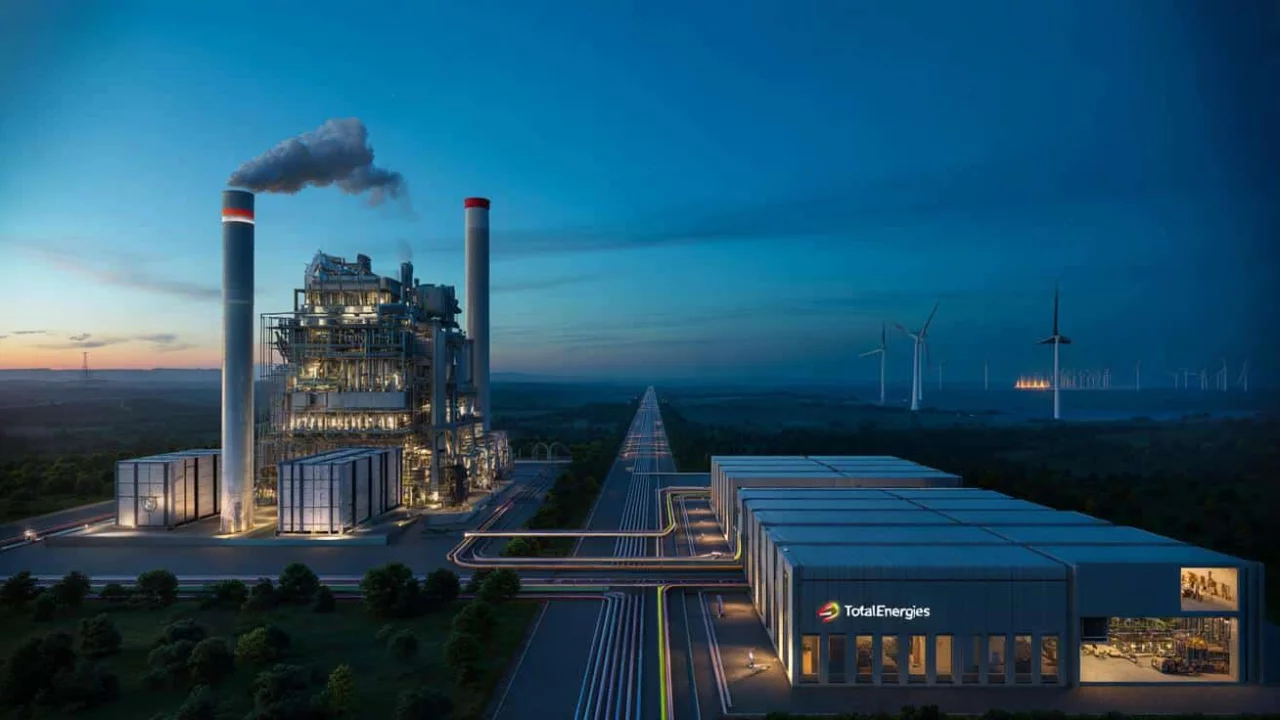
Maria switched on her electric kettle for her morning coffee, just like she’s done every day for the past decade. But what she doesn’t know is that the power flowing into her kitchen in Prague might soon be controlled by a French energy giant thousands of kilometers away. It’s a small example of how Europe’s energy landscape is quietly reshaping itself, one massive deal at a time.
This isn’t just about corporate boardrooms and billion-dollar transactions. It’s about who controls the electricity that powers your home, charges your phone, and keeps the lights on when the wind stops blowing and the sun goes down.
That reality hit home this week when TotalEnergies announced its stunning €5.1 billion takeover of European energy assets, creating what industry insiders are calling a new continental powerhouse with French DNA.
The Deal That’s Rewiring European Energy
The TotalEnergies takeover centers on a Czech company most people have never heard of, but which quietly controls a massive network of power plants across Western Europe. Energetický a průmyslový holding (EPH) has been the continent’s most aggressive buyer of energy assets that other companies didn’t want.
Now TotalEnergies is paying €5.1 billion for a 50% stake in EPH’s flexible power portfolio. But here’s the twist: they’re not paying in cash. Instead, they’re issuing nearly 100 million new shares, making EPH a significant shareholder in the French energy giant.
“This isn’t just an acquisition, it’s a marriage,” says energy analyst Henrik Olsen from Copenhagen Energy Partners. “TotalEnergies gets immediate access to crucial backup power capacity, while EPH gets a seat at the table of one of Europe’s most powerful energy companies.”
The combined portfolio is massive. We’re talking about more than 14 gigawatts of installed capacity, with another 5 gigawatts in development. To put that in perspective, that’s enough to power roughly 20 million European homes when needed.
But the real value lies in what industry experts call “flexible” power – facilities that can quickly start up when renewable energy isn’t available and shut down when it is. Think of them as Europe’s energy insurance policy.
What This Mega-Deal Actually Includes
The TotalEnergies takeover package reads like a shopping list of Europe’s backup energy infrastructure:
- Gas-fired power plants across Germany, Italy, and the UK
- Biomass facilities that burn wood pellets and agricultural waste
- Large-scale battery storage systems for grid stabilization
- Combined heat and power units serving industrial customers
- Development rights for future renewable projects
Here’s how the numbers break down across key markets:
| Country | Capacity (GW) | Technology Mix | Status |
|---|---|---|---|
| Germany | 4.2 | Gas, biomass, batteries | Operational |
| Italy | 3.1 | Gas, solar hybrid | Operational |
| United Kingdom | 2.8 | Gas, battery storage | Operational |
| France | 1.9 | Biomass, batteries | Under construction |
| Czech Republic | 2.4 | Gas, coal conversion | Mixed |
“The beauty of this portfolio is its geographic spread and technology diversity,” explains Dr. Sarah Mitchell, who tracks European energy mergers for London-based research firm GridWatch Analytics. “TotalEnergies isn’t just buying power plants, they’re buying strategic positions in every major European electricity market.”
The deal structure reveals just how committed both sides are to making this work. By paying with shares rather than cash, TotalEnergies is essentially saying: “We want you as a partner, not just a seller.”
Why Your Electricity Bill Might Never Be the Same
This TotalEnergies takeover matters because it fundamentally changes how backup power works across Europe. When wind turbines stop spinning in Germany or solar panels go dark in Italy, these are the facilities that keep the electricity flowing.
The timing couldn’t be more critical. Europe is racing to meet aggressive renewable energy targets, but renewable power comes with a built-in problem: it’s unpredictable. Solar panels don’t work at night, and wind turbines sit idle when the air is still.
That’s where flexible power assets become crucial. They’re the energy equivalent of a spare tire – you hope you don’t need them, but you’re grateful they’re there when you do.
“Think about it from a consumer perspective,” says energy economist Prof. Marco Benedetti from Milan’s Bocconi University. “When everyone in your neighborhood turns on their air conditioning during a summer heatwave, these backup facilities ensure your power doesn’t cut out.”
The scale of this new entity under French control means TotalEnergies can now offer something few companies can: guaranteed power supply across multiple countries, regardless of weather conditions.
For households, this could mean more stable electricity prices during peak demand periods. For businesses, especially energy-intensive industries like steel and chemicals, it offers supply security that’s becoming increasingly valuable.
But there are concerns too. Critics worry that concentrating so much backup power capacity under one roof could reduce competition and potentially increase costs for consumers in the long run.
“We’re seeing the emergence of energy mega-corporations that dwarf anything we’ve seen before,” warns consumer advocate Elena Rodriguez from Brussels-based Energy Justice Europe. “The question is whether regulators can ensure these giants serve consumers’ interests, not just shareholder profits.”
The European Commission will need to approve the TotalEnergies takeover, but early signals suggest regulators view flexible power capacity as essential for energy security. The deal aligns with EU goals of reducing dependence on Russian energy while maintaining grid stability.
Looking ahead, this transaction sets a template for how Europe’s energy transition might unfold. Rather than purely national champions, we’re likely to see more cross-border energy alliances that can operate at continental scale.
For TotalEnergies, the takeover represents a bet that flexible power will become increasingly profitable as renewable energy expands. For EPH, it’s validation that their decade-long strategy of accumulating unloved assets was prescient.
The real winners might be European consumers, who get more secure electricity supply, and European businesses, which gain access to flexible power contracts that can adapt to changing energy markets.
FAQs
What exactly is TotalEnergies buying for €5.1 billion?
TotalEnergies is acquiring a 50% stake in a portfolio of gas-fired power plants, biomass facilities, and battery storage systems across Europe, totaling over 14 gigawatts of capacity.
Why is TotalEnergies paying with shares instead of cash?
The share-based payment structure creates a long-term partnership between TotalEnergies and EPH, making EPH a significant shareholder with roughly 4.1% of TotalEnergies’ capital.
How will this affect electricity prices for consumers?
The deal could lead to more stable electricity pricing during peak demand periods, but some critics worry about reduced competition potentially increasing long-term costs.
Which countries are most affected by this takeover?
Germany, Italy, the UK, France, and the Czech Republic will see the most impact, as these markets contain the largest concentrations of the acquired power assets.
When will the TotalEnergies takeover be completed?
The deal still requires European Commission approval, with completion expected by late 2026, assuming regulatory clearance.
What makes this different from other energy company mergers?
Unlike traditional utility mergers, this deal specifically focuses on “flexible” power assets that can quickly respond to renewable energy fluctuations, making it crucial for Europe’s green transition.











Leave a Comment