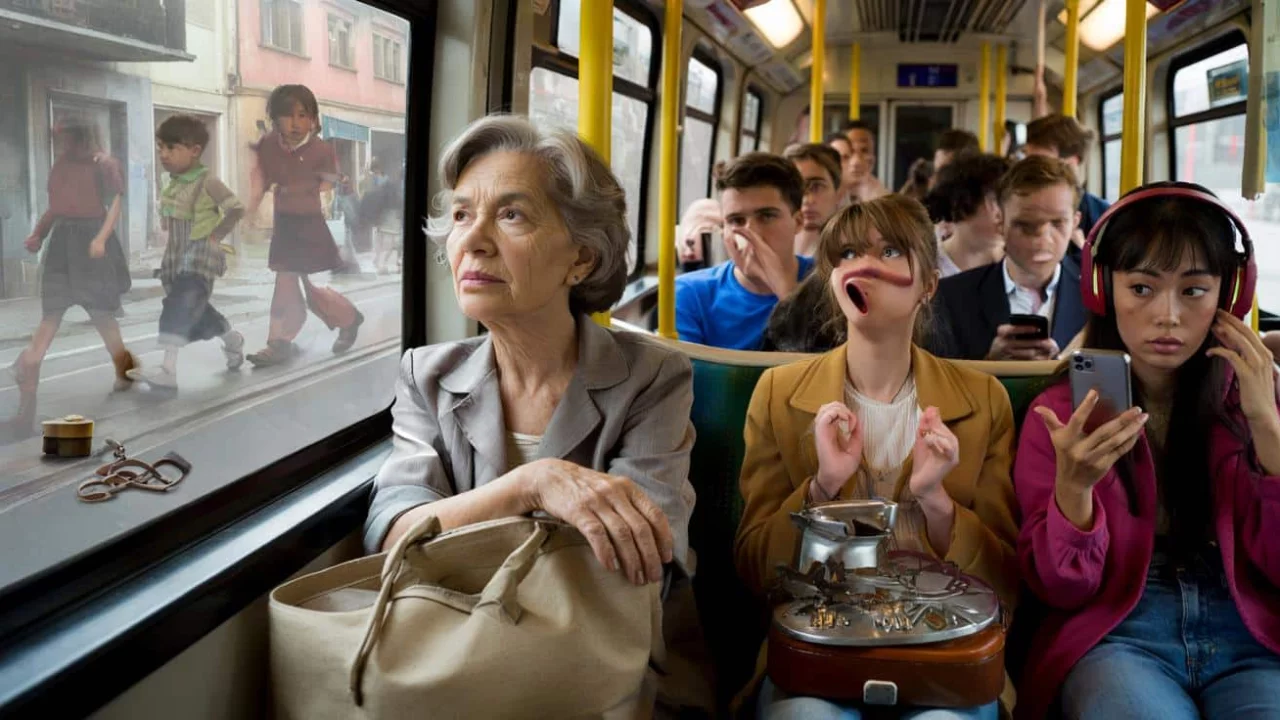
Sarah watches her 16-year-old daughter scroll through TikTok, eyes rolling at another video about “trauma parenting.” The teen pauses the screen and turns to her mother. “Mom, you literally had to walk home alone from school every day when you were eight. That’s literally child abandonment by today’s standards.” Sarah blinks, remembering those afternoon walks through her neighborhood in 1975 – the crunch of autumn leaves, stopping to pet Mrs. Henderson’s dog, the quiet pride of making it home safely with her house key tied around her neck.
What her daughter calls trauma, Sarah remembers as just… childhood. No helicopter parents, no scheduled playdates, no constant supervision. Just kids figuring things out on their own, one small challenge at a time.
This generational divide isn’t just about parenting styles – it’s about fundamentally different definitions of strength, safety, and what constitutes healthy child development. What psychologists are discovering is that both perspectives hold pieces of truth about how children develop resilience.
The Mental Armor That Built a Generation
People raised in the 1960s and 1970s developed what trauma parenting discussions today might label as survival mechanisms. But psychological research suggests these weren’t just coping strategies – they were genuine mental strengths forged through everyday independence.
“Children who had age-appropriate responsibility and managed small challenges independently often developed stronger self-efficacy beliefs,” explains Dr. Maria Chen, a developmental psychologist. “They learned they could handle problems because they actually did handle problems regularly.”
The latchkey kid phenomenon created millions of children who came home to empty houses, managed their own afternoon routines, and solved problems without immediate adult intervention. When the power went out, they called neighbors. When siblings fought, they worked it out themselves. When they were bored, they found something to do.
This daily practice built seven distinct mental strengths that researchers can measure today:
- Self-reliance – The deep belief that “I can figure this out”
- Frustration tolerance – Ability to sit with discomfort without immediate relief
- Delayed gratification – Waiting for rewards without constant entertainment
- Emotional regulation – Managing feelings privately before seeking help
- Problem-solving persistence – Trying multiple solutions before giving up
- Social resilience – Bouncing back from peer conflicts and criticism
- Boredom tolerance – Finding internal resources when unstimulated
Why Modern Psychology Questions These “Strengths”
The conversation around trauma parenting has revealed the hidden costs of this approach. Mental health professionals now recognize that some of what looked like strength was actually adaptive responses to neglect or emotional unavailability.
“The child who never cries for help might not be resilient – they might have learned that crying doesn’t bring help,” notes Dr. James Rodriguez, who specializes in generational trauma. “Some of these ‘strengths’ came at the expense of emotional development and secure attachment.”
Today’s parents see the gaps in their own upbringing and swing toward more supportive, emotionally available parenting. They validate feelings, provide constant communication, and create safety through presence rather than independence.
| 1960s-70s Approach | Modern Trauma-Informed Approach | Potential Outcome |
|---|---|---|
| “Stop crying, you’re fine” | “I see you’re upset, tell me what happened” | Emotional validation vs. self-soothing skills |
| “Figure it out yourself” | “Let’s solve this together” | Independence vs. secure help-seeking |
| “Life’s not fair, deal with it” | “That must feel really hard” | Resilience vs. empathy and processing |
| “Walk it off” | “Do you need a break or some comfort?” | Pain tolerance vs. self-care awareness |
The challenge isn’t that either approach is entirely wrong – it’s that both carry trade-offs that affect how children develop emotionally and mentally.
The Real-World Impact of This Generational Divide
This psychological shift affects millions of families navigating different definitions of strength and support. Parents who grew up with trauma parenting methods often struggle to understand their children’s need for emotional validation and constant communication.
“My mom thinks I’m coddling my kids because I talk through their feelings instead of telling them to toughen up,” says Jessica, a mother of two. “But I saw how that ‘toughness’ affected my ability to connect emotionally as an adult.”
The workplace reflects this divide too. Older employees often show higher tolerance for difficult conditions, unclear expectations, and minimal feedback. Younger workers seek more guidance, emotional support, and work-life boundaries.
“Neither generation is wrong about what they need,” explains workplace psychologist Dr. Amanda Liu. “We’re seeing the results of two completely different developmental approaches playing out in real time.”
The mental health implications are complex. People raised with 1960s-70s methods show lower rates of anxiety around daily challenges but higher rates of alexithymia – difficulty identifying and expressing emotions. They excel in crisis situations but may struggle with emotional intimacy.
Meanwhile, children raised with trauma-informed parenting show stronger emotional intelligence and communication skills but sometimes lower tolerance for frustration and discomfort. They’re better at seeking help but may struggle more with independent problem-solving.
The solution isn’t choosing sides in this generational debate. Instead, psychologists suggest integrating the genuine strengths from both approaches while addressing their respective blind spots.
Parents today can build resilience through age-appropriate challenges while maintaining emotional connection. Children can learn self-reliance through supported independence rather than abandonment. They can develop frustration tolerance through gradual exposure rather than sink-or-swim situations.
“The goal is raising children who can both handle challenges independently and seek support when needed,” says Dr. Chen. “That requires combining the practical strengths of older parenting with the emotional awareness of newer approaches.”
FAQs
Is trauma parenting always harmful to children?
Not necessarily – some aspects built genuine resilience, but often at the cost of emotional development and secure attachment patterns.
Can adults who experienced trauma parenting heal those patterns?
Yes, therapy and conscious parenting practices can help people develop the emotional skills they missed while keeping the strengths they gained.
Are kids today really less resilient than previous generations?
They show different types of resilience – better emotional regulation and help-seeking, but sometimes lower tolerance for discomfort and independent problem-solving.
How can parents balance independence with emotional support?
Provide challenges that are age-appropriate while remaining emotionally available, teaching both self-reliance and healthy help-seeking behaviors.
What’s the best approach for raising resilient children today?
Combining supported independence with emotional validation – letting children face manageable challenges while providing the emotional scaffolding they need to process experiences.
Will this generational divide ever resolve itself?
As research evolves, parenting approaches will likely continue adapting to balance the genuine benefits of both independence-building and emotional support.










Leave a Comment