Li Wei stares at his electricity bill in disbelief. Another scorching Beijing summer has pushed his air conditioning costs through the roof, and the monthly payment feels like a punch to the gut. But then he remembers something his neighbor mentioned – something about his electric car actually making money while it sits in the parking garage downstairs.
It sounds too good to be true, but Li’s neighbor isn’t the only one talking. Across China, a quiet revolution is brewing in apartment complexes and office parking lots. The same electric vehicles that have transformed China’s roads are about to get a second job: powering the nation’s homes and businesses.
This isn’t science fiction. It’s happening right now, and it could change everything about how we think about energy, transportation, and even our monthly bills.
How China Plans to Turn 40 Million Cars Into a Massive Battery
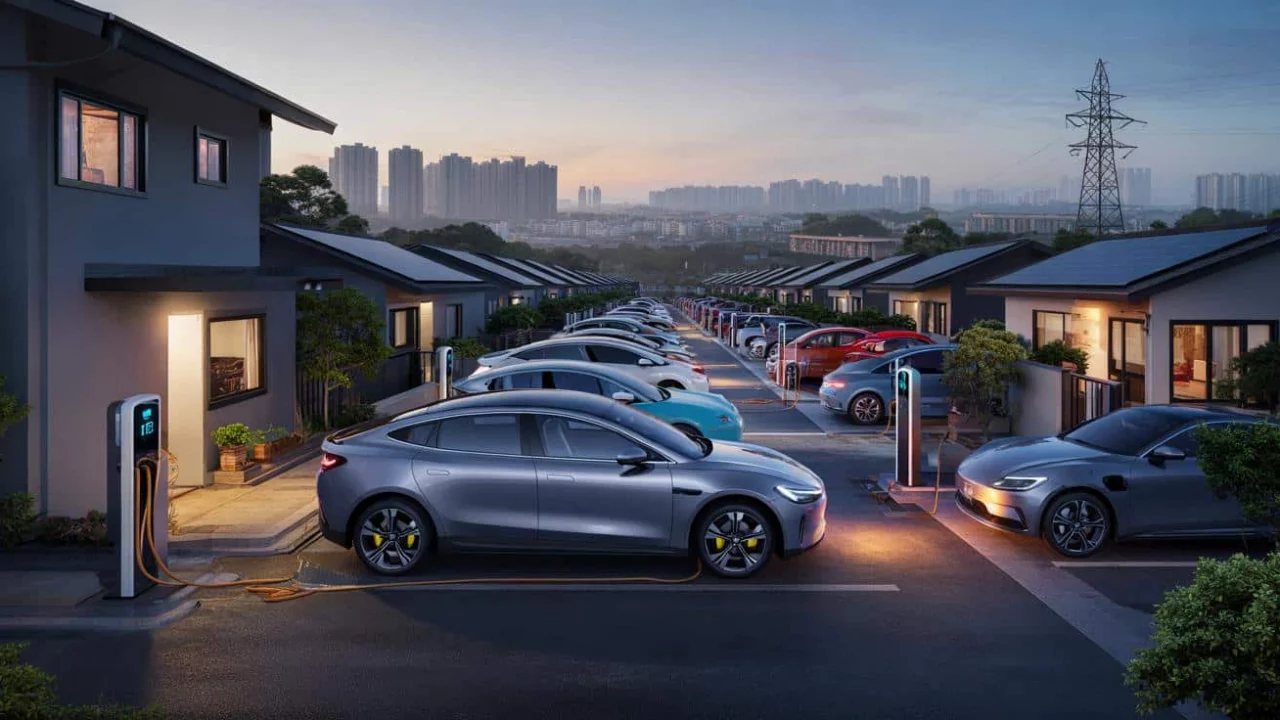
Vehicle-to-grid technology is exactly what it sounds like – your parked electric car becomes a mini power plant. Instead of just sitting there draining your parking meter, it’s quietly feeding electricity back into the grid when the city needs it most.
The concept relies on special “bidirectional” charging stations that work like a two-way street for electricity. When power is cheap and abundant, usually at night, your car charges up. When demand spikes during those sweltering summer afternoons when everyone cranks up their air conditioners, your car sells some of that stored energy back to the grid.
“We’re essentially creating the world’s largest distributed battery system,” explains Dr. Chen Ming, an energy systems researcher at Beijing University of Technology. “Every parked EV becomes a node in a vast energy network.”
The numbers behind China’s vehicle-to-grid ambitions are staggering. With over 40 million electric vehicles already on Chinese roads, the potential energy storage capacity dwarfs anything the world has seen. If even a fraction of these vehicles participated in vehicle-to-grid programs, China would control more mobile energy storage than several nuclear power plants combined.
Right now, the program is small – just 30 bidirectional charging stations across nine cities. But Beijing’s targets are anything but modest. By 2027, officials want 5,000 stations operational. By 2030, they’re aiming for a system that can handle up to 1 billion kilowatts of power exchange between electric vehicles and the national grid.
What’s In It for You: The Money Behind Vehicle-to-Grid
Early trial participants are already seeing real money from vehicle-to-grid technology. According to government pilot data, drivers can earn up to 1,400 yuan (roughly $170) for a full discharge session. That’s not pocket change – it’s enough to cover a month’s worth of groceries for many families.
Here’s how the economics break down:
| Time Period | Electricity Cost | Action | Your Benefit |
|---|---|---|---|
| Night (Low Demand) | 0.3 yuan/kWh | Car charges up | Cheap energy costs |
| Peak Hours (High Demand) | 0.8 yuan/kWh | Car sells back to grid | Earn 0.8 yuan/kWh |
| Extreme Peak | 1.2+ yuan/kWh | Premium discharge rate | Maximum earnings |
The financial incentives extend beyond individual payments. Vehicle-to-grid participants typically enjoy:
- Significantly reduced overall driving costs through energy arbitrage
- Priority access to charging stations during busy periods
- Potential insurance discounts for grid-supporting vehicles
- Government subsidies for installing compatible home charging equipment
“I’m making more money from my car when it’s parked than some people make from part-time jobs,” says Wang Lei, a pilot program participant in Shenzhen. “It’s like having a second income stream that requires zero effort.”
But the technology isn’t just about individual profit. Vehicle-to-grid systems could dramatically reduce the strain on China’s power grid during peak demand periods, potentially preventing the rolling blackouts that have plagued some regions during extreme weather events.
The Ripple Effects: What This Means for Everyone
Vehicle-to-grid technology represents more than just a clever way to make money from your parked car. It’s a fundamental shift in how energy systems work, and the implications reach far beyond China’s borders.
For households, the changes could be transformative. Imagine your car not just getting you to work, but also paying for your groceries through overnight energy trading. Families participating in vehicle-to-grid programs report monthly energy earnings that offset 30-50% of their electricity bills.
The environmental benefits are equally compelling. Instead of firing up coal plants during peak demand, grid operators can tap into stored renewable energy that was captured when wind and solar production was high but demand was low.
“This technology essentially turns every electric vehicle into a storage facility for renewable energy,” notes Maria Rodriguez, an international energy policy analyst. “It’s a game-changer for grid stability and carbon emissions.”
The implications extend to other countries watching China’s experiment closely. European nations, Japan, and parts of the United States are already piloting similar vehicle-to-grid programs, but none match the scale of China’s ambitions.
However, challenges remain. Vehicle-to-grid technology requires significant infrastructure investment, sophisticated grid management software, and consumer behavior changes. There are also legitimate concerns about battery degradation – using your car’s battery for grid services does add wear and tear, though manufacturers are designing systems to minimize this impact.
China’s vehicle-to-grid pilot program is paying drivers up to $170 per discharge session. With 40+ million EVs on Chinese roads, this could become the world’s largest distributed energy storage network. 🔋⚡️ #ElectricVehicles#VehicleToGrid
— Clean Energy News (@CleanEnergyNews) December 15, 2024
Insurance companies are adapting too, developing new policies that account for vehicles’ dual role as transportation and energy storage assets. Some insurers are even offering discounts for vehicle-to-grid participants, recognizing that cars spending more time plugged in face lower accident risks.
The technology is also reshaping urban planning. Cities are redesigning parking facilities to accommodate bidirectional charging infrastructure, and some new residential developments are being built with vehicle-to-grid capabilities as standard features.
“We’re not just building parking spaces anymore,” explains urban planner Zhang Wei. “We’re creating energy hubs that happen to store cars during the day.”
As China’s vehicle-to-grid network expands, it’s becoming a model for other nations grappling with aging electrical grids and increasing renewable energy integration. The success or failure of China’s ambitious timeline could influence energy policy worldwide for decades to come.
The next few years will be crucial. If China can successfully scale vehicle-to-grid technology from 30 stations to 5,000, while maintaining driver participation and grid stability, it will have created a blueprint for transforming transportation infrastructure into energy infrastructure.
For now, Li Wei is still deciding whether to join his neighborhood’s pilot program. The potential earnings are tempting, but like millions of other Chinese drivers, he’s watching the early adopters to see if this revolutionary technology lives up to its promises.
FAQs
How much money can I actually make from vehicle-to-grid technology?
Current pilot programs in China are paying up to 1,400 yuan ($170) per full discharge session, though typical earnings vary based on your car’s battery size and local electricity prices.
Will using my car for grid services damage the battery?
Modern vehicle-to-grid systems are designed to minimize battery degradation, but there is some additional wear. Most manufacturers are developing warranties that account for grid service usage.
Do I need special equipment to participate in vehicle-to-grid programs?
Yes, you need a bidirectional charging station, which can charge your car and also send power back to the grid. These are different from standard EV chargers.
What happens if the grid needs power but I need to drive?
Vehicle-to-grid systems are designed to maintain a minimum charge level for driving. You can typically set preferences to ensure you always have enough power for your daily commute.
Is vehicle-to-grid technology coming to other countries?
Yes, pilot programs are underway in Japan, several European countries, and parts of the United States, though none match the scale of China’s planned rollout.
How does vehicle-to-grid help the environment?
By storing renewable energy when it’s abundant and releasing it during peak demand, vehicle-to-grid technology reduces the need to fire up fossil fuel power plants during high-demand periods.











Leave a Comment