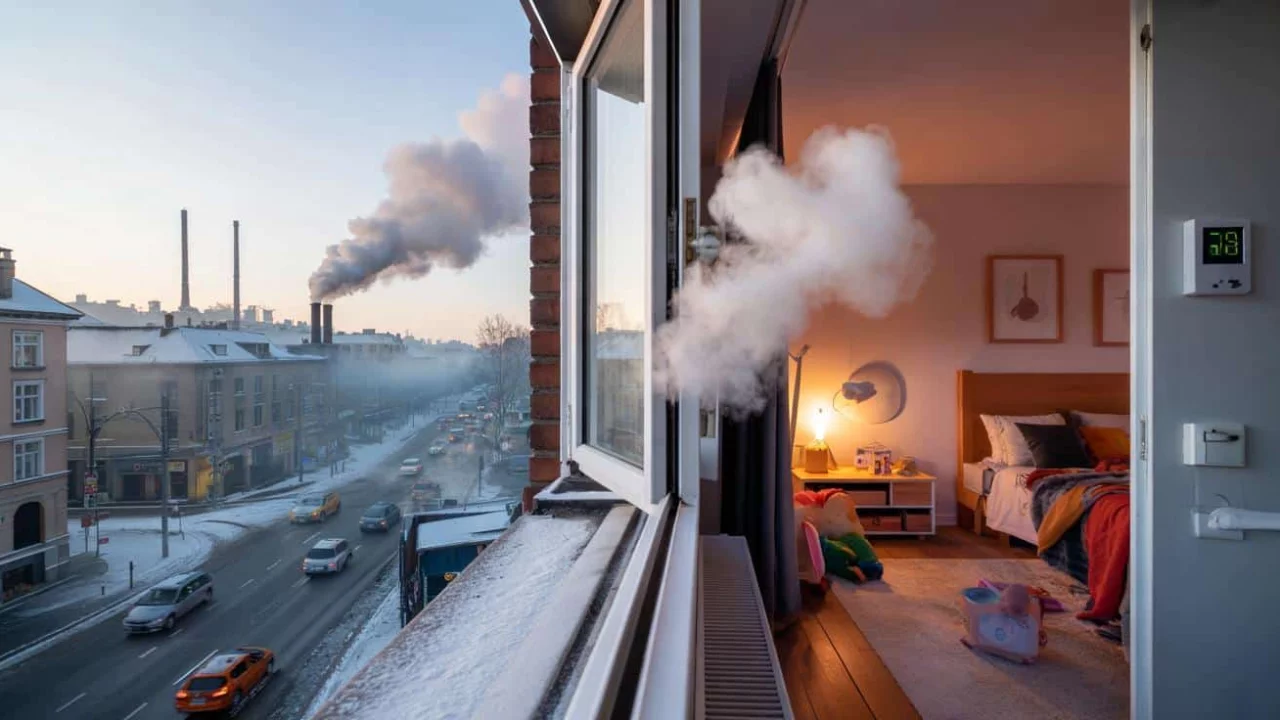
Sarah had developed the perfect morning routine. Coffee brewing, shower running, and at exactly 8:15am, she’d throw open every window in her London flat for that crisp winter wake-up call. The cold air felt invigorating, and she loved how it seemed to clear her head before work. What she didn’t realize was that her daily ritual was slowly filling her home with invisible pollutants and costing her hundreds of pounds in heating bills each winter.
Like Sarah, millions of people instinctively reach for their window latches during those early morning hours, believing they’re doing something healthy for their homes and families. The reality is far more complex and concerning than most of us realize.
That seemingly innocent burst of “fresh” winter air between 8am and 10am might actually be the worst possible time to ventilate your home, both for your health and your wallet.
When Fresh Air Becomes a Health Hazard
Winter morning air pollution reaches its daily peak precisely when most of us are opening our windows. This isn’t coincidence – it’s the perfect storm of human activity and weather conditions.
By 8am, the morning rush hour is in full swing. Cars sit in traffic with engines running, buses navigate crowded streets, and millions of heating systems fire up simultaneously across neighborhoods. All of this creates what environmental scientists call the “morning pollution spike.”
“The air quality between 8am and 10am is typically at its worst for the entire day,” explains Dr. Michael Harrison, an atmospheric scientist at the University of Edinburgh. “You’re essentially inviting concentrated exhaust fumes and heating emissions directly into your living space.”
In urban areas, this toxic cocktail includes nitrogen oxides from car exhausts, fine particulate matter from diesel engines, and microscopic droplets from cold engine starts. Even rural areas aren’t immune – wood-burning stoves, heating oil systems, and agricultural activities contribute their own share of pollutants.
What makes winter morning air pollution particularly dangerous is a weather phenomenon called temperature inversion. During cold mornings, the air near the ground becomes trapped under warmer layers above, creating a lid that prevents pollutants from dispersing upward.
“Think of it like a dome over your neighborhood,” says air quality specialist Dr. Jennifer Walsh. “All those exhaust fumes and heating emissions get concentrated right at street level, exactly where your windows open.”
The Hidden Costs of Early Morning Ventilation
The financial impact of opening windows during the coldest part of the day is staggering. Between 8am and 10am, outdoor temperatures typically hover near their daily minimum. Buildings and the ground have been cooling all night, and weak morning sunlight provides little warmth.
Here’s what happens when you ventilate during these peak-cold hours:
- Heated indoor air escapes within minutes through open windows
- Frigid outdoor air rushes in and clings to walls, floors, and furniture
- Your heating system must work overtime to restore comfortable temperatures
- Thermal shock causes frequent, energy-intensive heating cycles
- Poor insulation means cold air lingers for hours in some areas
| Time Period | Average Temperature | Air Quality Index | Heating Cost Impact |
|---|---|---|---|
| 6am-8am | Coldest | Moderate | High |
| 8am-10am | Near minimum | Poor to Very Poor | Very High |
| 10am-12pm | Rising | Good to Moderate | Moderate |
| 2pm-4pm | Peak warmth | Good | Low |
The energy efficiency expert Tom Richardson notes: “I’ve seen households reduce their winter heating bills by 15-20% simply by changing when they ventilate. The 8-10am window is an energy killer.”
Modern heat pumps and condensing boilers are particularly vulnerable to these thermal shocks. Frequent switching between heating and cooling modes reduces their efficiency and increases wear on expensive components.
Who Suffers Most From Morning Air Pollution
The health impacts of winter morning air pollution aren’t distributed equally. Certain groups face significantly higher risks when exposed to the concentrated pollutants that accumulate during early morning hours.
Children are especially vulnerable because their respiratory systems are still developing and they breathe more rapidly than adults. The fine particles that enter homes during morning ventilation can trigger asthma attacks and respiratory infections that last for weeks.
Elderly residents face their own challenges. Age-related changes in lung function mean that winter morning air pollution can exacerbate chronic conditions like COPD and increase the risk of cardiovascular events.
People with existing respiratory conditions experience the most immediate effects. Dr. Patricia Chen, a pulmonologist, observes: “Patients often don’t connect their morning breathing difficulties with their ventilation habits, but the timing is rarely coincidental.”
The pollutants that enter during morning ventilation don’t disappear quickly either. Fine particles can remain suspended in indoor air for 6-8 hours, meaning family members continue breathing contaminated air well into the afternoon.
Location matters enormously. Homes within 500 meters of busy roads, industrial areas, or major intersections experience pollution levels that can be 3-4 times higher during morning rush hour. Apartments on lower floors face particular risks because vehicle emissions concentrate near ground level.
Winter air quality data shows pollution peaks between 8-10am in most cities. That 'fresh' morning air might not be as clean as it looks. Timing your home ventilation matters more than you think. #AirQuality#WinterHealth
— Environmental Health Watch (@EnvHealthWatch) February 15, 2024
Smart ventilation strategies can dramatically reduce these risks while maintaining healthy indoor air quality. The key is timing your window opening to coincide with cleaner outdoor air and warmer temperatures.
The optimal ventilation windows typically occur between 10am-noon and 2pm-4pm, when traffic has decreased, heating systems have stabilized, and outdoor temperatures are more moderate. These periods offer the best balance between air quality and energy efficiency.
Short, intensive ventilation sessions work better than leaving windows cracked open all morning. Five to ten minutes of cross-ventilation during optimal hours achieves better air exchange than hours of partial opening during polluted periods.
Mechanical ventilation systems with heat recovery offer an alternative for homes in heavily polluted areas. These systems filter incoming air while preserving heat energy, though they require significant upfront investment.
Simple air quality monitors can help homeowners make informed decisions about when to ventilate. These devices track both indoor and outdoor pollution levels, providing real-time guidance for optimal ventilation timing.
FAQs
What time should I open windows in winter?
The best times are typically 10am-noon and 2pm-4pm when air pollution is lower and temperatures are warmer.
How long should I ventilate my home in winter?
Five to ten minutes of intensive cross-ventilation is more effective than leaving windows partially open for hours.
Does winter morning air pollution affect rural areas?
Yes, rural areas experience pollution from wood stoves, heating oil systems, and agricultural activities during morning hours.
Can air purifiers replace proper ventilation?
Air purifiers help with indoor pollutants but cannot replace ventilation for removing humidity and providing fresh oxygen.
How much can proper ventilation timing save on heating bills?
Households can typically reduce winter heating costs by 15-20% by avoiding ventilation during the coldest, most polluted hours.
Are ground-floor apartments more affected by morning air pollution?
Yes, vehicle emissions and other pollutants concentrate near ground level, making lower floors more vulnerable during rush hour periods.











Leave a Comment