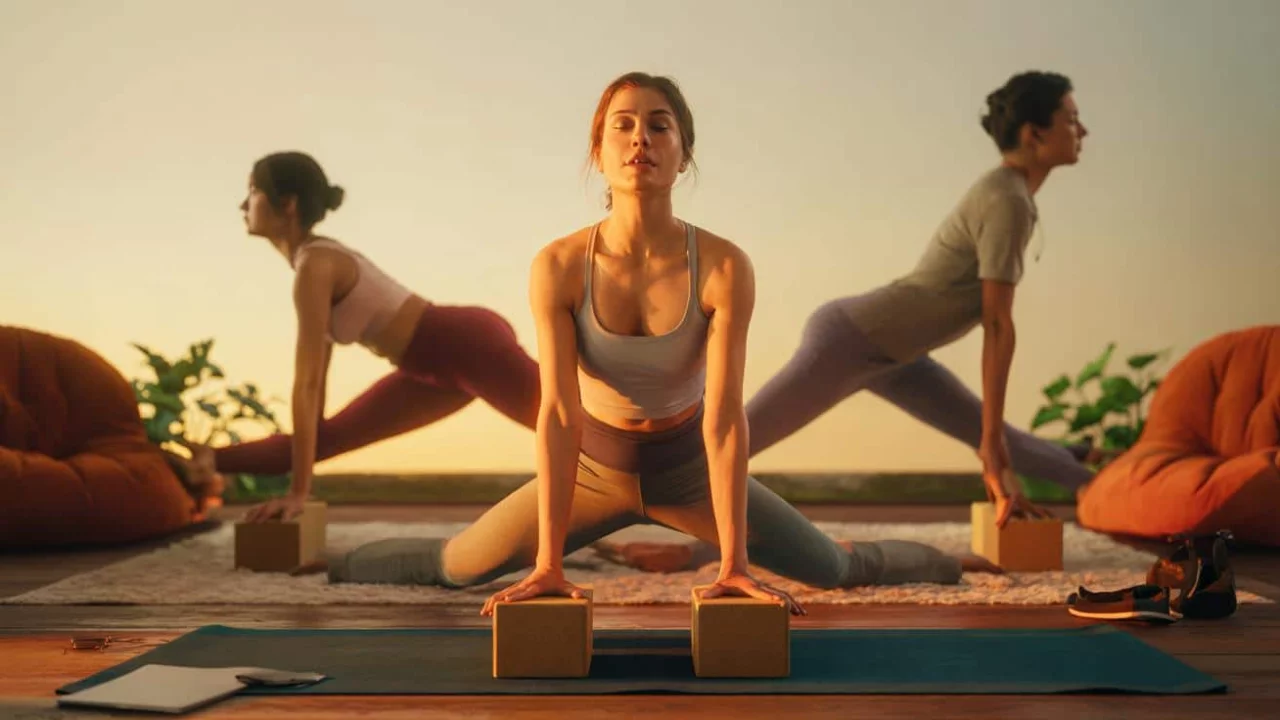
The first time you really notice your body has turned stiff is rarely in a yoga studio. It’s on a random Tuesday morning, when you drop your keys under the car seat and groan like you’re twice your age just to reach them. Or when you try to squat to tie a shoelace and your hips send you a very clear “nope”.
You stand back up, rub your lower back, and laugh it off. Then later that day, you feel your neck locked at the screen, shoulders creeping toward your ears, as if your body was quietly shrinking around your desk.
At some point, the question slips in: “Wait… since when did moving become a negotiation?”
Why your body feels older than your age
Stiffness doesn’t usually arrive with sirens, it just settles in by stealth. One missed stretch here, one rushed morning there, years of chairs that aren’t built for humans but for spreadsheets. You still think of yourself as “quite flexible”, until you try to sit cross-legged on the floor for ten minutes and your hips start writing complaint emails.
The truth is, your body is doing exactly what you teach it to do daily. Sit long enough, and it becomes brilliant at sitting. Bend rarely, and bending starts to feel exotic. Muscles shorten, fascia thickens, joints lose that easy glide you didn’t even know you had as a kid.
“Most people don’t realize that flexibility is like a savings account,” explains Dr. Sarah Martinez, a physical therapist who’s spent fifteen years helping office workers reclaim their range of motion. “You can’t just withdraw from it forever without making deposits.”
The good news? Your body remembers how to move. It’s just been waiting for permission to stretch again.
12 essential yoga poses to unlock your stiff body
These yoga poses for body stiffness target the areas that get locked up from modern living. You don’t need to be flexible to start – that’s literally the point.
| Body Area | Primary Poses | Hold Time |
|---|---|---|
| Hips & Lower Back | Child’s Pose, Figure-4 Stretch | 30-60 seconds |
| Shoulders & Neck | Cat-Cow, Thread the Needle | 5-8 breaths |
| Spine | Seated Spinal Twist, Cobra Pose | 30 seconds each side |
| Legs & Hamstrings | Forward Fold, Low Lunge | 45-60 seconds |
For Your Hips and Lower Back:
- Child’s Pose: Kneel on the floor, sit back on your heels, then fold forward with arms extended. This gently opens tight hip flexors.
- Figure-4 Stretch: Lie on your back, cross one ankle over the opposite knee, and gently pull the bottom leg toward your chest.
- Happy Baby Pose: Lying down, grab the outside edges of your feet and gently rock side to side.
For Your Shoulders and Neck:
- Cat-Cow Pose: On hands and knees, alternate between arching and rounding your spine to release tension.
- Thread the Needle: From tabletop, reach one arm under the other and rest your shoulder on the mat.
- Eagle Arms: Wrap your arms around each other and lift your elbows to stretch between your shoulder blades.
“I tell my clients that stiffness is just your body’s way of saying ‘we haven’t moved like this in a while,'” notes yoga instructor Mike Chen, who specializes in therapeutic movement. “These poses are conversations, not commands.”
For Your Spine:
- Seated Spinal Twist: Sit cross-legged, place one hand behind you, and gently rotate your torso.
- Cobra Pose: Lie face down, press your palms into the floor, and lift your chest to open the front body.
- Knee-to-Chest Pose: Lying down, hug one knee at a time toward your chest to decompress your lower back.
For Your Legs and Hamstrings:
- Forward Fold: Standing or seated, hinge at the hips and reach toward your feet (bend your knees if needed).
- Low Lunge: Step one foot forward, lower the back knee, and sink into your hip flexors.
- Legs-Up-The-Wall: Lie with your back on the floor and legs up against a wall to reverse blood flow and release tension.
What happens when you actually stick with it
The first week feels like you’re negotiating with a rusty gate. Everything creaks, nothing wants to budge, and you’re pretty sure yoga instructors are secretly made of rubber.
But somewhere around week two, something shifts. Maybe it’s reaching for something on a high shelf without wincing, or getting out of bed without that morning shuffle. Your body starts remembering what it felt like to move freely.
“The biggest surprise for most people isn’t how much more flexible they become,” says Dr. Martinez. “It’s how much better they feel doing everyday things. Suddenly, playing with their kids or gardening doesn’t feel like a risk assessment.”
Regular practice of these yoga poses for body stiffness creates a snowball effect. Better flexibility leads to less pain, which leads to more movement, which leads to even better flexibility. Your body stops feeling like it’s working against you and starts feeling like it’s working with you.
The key is consistency over intensity. Fifteen minutes of gentle stretching beats an hour of forcing yourself into poses that make you curse. Your muscles respond better to patient, regular attention than to sporadic punishment sessions.
“Think of it as teaching your body a new language,” explains Chen. “You wouldn’t expect to be fluent after one lesson, but with daily practice, suddenly you’re having conversations you never thought possible.”
Most people notice significant changes within three to four weeks. Not just in flexibility, but in how they carry themselves through the day. The afternoon shoulder hunch starts to disappear. Getting up from the couch stops requiring a strategic plan.
The real magic happens when moving well becomes automatic again – when your body stops sending you warning signals every time you want to do something basic like reach, bend, or stretch.
FAQs
How often should I do these yoga poses for body stiffness?
Daily practice works best, even if it’s just 10-15 minutes. Consistency matters more than duration.
Can I do these poses if I’m really stiff and inflexible?
Absolutely. These poses are designed for stiff bodies. Modify as needed and never push through sharp pain.
How long before I see results from these flexibility exercises?
Most people notice some improvement within a week, with significant changes appearing after 3-4 weeks of regular practice.
Should I hold these poses longer if I’m really tight?
Not necessarily. Gentle, consistent stretching works better than forcing longer holds. Listen to your body’s signals.
What’s the best time of day to practice these yoga poses?
Morning practice helps prepare your body for the day, while evening practice can release accumulated tension. Choose what fits your schedule.
Can these poses help with chronic stiffness from desk work?
Yes, these poses specifically target the areas most affected by prolonged sitting and desk work. Regular practice can significantly reduce stiffness and improve posture.











Leave a Comment