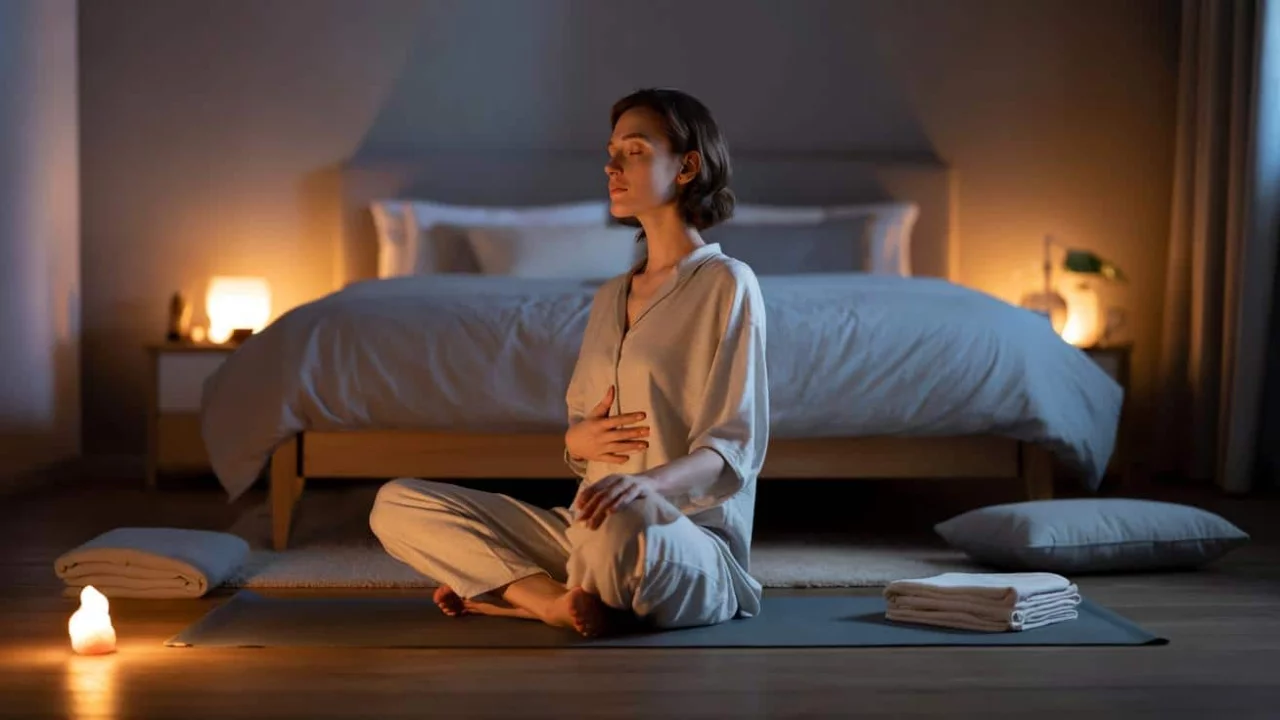
Sarah used to lie awake for hours, her mind racing through tomorrow’s meetings while her body felt wired despite her exhaustion. She’d tried everything from warm milk to sleep apps, but nothing seemed to quiet the constant buzz in her head. Then a friend suggested just five minutes of gentle stretching before bed. “It sounds too simple,” Sarah thought, but desperation made her try it anyway.
Three weeks later, Sarah was falling asleep within minutes of hitting the pillow. The secret wasn’t complicated equipment or lengthy routines—it was five specific yoga poses for better sleep that helped her nervous system finally understand it was time to rest.
Millions of people struggle with the same nightly battle Sarah faced. Our brains aren’t designed to switch from high-speed productivity mode straight into peaceful slumber, yet that’s exactly what modern life demands of us.
Why Your Body Needs a Sleep Transition
Sleep isn’t an on-off switch your body can flip instantly. Your nervous system requires a gradual transition from the sympathetic state (fight-or-flight) to the parasympathetic state (rest-and-digest). Without this transition, you end up lying in bed with a racing heart and an overactive mind.
Gentle yoga poses for better sleep work by activating your parasympathetic nervous system through slow, supported movements and deep breathing. Unlike vigorous exercise that energizes you, these poses actually lower your heart rate and reduce cortisol levels.
“When we hold restorative poses, we’re essentially giving our nervous system permission to downshift,” explains Dr. Michael Chen, a sleep specialist at Stanford Sleep Medicine Center. “The physical stillness combined with focused breathing creates the perfect conditions for natural melatonin production.”
The beauty of bedtime yoga lies in its simplicity. You don’t need an hour-long session or perfect technique. Even five to ten minutes of gentle stretching can dramatically improve your sleep quality by releasing physical tension and mental stress accumulated throughout the day.
Five Essential Yoga Poses for Better Sleep
These poses are specifically chosen for their calming effects and ease of practice. You can do them in sequence or pick the ones that feel most needed on any given night.
| Pose Name | Hold Time | Main Benefits | Best For |
|---|---|---|---|
| Child’s Pose | 1-3 minutes | Calms nervous system, releases back tension | Mental stress, overthinking |
| Legs Up the Wall | 5-10 minutes | Improves circulation, reduces anxiety | Restless legs, circulation issues |
| Supine Spinal Twist | 1-2 minutes each side | Releases lower back, aids digestion | Back pain, digestive discomfort |
| Cat-Cow Stretch | 5-8 slow movements | Mobilizes spine, coordinates breath | Stiff neck and shoulders |
| Corpse Pose | 3-5 minutes | Complete relaxation, meditation | Racing thoughts, physical tension |
Child’s Pose (Balasana): Kneel on the floor, touch your big toes together, and sit back on your heels. Separate your knees about hip-width apart, then fold forward and rest your forehead on the ground. Let your arms relax alongside your body or stretch them forward. This pose immediately signals to your brain that it’s time to retreat inward.
Legs Up the Wall (Viparita Karani): Lie on your back near a wall and extend your legs up against it. Your body should form an L-shape. Place a pillow under your lower back for extra support if needed. This gentle inversion helps blood flow back to your heart and has an almost instant calming effect.
Supine Spinal Twist: Lying on your back, draw your right knee to your chest, then let it fall across your body to the left. Keep your right shoulder grounded and turn your head to the right. Hold, then repeat on the other side. This twist helps release the tension that builds up in your lower back throughout the day.
Cat-Cow Stretch: On your hands and knees, alternate between arching your back (cow) and rounding it (cat). Move slowly and coordinate the movement with your breathing. This gentle flow helps transition your spine from the day’s activities while focusing your mind on the present moment.
Corpse Pose (Savasana): Lie flat on your back with your arms at your sides, palms facing up. Close your eyes and focus on releasing tension from each part of your body, starting with your toes and working up to your head. This final pose integrates the benefits of your practice.
“The key is consistency rather than perfection,” notes yoga therapist Lisa Rodriguez. “Even holding these poses for shorter periods every night will train your body to recognize bedtime cues.”
Creating Lasting Sleep Improvements
The real magic happens when these yoga poses for better sleep become a nightly ritual. Your brain starts associating the movements with sleep preparation, creating a powerful psychological trigger for drowsiness.
Start with just one or two poses that feel comfortable, then gradually add others as the routine becomes natural. Many people find that their bodies begin relaxing as soon as they roll out their yoga mat or move to their designated sleep-prep space.
Physical benefits accumulate over time too. Regular gentle stretching reduces chronic muscle tension, especially in the neck, shoulders, and lower back—common areas where we store stress. Better flexibility means less tossing and turning to find comfortable sleep positions.
- Practice 30-60 minutes before your intended bedtime
- Keep movements slow and avoid anything that feels energizing
- Focus on exhaling longer than you inhale to activate relaxation responses
- Use props like pillows and blankets to make poses more comfortable
- Don’t force any position—discomfort will work against relaxation
“I tell my patients that bedtime yoga isn’t about athletic achievement,” says sleep researcher Dr. Amanda Foster. “It’s about creating a bridge between your active day and restful night. The poses should feel like a warm hug for your nervous system.”
People who practice these poses regularly report falling asleep faster, staying asleep longer, and waking up feeling more refreshed. The combination of physical release and mental focusing creates an ideal internal environment for deep, restorative sleep.
Remember that building new sleep habits takes time. Be patient with yourself as you learn which poses work best for your body and schedule. The investment of a few minutes each night pays dividends in better energy, mood, and overall health.
FAQs
How long should I hold each yoga pose for better sleep?
Hold most poses for 1-3 minutes, though Legs Up the Wall can be held for 5-10 minutes. Listen to your body rather than watching the clock.
Can I do these poses in bed?
Yes, many of these poses can be modified for bed practice, especially the spinal twist and legs up the wall using your headboard.
What if I fall asleep during the poses?
That’s perfectly fine and actually shows the poses are working! Just make sure you’re in a safe position where falling asleep won’t cause discomfort.
Should I avoid bedtime yoga if I have back problems?
These gentle poses are generally safe, but consult your doctor first. Use props for support and never force any movement that causes pain.
How quickly will I see sleep improvements?
Many people notice better relaxation within the first week, with more significant sleep improvements developing over 2-4 weeks of consistent practice.
Is it better to do all five poses or focus on just a few?
Start with 2-3 poses that feel most comfortable and helpful. You can always add more as the routine becomes established.











Leave a Comment