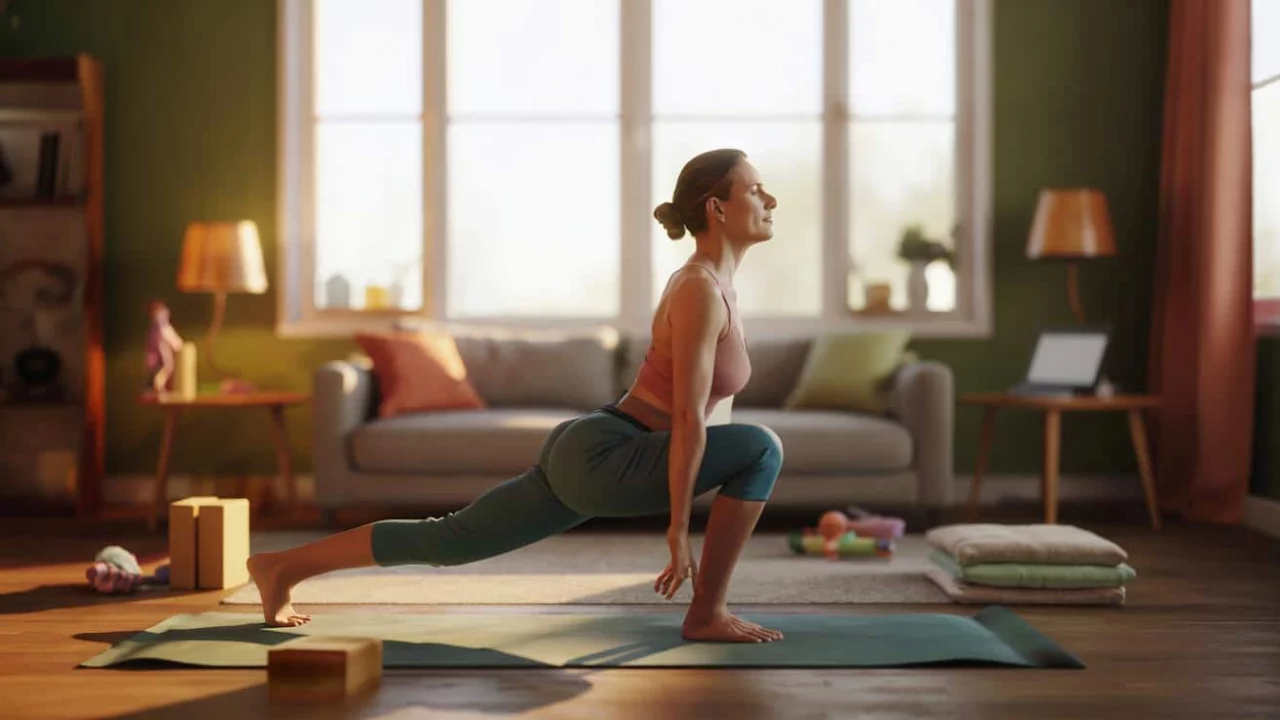
The first time you really feel your body stiffen, it rarely happens in a yoga studio. It’s more likely on a random Tuesday morning, when you bend to tie your shoes and something in your lower back quietly protests. Or when you turn your head to reverse the car and realize your neck has the mobility of a garden gnome.
You pause for a second, surprised, then carry on. Until the next time. One day, you notice you’re living around your stiffness. You avoid deep chairs. You sleep on one side. You stop playing on the floor with your kids. The body adapts. The question is: do you want it to adapt to tension… or to ease?
Why your body feels like it’s “rusting” — and what yoga can change
Most people think stiffness comes from age, like wrinkles or gray hair. But a lot of it comes from repetition: same chair, same posture, same way of walking, same stress patterns playing on a loop. Your muscles are like Velcro; sit in one position long enough and they glue themselves there.
Yoga poses for flexibility work like gentle “un-sticking” tools, peeling you away from those habits. You don’t need a perfect practice or expensive gear. You need a mat-sized space, about ten quiet minutes, and a willingness to meet your body exactly where it is today.
“The biggest misconception is that you have to be flexible to start yoga,” says Dr. Sarah Chen, a physical therapist who teaches adaptive yoga. “It’s like saying you need to be clean to take a shower. Flexibility is what happens when you practice, not what you bring to it.”
Take Maya, 42, who started yoga because she couldn’t comfortably reach the bottom shelf in her kitchen. On her first day, she struggled to touch her knees in a forward fold, hamstrings screaming after years of desk work and car commutes. Three weeks into a simple routine of 12 poses, she sent her teacher a photo: hands flat on the floor, a grin you could feel through the screen.
Nothing magical happened in those 21 days. She just gave her joints and muscles a different daily story. The body listened, and slowly rewrote its script.
The essential twelve: poses that unlock your body’s natural movement
These yoga poses for flexibility target the areas where most people hold tension. Each pose addresses specific muscle groups while improving overall mobility. The beauty lies in their simplicity — no advanced training required.
| Pose Name | Target Area | Hold Time | Key Benefit |
|---|---|---|---|
| Child’s Pose | Lower back, hips | 30-60 seconds | Releases spine compression |
| Cat-Cow Stretch | Entire spine | 5-8 repetitions | Improves spinal mobility |
| Downward Dog | Shoulders, hamstrings | 30-45 seconds | Full-body stretch |
| Forward Fold | Hamstrings, calves | 30-60 seconds | Lengthens back body |
| Pigeon Pose | Hip flexors, glutes | 45-90 seconds each side | Deep hip opening |
| Cobra Pose | Chest, shoulders | 15-30 seconds | Counteracts forward posture |
The remaining six poses complete the sequence:
- Seated Spinal Twist: Wrings out tension from the torso and improves digestion
- Bridge Pose: Strengthens glutes while opening chest and hip flexors
- Supine Figure-4: Gentle hip opener perfect for tight IT bands
- Legs Up the Wall: Reverses blood flow and calms the nervous system
- Neck Rolls: Releases cervical spine tension from device use
- Ankle Circles: Restores mobility often lost to restrictive footwear
“I tell my students to think of these poses as daily maintenance, like brushing your teeth,” explains Mark Rodriguez, a certified yoga instructor with 15 years of experience. “You wouldn’t skip oral hygiene because your teeth feel fine today. Same principle applies to your joints and muscles.”
Real benefits people actually notice (and when they notice them)
The changes don’t happen overnight, but they’re more predictable than you might think. Most people report sleeping better within the first week — less tossing and turning as tight hips and shoulders begin to release. By week two, daily movements feel easier. Getting out of bed, reaching overhead, bending to pick things up.
The psychological shift often surprises people most. When your body moves with less resistance, your mind follows. Stress that used to lodge in your shoulders finds fewer places to stick. You breathe deeper without thinking about it.
“After about a month of consistent practice, I realized I wasn’t taking ibuprofen for my usual afternoon headaches,” shares Janet, 58, who started practicing these poses during the pandemic. “My husband noticed I was laughing more. I didn’t even realize I’d been holding so much tension in my face.”
The poses work for bodies of all ages and fitness levels. Teenagers dealing with growth spurts and academic stress find relief in forward folds and twists. Parents juggling kids and careers use child’s pose as a reset button. Seniors discover that gentle movement prevents the stiffness that makes simple tasks challenging.
Consistency matters more than perfection. Five minutes every day beats an hour-long session once a week. Your body responds to regular, gentle requests for change rather than occasional dramatic demands.
“The goal isn’t to become a pretzel,” notes Dr. Lisa Park, who studies movement therapy. “It’s to maintain the range of motion you need for a comfortable life — tying shoes, looking over your shoulder, playing with grandchildren, sleeping through the night.”
These twelve yoga poses for flexibility serve as a foundation. They address the most common areas of restriction while being accessible to almost anyone. Whether you’re 25 or 75, whether you can touch your toes or struggle to reach your knees, these movements meet you where you are and gently invite your body toward greater ease.
The beautiful truth about flexibility is that it’s never too late to start, and it’s always possible to improve. Your body is remarkably adaptable, ready to unwind years of tension when you give it the right tools and consistent attention.
FAQs
How long should I hold each yoga pose for flexibility?
Most poses benefit from 30-60 second holds, but listen to your body and start with shorter durations if needed.
Can I do these poses every day?
Yes, these gentle yoga poses for flexibility are safe for daily practice and actually work better with consistent repetition.
What if I’m not flexible at all when I start?
Perfect! That means you have the most to gain. Start where you are and modify poses as needed — flexibility develops gradually.
Should these poses hurt?
No. You should feel a gentle stretch, never sharp pain. Breathe deeply and back off if anything feels uncomfortable.
When will I start seeing improvements in my flexibility?
Most people notice easier daily movements within 1-2 weeks, with more significant flexibility gains appearing after 3-4 weeks of regular practice.
Do I need special equipment or clothing?
Just comfortable clothes that allow movement and a non-slip surface. A yoga mat is helpful but not essential to get started.











Leave a Comment