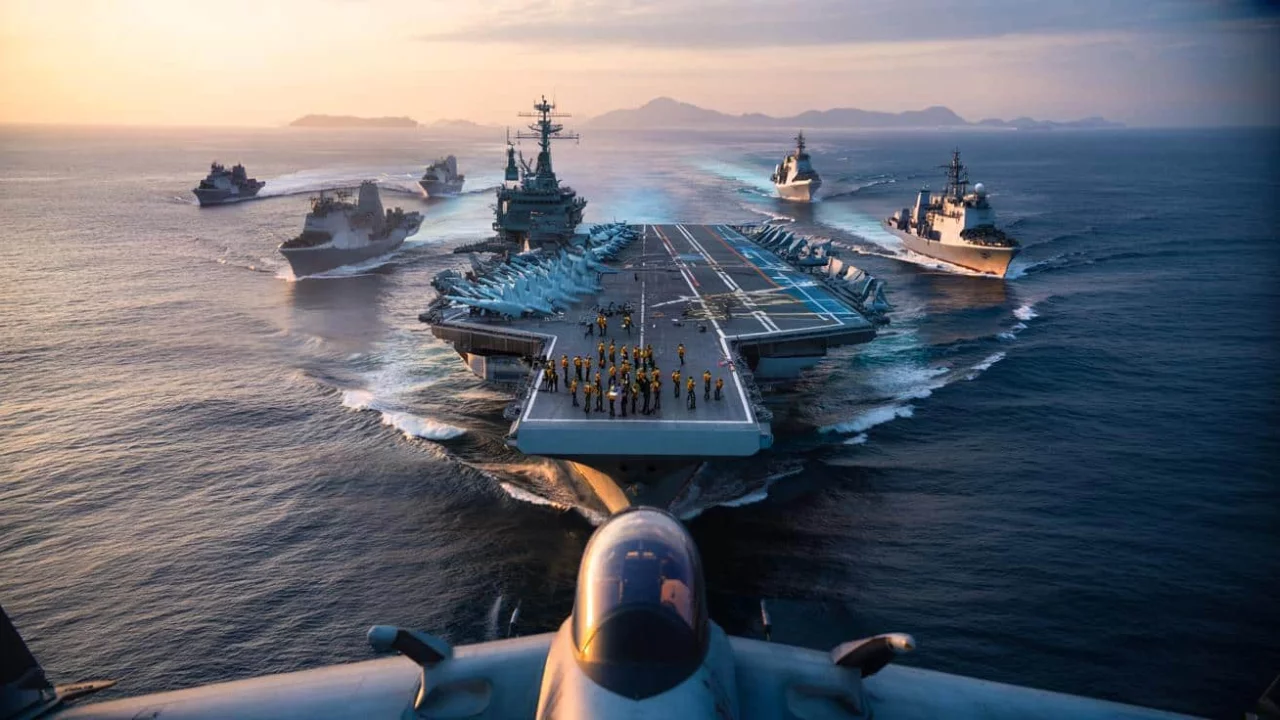
Captain Yamamoto still remembers the first time he saw an aircraft carrier on his radar screen during his early days in Japan’s Maritime Self-Defense Force. Back then, it was always an American vessel—a reassuring blip representing an ally. The coffee in his mug stayed steady, conversations remained calm. But when the aircraft carrier Liaoning appeared on Japanese monitors last week, accompanied by its escort of Chinese warships, the atmosphere in the operations room felt completely different.
The massive Chinese vessel moved deliberately through waters between Okinawa and Miyako Island, a corridor that has become increasingly familiar to Japanese defense officials. This wasn’t the first time China’s flagship carrier had sailed these waters, and everyone knew it wouldn’t be the last.
For ordinary Japanese citizens going about their daily routines, the news might seem distant. But for defense analysts and regional security experts, each passage of the Liaoning near Japanese waters represents something much larger than a simple naval exercise.
What happened when Japan detected the Chinese carrier
The Japanese Defense Ministry confirmed that its forces spotted the aircraft carrier Liaoning and several accompanying vessels sailing through international waters near Japan’s southwestern island chain. The Chinese flotilla moved through the strategically vital passage between Okinawa and Miyako Island, a route that connects the East China Sea with the Pacific Ocean.
Japanese Maritime Self-Defense Force personnel immediately dispatched patrol aircraft to monitor the Chinese ships. A Japanese destroyer maintained visual contact with the carrier group while staying at a respectful distance in international waters.
“We observed standard protocol throughout the encounter,” said a defense ministry spokesperson. “All vessels remained in international waters, but we maintained close surveillance as part of our routine maritime security operations.”
The Liaoning, China’s first operational aircraft carrier, has made similar passages through this area multiple times over recent years. Each transit draws attention because it demonstrates China’s growing naval capabilities and its willingness to operate far from its home ports.
The 60,000-ton carrier, originally built in Ukraine and later purchased and refitted by China, represents a significant milestone in Chinese naval modernization. When it sails near Japan, it carries both fighter jets and a clear message about China’s expanding maritime reach.
Key details about the Liaoning and its mission
Understanding the significance of this encounter requires looking at both the vessel itself and the strategic importance of where it was spotted. Here are the essential facts about this latest sighting:
| Aspect | Details |
|---|---|
| Location | Waters between Okinawa and Miyako Island |
| Date | February 2026 |
| Escort Vessels | Multiple Chinese warships accompanying carrier |
| Japanese Response | Patrol aircraft and destroyer monitoring |
| Legal Status | All movements in international waters |
The aircraft carrier Liaoning brings impressive capabilities to any mission:
- Displacement of approximately 60,000 tons when fully loaded
- Capacity for 24-36 fighter aircraft, primarily J-15 jets
- Range allowing operations far from Chinese mainland
- Crew of roughly 2,000 personnel
- Ability to project Chinese naval power across vast ocean distances
The passage route chosen by the Chinese flotilla holds particular strategic significance. The waters between Okinawa and Miyako Island represent one of the few deep-water channels that allow large naval vessels to move between the East China Sea and the broader Pacific Ocean.
“Every time the Liaoning passes through this corridor, it’s practicing for potential future operations in the Pacific,” explains maritime security analyst Dr. Kenji Tanaka. “These aren’t just training exercises—they’re rehearsals for projecting power far beyond China’s immediate neighborhood.”
Japanese defense officials track these movements carefully because they represent a significant shift in regional naval balance. For decades, the United States Navy dominated aircraft carrier operations in this region. China’s growing carrier capabilities change that dynamic substantially.
How this affects regional security and everyday life
While most Japanese citizens won’t see any immediate changes in their daily routines, the presence of Chinese aircraft carriers near Japan has far-reaching implications for regional stability and international relations.
The economic impact extends beyond military considerations. Shipping companies that move goods through these waters pay close attention to naval activities. Insurance rates for commercial vessels can fluctuate based on perceived regional tensions.
Local fishing communities in Okinawa and nearby islands sometimes report restrictions on their traditional fishing grounds when military exercises occur. These disruptions, while temporary, affect livelihoods in communities that have depended on these waters for generations.
“When we see that big ship on the horizon, we know our fishing boats might need to stay closer to shore for a few days,” says Hiroshi Nakamura, who has fished these waters for thirty years. “It’s not dangerous, but it changes how we plan our work.”
For Japan’s defense establishment, each Liaoning transit provides valuable intelligence about Chinese naval capabilities and operating procedures. Japanese forces use these encounters to refine their own tracking and monitoring techniques.
The broader implications reach into diplomatic relationships throughout East Asia. South Korea, Taiwan, the Philippines, and other regional partners watch these developments closely, adjusting their own defense planning accordingly.
Alliance relationships also evolve in response to changing naval dynamics. Japan’s security cooperation with the United States, Australia, and India has deepened partly in response to China’s expanding naval presence.
“These carrier movements represent China’s growing confidence in operating far from its home ports,” notes regional security expert Professor Akiko Sato. “For Japan, it means adapting to a new reality where Chinese naval power extends well beyond the South China Sea.”
The technological aspects of monitoring these carrier groups also drive innovation in Japanese defense capabilities. New radar systems, satellite surveillance networks, and maritime patrol aircraft all receive increased funding and attention.
Looking ahead, defense analysts expect the aircraft carrier Liaoning to continue regular transits through this region as China expands its carrier operations. The country is building additional carriers and developing new naval aviation capabilities that will likely increase the frequency of such encounters.
For ordinary citizens, these developments underscore the importance of regional stability and effective diplomacy. While military tensions capture headlines, the underlying challenge involves managing great power competition in ways that preserve peace and economic prosperity for all regional partners.
FAQs
Why does China sail the Liaoning near Japan?
China uses these missions to demonstrate naval capabilities, practice open-ocean operations, and show that its forces can operate throughout international waters in the region.
Is it legal for Chinese warships to sail in these waters?
Yes, the Liaoning and escort vessels remain in international waters where all nations have the right of passage under international maritime law.
How does Japan respond to these carrier movements?
Japan monitors Chinese naval movements using patrol aircraft, destroyers, and satellite surveillance while maintaining professional communication protocols.
Does the Liaoning pose a direct threat to Japan?
The carrier represents expanded Chinese military capabilities but operates in international waters following established maritime protocols during these transits.
How often does China’s carrier pass near Japan?
The Liaoning has made similar passages multiple times over recent years, with frequency increasing as Chinese naval operations expand.
What other countries track these Chinese naval movements?
The United States, South Korea, Taiwan, and other regional partners maintain awareness of Chinese carrier operations through various intelligence-sharing arrangements.











Leave a Comment