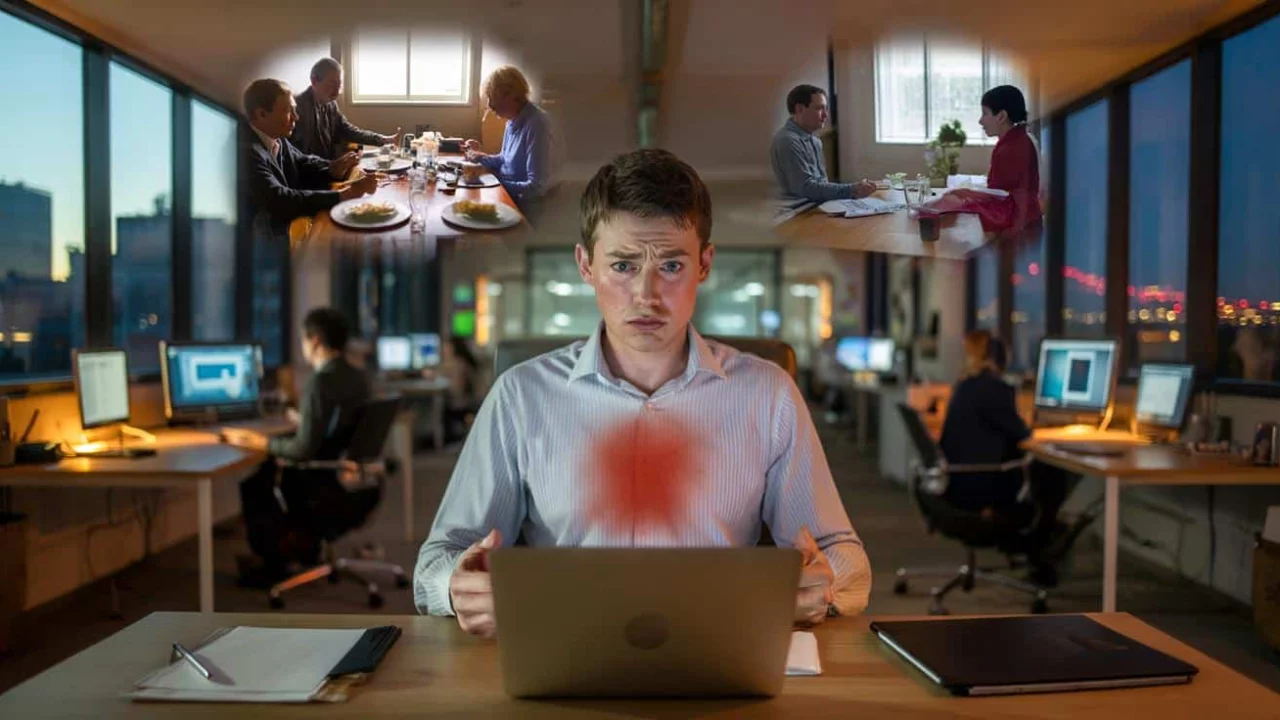
Sarah was having a perfectly normal conversation with her roommate about weekend plans when her friend casually mentioned, “Oh, by the way, I invited Jake to join us.” The words hit Sarah like cold water. Her chest tightened, palms went sweaty, and suddenly she felt like a teenager again—invisible, overlooked, not quite good enough to be included in the original plan.
The rational part of her brain knew this was ridiculous. Jake was a mutual friend. Her roommate wasn’t trying to hurt her. But her body had already launched into full panic mode, complete with that familiar knot in her stomach and the urge to make an excuse and disappear.
Five minutes later, she was locked in her bathroom wondering why a simple sentence about weekend plans had sent her nervous system into overdrive.
When your brain’s alarm system gets stuck on repeat
These automatic emotional reactions happen because your brain has two very different processing systems running simultaneously. The first is fast, primitive, and designed to keep you alive. The second is slower, more thoughtful, and tries to make sense of things.
When something triggers an emotional response, your amygdala—the brain’s alarm center—fires before your prefrontal cortex can even assess what’s actually happening. It’s like having a smoke detector that goes off every time you toast bread, except the smoke detector controls your entire emotional state.
“Most people don’t realize that emotional reactions can be triggered in less than 200 milliseconds,” explains Dr. Lisa Chen, a neuropsychologist who studies emotional processing. “That’s faster than you can consciously register what’s happening.”
Your body starts preparing for fight, flight, or freeze while your conscious mind is still trying to figure out what just occurred. Heart rate spikes, stress hormones flood your system, and suddenly you’re responding to something that happened twenty years ago instead of what’s actually in front of you.
The hidden triggers that hijack your nervous system
Understanding what sets off these automatic responses can help you recognize when you’re being emotionally hijacked. Research shows that certain patterns consistently trigger our most intense reactions:
- Tone of voice – A particular inflection that reminds you of criticism or dismissal
- Facial expressions – That look of disappointment or annoyance that cuts straight through
- Body language – Crossed arms, eye rolls, or someone turning away mid-conversation
- Specific phrases – Words that carry emotional weight from past experiences
- Environmental cues – Certain smells, sounds, or settings that transport you back
- Time pressure – Feeling rushed or put on the spot
The most powerful triggers often connect to our core fears: rejection, abandonment, humiliation, or feeling powerless. Your brain doesn’t distinguish between a saber-toothed tiger and your boss’s disapproving email—threat is threat.
| Trigger Type | Physical Response | Common Thoughts |
|---|---|---|
| Criticism | Tight chest, heat in face | “I’m not good enough” |
| Rejection | Stomach drop, shallow breathing | “Nobody wants me around” |
| Confrontation | Racing heart, muscle tension | “I have to defend myself” |
| Being ignored | Restlessness, jaw clenching | “I don’t matter” |
“The intensity of your reaction often has nothing to do with the current situation,” notes Dr. Michael Rodriguez, who specializes in trauma-informed therapy. “You’re responding to every similar situation you’ve ever experienced, all compressed into this one moment.”
Why some people seem emotionally bulletproof
You probably know someone who stays calm in situations that would send you into orbit. They don’t seem immune to stress—they just don’t get derailed by it the same way.
These people aren’t necessarily more emotionally intelligent or stronger. They’ve often learned to recognize the early warning signs of automatic emotional reactions and developed strategies to interrupt the cycle before it takes over.
The key difference is awareness. When you can catch yourself in the first few seconds of an emotional hijacking, you have options. When you don’t notice until you’re already flooded with feelings, you’re along for the ride.
Dr. Sarah Kim, who researches emotional regulation, puts it simply: “The goal isn’t to never have automatic reactions—that’s impossible. The goal is to notice them happening and remember that feelings aren’t facts.”
Some practical signs that your emotional alarm system is activated:
- Your breathing becomes shallow or you hold your breath
- Your voice changes pitch or you start talking faster
- You feel heat in your face, neck, or chest
- Your thoughts become black-and-white or catastrophic
- You have the urge to escape, attack, or shut down completely
The more you practice noticing these signals, the more choice you have in how to respond. Instead of being swept away by the emotional tsunami, you can observe it happening and decide what to do next.
This doesn’t mean suppressing your feelings or pretending they don’t matter. Automatic emotional reactions contain important information about your needs, boundaries, and past experiences. The trick is learning to listen to them without being controlled by them.
Understanding why certain emotional reactions feel uncontrollable can be the first step toward reclaiming some sense of agency over your inner experience. You may not be able to stop the initial wave of feeling, but you can learn to surf it instead of being pulled under.
FAQs
Why do some situations trigger me more than others?
Your brain creates stronger emotional associations with experiences that felt threatening, overwhelming, or significant. These become “hot spots” that trigger faster and more intense reactions.
Can automatic emotional reactions be completely eliminated?
No, and you wouldn’t want them to be. These reactions serve important protective functions. The goal is managing them, not eliminating them entirely.
How long does it take to change these patterns?
Recognition can happen immediately, but changing ingrained patterns typically takes consistent practice over weeks or months. Be patient with yourself.
Is it normal to feel embarrassed about having strong reactions?
Absolutely. Many people feel shame about their emotional responses, which often makes the reactions stronger. Self-compassion is crucial for emotional regulation.
Do automatic emotional reactions get worse with age?
They can become more entrenched if left unaddressed, but they can also improve with increased self-awareness and life experience. Age itself isn’t the determining factor.
Should I seek professional help for intense emotional reactions?
If automatic reactions significantly interfere with relationships, work, or daily life, or if they involve trauma responses, working with a therapist can be very helpful.











Leave a Comment