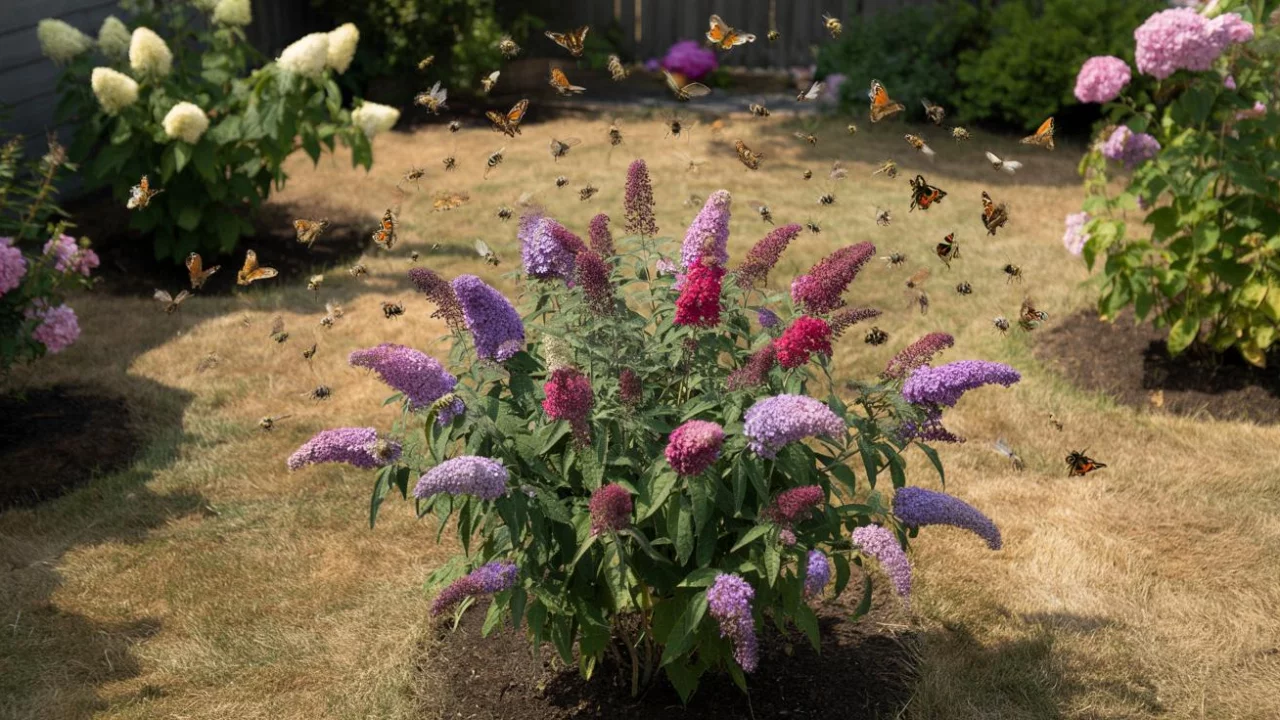
The thermometer on my patio was flashing an angry 102°F when I spotted the only thing in my garden that hadn’t surrendered to the heat. My lawn looked like burnt toast, the roses had given up weeks ago, and even my supposedly drought-tolerant lavender was begging for mercy. But there, in the middle of this botanical disaster zone, one shrub was putting on the show of its life.
Purple flower spikes stretched toward the blazing sky while dozens of butterflies danced around them like they were at some exclusive garden party. Monarchs, swallowtails, painted ladies – even the bees had crashed the celebration. I stood there with my wilted hose, watching this miracle unfold.
That’s when I realized I’d been gardening all wrong. The plant I’d basically ignored all season was the only one thriving in this heat dome.
Meet the butterfly plant that laughs at drought
The butterfly bush, or Buddleia davidii if you want to get scientific about it, has earned its reputation as the ultimate low-maintenance butterfly magnet. This isn’t your delicate, high-maintenance garden prima donna. This is the plant equivalent of that friend who shows up looking amazing after sleeping in their car.
Native to China, the butterfly plant has spread across the globe precisely because it’s so ridiculously adaptable. While your petunias are wilting and your impatiens are having existential crises, Buddleia is out there blooming like it’s the best day of its life.
“I’ve seen butterfly bushes thriving in abandoned lots where nothing else grows,” says landscape designer Maria Rodriguez, who’s been working with drought-resistant plants for over fifteen years. “They’ll grow in poor soil, handle extreme heat, and come back stronger after being cut down.”
The secret lies in its deep root system and Mediterranean-style approach to water conservation. Those silvery-green leaves aren’t just for show – they’re designed to reflect heat and minimize water loss. The plant essentially goes into conservation mode during dry spells, focusing all its energy on producing those nectar-rich flower spikes that butterflies can’t resist.
Why butterflies can’t stay away from this plant
The butterfly plant doesn’t just survive harsh conditions – it creates an all-you-can-eat buffet for pollinators right when other food sources are scarce. Those cone-shaped flower clusters produce nectar with a sugar content that makes butterflies act like kids in a candy store.
Here’s what makes this plant a butterfly paradise:
- Blooms continuously from mid-summer through fall
- Produces up to 40,000 seeds per flower head
- Flowers contain 20-25% sugar content in their nectar
- Attracts over 40 different butterfly species
- Blooms intensify during hot, dry weather
- Individual flowers last 2-3 weeks before being replaced
| Butterfly Species | Peak Activity Time | Preferred Flower Colors |
|---|---|---|
| Monarch | Late morning | Purple, pink |
| Swallowtail | Midday | White, yellow |
| Painted Lady | All day | Purple, magenta |
| Red Admiral | Afternoon | Dark purple |
“The timing is perfect,” explains entomologist Dr. James Chen. “When summer heat stresses other flowering plants, butterfly bush hits peak bloom. It’s like opening the only restaurant in town during a famine.”
The real-world impact of planting butterfly bushes
As climate change brings more extreme weather events, the humble butterfly plant is becoming a crucial player in backyard conservation efforts. With monarch butterfly populations declining by 80% over the past two decades, every garden that can support migrating butterflies matters.
Homeowners who plant butterfly bushes often report seeing species they’ve never noticed before. Sarah Mitchell, a suburban gardener in Arizona, planted three butterfly bushes last spring after years of failed attempts at traditional flower gardens.
“By August, when my neighbors’ gardens looked like moonscapes, my yard was like a butterfly highway,” Mitchell says. “I counted twelve different species in one afternoon. My kids started calling it the butterfly airport.”
The impact extends beyond just pretty wings in the garden. Butterfly plants support entire ecosystems by providing crucial late-season nectar when other sources have dried up. This helps maintain pollinator populations that are essential for food production and wild plant reproduction.
Urban planners are taking notice too. Cities from Phoenix to Austin are incorporating butterfly bushes into median strips and public spaces as part of pollinator-friendly initiatives. The plants require minimal irrigation once established and can handle the reflected heat and poor soil conditions common in urban environments.
However, there’s a balancing act involved. In some regions, particularly the Pacific Northwest, butterfly bush can become invasive. “The key is choosing the right varieties and managing them responsibly,” notes conservation biologist Dr. Lisa Park. “Sterile cultivars give you all the butterfly benefits without the invasive concerns.”
For gardeners dealing with increasingly unpredictable weather, butterfly plants offer a glimpse of climate-adapted gardening. They prove that creating wildlife habitat doesn’t require perfect conditions or constant maintenance – sometimes it just requires choosing plants that are tougher than the challenges they face.
As summers get hotter and water becomes more precious, the butterfly plant stands as a testament to working with nature instead of against it. While we’re still figuring out how to adapt our gardens to a changing climate, this hardy shrub has already shown us the way forward: bloom where you’re planted, attract what you can, and keep thriving no matter what the weather throws your way.
FAQs
How long does it take for a butterfly plant to attract butterflies?
Most butterfly bushes start attracting butterflies within their first blooming season, typically 3-4 months after planting.
Do butterfly plants need full sun to bloom well?
Yes, butterfly bushes perform best with at least 6 hours of direct sunlight daily, though they can tolerate partial shade with reduced flowering.
Can butterfly plants survive winter freezes?
Most varieties are hardy to USDA zones 5-9, surviving temperatures down to -20°F, though they may die back to the ground and regrow from roots.
How often should I water a newly planted butterfly bush?
Water deeply once or twice weekly for the first month, then reduce to only during extended dry periods once established.
Will butterfly plants spread and take over my garden?
Traditional varieties can self-seed aggressively, but newer sterile cultivars like ‘Miss Ruby’ and ‘Miss Molly’ don’t produce viable seeds.
When is the best time to prune butterfly bushes?
Prune in late winter or early spring before new growth begins, cutting back to 12-24 inches from the ground to promote vigorous flowering.




Leave a Comment