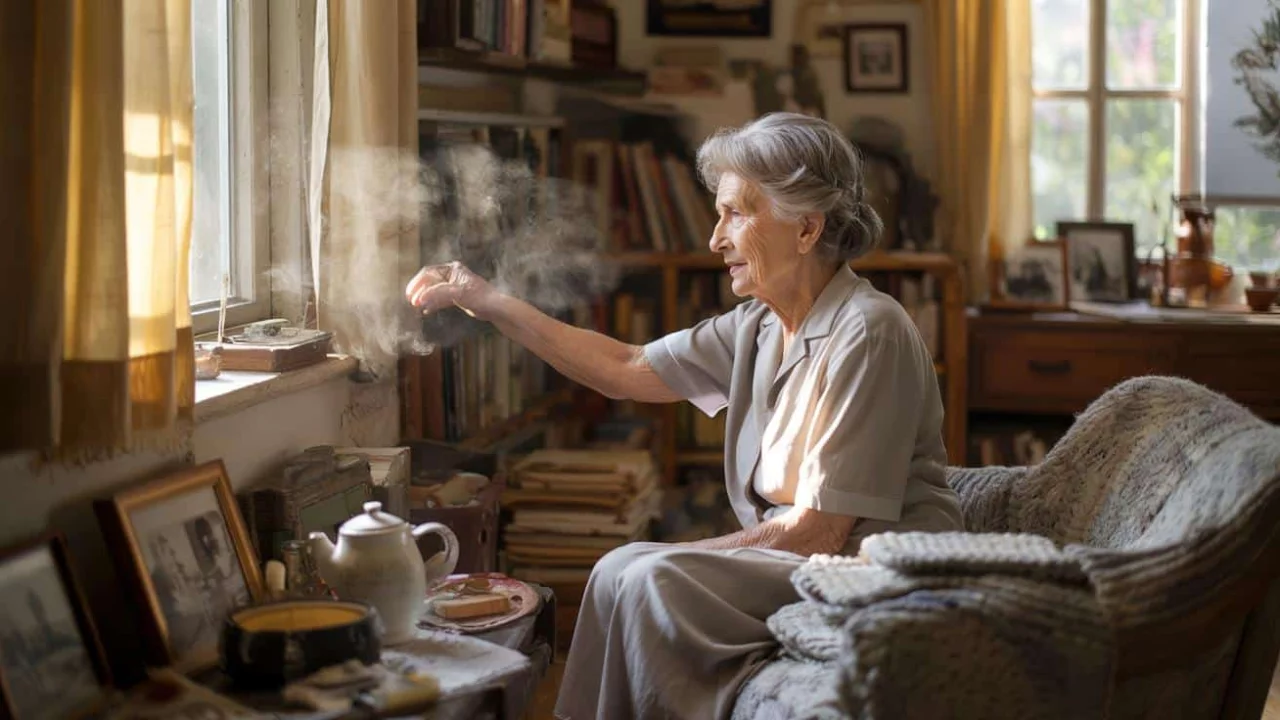
Sarah noticed it the moment she walked into her grandfather’s bedroom to help him pack for his move to assisted living. The room was immaculate—bed made with hospital corners, medications organized in neat rows, not a speck of dust on the mahogany dresser. Yet there was that unmistakable scent hanging in the air, sweet and slightly musty, like old books mixed with something she couldn’t quite place.
“Grandpa, maybe we should open a window,” she suggested gently, trying not to hurt his feelings. He looked confused. “I aired it out this morning, sweetheart. Always do.” And she knew he was telling the truth—he’d been meticulous about cleanliness his entire life.
What Sarah didn’t realize was that she was encountering something that has puzzled families for generations, something that has nothing to do with hygiene and everything to do with the biology of aging itself.
The science behind what we notice but don’t discuss
The old person smell isn’t a myth, and it’s definitely not about cleanliness. It’s a real biological phenomenon that scientists have been studying for decades, particularly in Japan where cultural attitudes allow for more open research on aging-related changes.
The culprit has a name: 2-nonenal, a chemical compound that our bodies start producing more of as we age. Dr. Shinichiro Haze, a researcher who has studied this extensively, explains it simply: “After age 40, our skin begins producing different oils and chemicals. One of these is 2-nonenal, which has a distinctive grassy, greasy odor that tends to linger.”
This compound forms when omega-7 unsaturated fatty acids on our skin break down through oxidation. As we get older, our skin’s natural antioxidant defenses weaken, and hormonal changes increase the production of these fatty acids. The result is a scent that no amount of scrubbing can completely eliminate because it’s literally being produced by our body chemistry.
What makes this particularly challenging is that 2-nonenal is stubborn. Unlike other body odors that wash away easily, this compound binds to fabrics and lingers on skin even after thorough washing. “It’s not water-soluble like regular body odor,” notes dermatologist Dr. Patricia Williams. “That’s why elderly people can shower religiously and still have this distinctive scent.”
Understanding the key factors that create this phenomenon
The development of old person smell involves several interconnected biological processes that intensify with age:
- Hormonal shifts: Decreased estrogen and testosterone levels affect skin oil production
- Slower skin renewal: Dead skin cells accumulate more readily on aging skin
- Reduced antioxidant activity: Less protection against oxidative processes that create odor compounds
- Medication effects: Many common medications alter body chemistry and scent
- Dietary changes: Age-related changes in diet can influence body odor
- Decreased sense of smell: Older adults may not notice their own scent changes
The timing and intensity of these changes varies significantly from person to person. Some people begin producing noticeable levels of 2-nonenal in their 40s, while others don’t develop the characteristic scent until much later.
| Age Range | 2-Nonenal Production Level | Common Characteristics |
|---|---|---|
| 40-50 years | Low to moderate | Barely noticeable, mainly on clothing |
| 50-65 years | Moderate | More apparent, especially in closed spaces |
| 65+ years | High | Distinctive scent, lingers on fabrics |
Environmental factors also play a role. Poor ventilation, synthetic fabrics, and certain cleaning products can actually make the scent more noticeable. “We’ve found that cotton and linen fabrics hold less of the odor than synthetic materials,” explains textile researcher Dr. Michael Chen. “Natural fibers seem to release these compounds more easily during washing.”
How this affects real people and their relationships
The emotional impact of old person smell extends far beyond the science. Many elderly individuals become self-conscious when they realize others notice their scent, leading to social isolation and decreased confidence.
Martha, a 72-year-old retired teacher, describes the moment she realized she had developed the scent: “My daughter started doing my laundry more often, and I caught her spraying air freshener in my room. It was humiliating until I learned it wasn’t something I was doing wrong.”
Family members often struggle with how to address the issue sensitively. Many assume their elderly relatives aren’t maintaining proper hygiene, leading to uncomfortable conversations and hurt feelings. Understanding the biological basis of old person smell can transform these interactions from sources of shame into opportunities for practical problem-solving.
Some practical strategies that can help minimize the scent include:
- Using antibacterial soaps specifically designed to target nonenal
- Washing clothes in hot water with oxygen bleach
- Improving ventilation in living spaces
- Choosing natural fiber clothing and bedding
- Using air purifiers with activated carbon filters
“The key is understanding that this isn’t a hygiene failure,” emphasizes geriatric specialist Dr. Robert Kim. “It’s a normal part of aging that can be managed, not eliminated entirely. Families need to approach it with compassion and practical solutions.”
The scent also serves as an unconscious social signal. Research suggests that humans have evolved to recognize age-related scents as part of our social awareness system. This might explain why old person smell feels so familiar and recognizable—we’re biologically programmed to notice it.
For healthcare workers and family caregivers, recognizing that old person smell is biological rather than behavioral can improve relationships and care quality. Instead of assuming poor hygiene, they can focus on comfort measures and environmental modifications that actually address the root cause.
The stigma surrounding aging scents is slowly changing as more people understand the science behind them. Support groups for elderly individuals now commonly discuss this topic, helping people realize they’re not alone in experiencing these changes.
FAQs
What exactly causes old person smell?
Old person smell comes from a chemical compound called 2-nonenal that our bodies produce more of as we age, created when fatty acids on our skin break down.
At what age do people typically develop this scent?
Most people begin producing noticeable levels of 2-nonenal after age 40, though it becomes more pronounced in the 60s and beyond.
Can old person smell be prevented completely?
No, it can’t be completely prevented since it’s a natural biological process, but it can be minimized through proper hygiene, clothing choices, and environmental management.
Is old person smell the same in all cultures?
The basic biological process is universal, but diet, genetics, and lifestyle factors can influence how pronounced the scent becomes in different populations.
Do certain medications make old person smell worse?
Yes, some medications can alter body chemistry and potentially increase the production of odor-causing compounds, though this varies by individual.
Can younger people develop old person smell?
While rare, hormonal imbalances or certain medical conditions can sometimes cause younger people to produce similar compounds, though this usually indicates an underlying health issue.










Leave a Comment