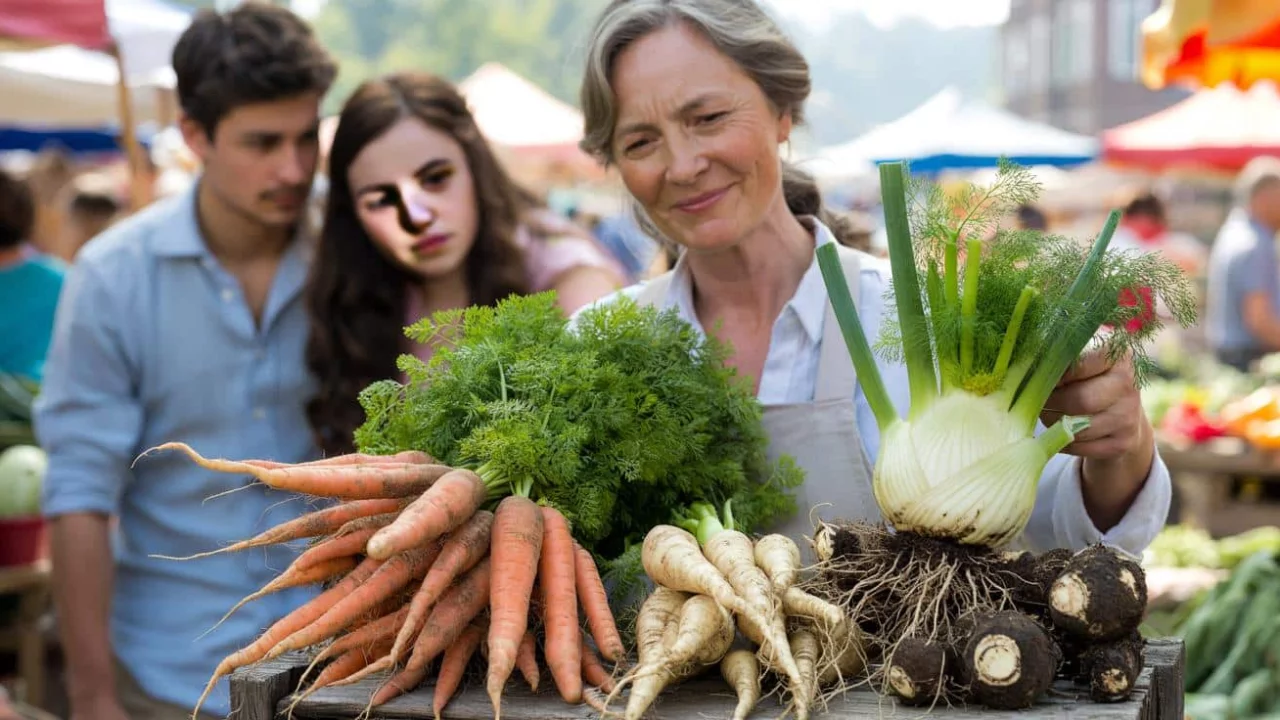
At the Saturday market, the stall was chaos in the best possible way. Pyramids of orange carrots, pale knobbly parsnips, and leafy green bundles that looked like something from an herbalist’s dream. The vendor, a woman with earth under her nails and no patience for small talk, watched a young guy frown at three different crates in front of him. “Carrot tops, parsley, coriander… I never know what to do with all this,” he muttered to his girlfriend, poking a bunch of feathery leaves with one finger.
The vendor smiled, the kind of smile of someone who has seen this scene ten thousand times. “Funny thing,” she said, “those feathery leaves and those mystery roots over there? Same plant family. You’re eating cousins without even realizing it.” He blinked, confused.
What looks like three different vegetables on your plate is sometimes just one plant in disguise. The botanical world is full of these shape-shifters, and once you know the secret, your grocery shopping will never feel the same again.
The great vegetable masquerade: when nature plays dress-up
Most of us grow up thinking every vegetable is its own separate character. A carrot is a carrot, celery is celery, coriander is coriander, end of story. You toss the roots in one pan, the leaves in another, and never really ask who’s related to whom.
Yet nature is far less tidy than supermarket aisles. One plant can offer a root, a stem, and leaves that seem like three strangers. The Apiaceae family, also known as umbellifers, is the master of this disguise. Carrots, parsley, celery, fennel, dill, and coriander all belong to this one massive plant family.
“People are always shocked when I tell them that carrot greens taste almost exactly like parsley,” says Maria Santos, a botanical educator who runs workshops on edible plants. “They’re so closely related that you can use carrot tops in any recipe that calls for parsley.”
The most mind-bending example? Brassica oleracea. This single species has been transformed by humans into cabbage, broccoli, cauliflower, Brussels sprouts, kale, and kohlrabi. One plant in disguise as six completely different vegetables, each bred to emphasize different parts: leaves, flower buds, stems, or compact heads.
Fennel is another perfect example. The bulbous white base tastes like mild licorice, the feathery fronds work as an herb, and the seeds become a spice. Three ingredients from one plant, each with its own flavor profile and culinary purpose.
The science behind the transformation
How does one plant become so many different vegetables? The answer lies in selective breeding, a process that’s been happening for thousands of years. Farmers would save seeds from plants that showed the traits they wanted, gradually creating varieties that looked nothing like their wild ancestors.
Here’s how the same plant species can create completely different vegetables:
- Root emphasis: Carrots and parsnips were bred for thick, sweet roots
- Leaf focus: Kale and collard greens maximize leaf production
- Stem development: Celery and kohlrabi grew thick, tender stems
- Flower power: Broccoli and cauliflower are actually undeveloped flower clusters
- Seed specialization: Coriander seeds and dill seeds became distinct spices
“The genetic potential was always there,” explains Dr. James Chen, a plant geneticist at Cornell University. “Humans just learned to unlock different combinations of traits that were hiding in the same plant’s DNA.”
| Plant Family | Common Name | Different “Vegetables” | Parts Used |
|---|---|---|---|
| Brassica oleracea | Wild Cabbage | Cabbage, Broccoli, Cauliflower, Brussels Sprouts, Kale | Leaves, Flower buds, Stems |
| Apiaceae | Carrot Family | Carrots, Parsley, Celery, Fennel, Dill | Roots, Leaves, Stems, Seeds |
| Beta vulgaris | Sea Beet | Sugar Beet, Red Beet, Swiss Chard | Roots, Leaves, Stems |
The wild ancestors of these vegetables would be almost unrecognizable to us today. Wild carrots were thin, pale, and bitter. Ancient cabbage looked more like a scraggly weed than the tight, round heads we know. Yet within each plant’s genetic code lay the blueprints for dramatic transformation.
What this means for your kitchen and wallet
Understanding that one plant can disguise itself as multiple vegetables changes how you shop, cook, and even grow your own food. When you buy carrots, don’t toss those green tops – they’re essentially free parsley with a slightly more peppery bite.
Fennel fronds work beautifully in salads or as a garnish for fish, while the bulb roasts into something completely different. Beet greens taste remarkably similar to Swiss chard because they’re the same species, just bred for different priorities.
“Once people realize they’re throwing away perfectly good food, they start getting creative,” says chef Roberto Martinez, who specializes in nose-to-tail vegetable cooking. “Broccoli stems taste exactly like the florets once you peel them. Cauliflower leaves are just as good as any cooking green.”
This knowledge also explains why certain vegetables pair so well together. Of course carrots and parsley work in the same dish – they’re botanical siblings. Fennel and dill complement each other because they’re cousins in the same family tree.
For home gardeners, this opens up entirely new possibilities. Plant one type of beet and harvest both the roots and the greens. Grow fennel and use every part of the plant across different seasons. Let some of your herbs go to seed for an entirely different flavor profile.
The economic impact is significant too. Instead of buying multiple separate ingredients, you’re getting several vegetables from one plant. Those expensive microgreens? Often just the baby versions of vegetables you already know, harvested at a different stage.
Next time you’re at the grocery store, take a closer look at the botanical relationships hiding in plain sight. That one plant in disguise might just revolutionize your cooking, reduce your food waste, and help you understand the incredible adaptability of the plants we depend on.
FAQs
Can you really eat carrot tops like parsley?
Yes, carrot greens are not only safe to eat but taste very similar to parsley since they’re in the same plant family.
Are Brussels sprouts really the same plant as cabbage?
Absolutely. Brussels sprouts, cabbage, broccoli, cauliflower, and kale are all varieties of the same species: Brassica oleracea.
Why do vegetables from the same plant taste so different?
Selective breeding over thousands of years emphasized different plant parts and flavors, creating distinct tastes from the same genetic foundation.
Which parts of fennel can you eat?
Every part: the white bulb, the green fronds, and the seeds. Each has a different intensity of the signature licorice flavor.
Do beet greens really taste like Swiss chard?
Yes, because they’re the same species (Beta vulgaris), just bred to emphasize either the root or the leaves.
Can I grow multiple vegetables from one plant?
With some plants like fennel or beets, yes. You can harvest different parts at different times for various culinary uses.











Leave a Comment