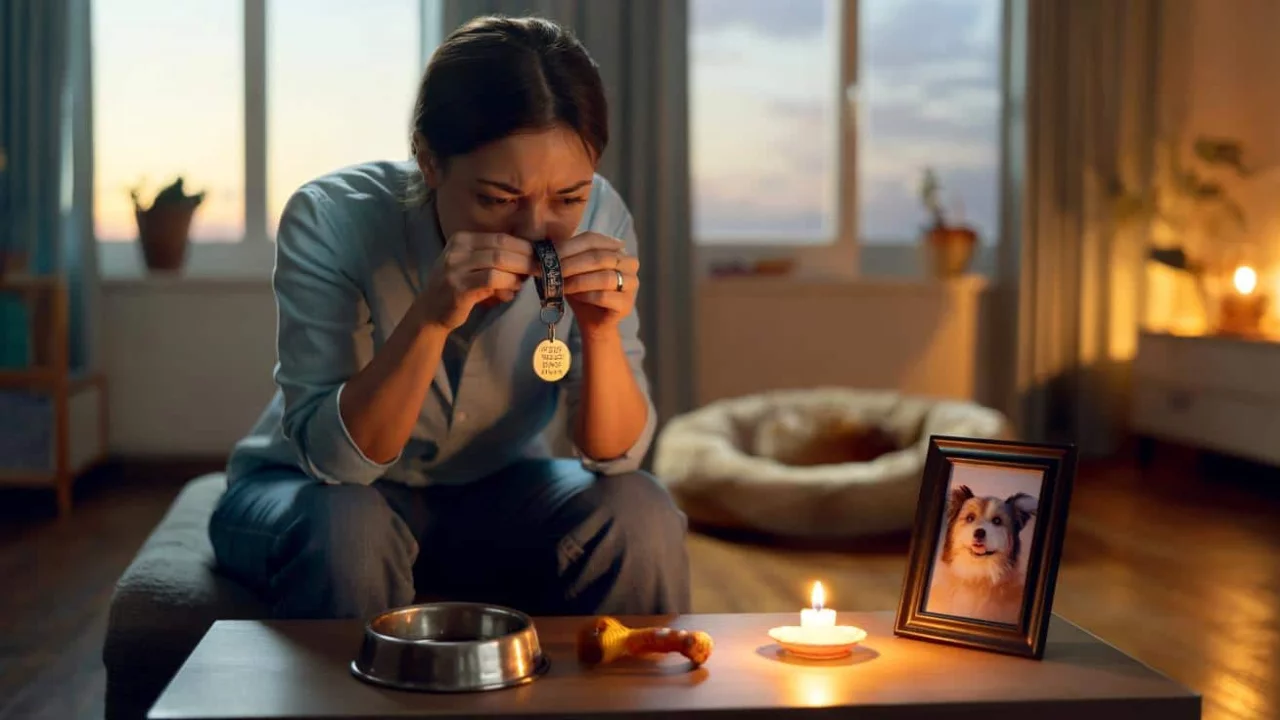
Sarah stared at the empty dog bed in her living room for twenty minutes before she realized she was doing it. Three weeks had passed since Max, her golden retriever, had died, and she still found herself setting two bowls out for dinner every night. The grief hit in waves—sometimes while brushing her teeth, sometimes in the grocery store when she passed the pet food aisle.
“I felt crazy,” Sarah admits. “People kept telling me ‘at least it wasn’t a person,’ but my body didn’t seem to know the difference. I couldn’t sleep, couldn’t concentrate at work. I was a mess.”
Sarah’s experience isn’t unusual. What she didn’t know is that her brain was processing Max’s death using the same neural pathways it would use for any significant loss. Pet bereavement grief can trigger the same biological and emotional responses as losing a human family member—because to many people, that’s exactly what their pet was.
Your brain doesn’t distinguish between species when it comes to love
The attachment between humans and pets operates on the same neurochemical level as human relationships. When you pet your dog or hear your cat purr, your brain releases oxytocin—the same hormone involved in parent-child bonding and romantic relationships.
“The neural pathways for attachment don’t care if your loved one has two legs or four,” explains Dr. Jennifer Martinez, a grief counselor who specializes in pet loss. “Your brain has formed the same type of emotional bond, complete with daily routines, physical comfort, and unconditional positive regard.”
This biological reality helps explain why pet bereavement can feel so overwhelming. Your nervous system has been wired for years around the presence of another living being. When that presence disappears, the disruption is profound.
The symptoms mirror human grief in startling ways. Pet owners experiencing bereavement report difficulty sleeping, changes in appetite, inability to concentrate, and waves of intense sadness that seem to come from nowhere.
The hidden complexity of pet grief symptoms
Pet bereavement grief manifests in both expected and surprising ways. Understanding these symptoms can help validate what many pet owners experience but rarely discuss openly.
Common physical and emotional responses include:
- Disrupted sleep patterns and frequent waking
- Loss of appetite or emotional eating
- Difficulty concentrating at work or school
- Intrusive thoughts about the pet’s final moments
- Phantom sounds—hearing familiar barks, meows, or footsteps
- Avoiding places associated with the pet
- Guilt about decisions made during the pet’s illness
- Social withdrawal from friends and family
The timeline for pet grief varies dramatically from person to person, but research shows it can last anywhere from several months to over a year.
| Grief Stage | Typical Duration | Common Experiences |
|---|---|---|
| Acute grief | 2-6 weeks | Intense crying, sleep disruption, loss of appetite |
| Active grieving | 2-6 months | Waves of sadness, guilt, difficulty with routines |
| Accommodation | 6-12 months | Gradual acceptance, ability to remember positively |
| Integration | Ongoing | Pet becomes part of life story without acute pain |
“I had clients who were more devastated by losing their dog than when their marriage ended,” notes therapist Dr. Robert Chen. “The relationship with a pet is often simpler and more unconditionally positive than human relationships. There’s no conflict, no judgment—just pure companionship.”
Why society struggles to understand pet loss
Despite the real psychological impact, pet bereavement grief often receives minimal social support. Friends and colleagues may expect you to “get over it” quickly, not understanding that you’ve lost a daily companion who provided structure, comfort, and unconditional love.
This lack of recognition can complicate the grieving process. When society doesn’t validate your loss, you may feel isolated or ashamed of the depth of your pain.
“The disenfranchised nature of pet grief makes it harder to process,” explains Dr. Martinez. “People don’t get bereavement leave for pets. They’re expected to function normally the day after putting down a companion they’ve lived with for a decade.”
The practical aftermath adds another layer of difficulty. Unlike human death, pet loss often happens through euthanasia, leaving owners with complex feelings about their role in the decision. The guilt can be overwhelming, even when the choice was clearly compassionate.
Pet owners also face immediate practical challenges: disposing of food and toys, deciding what to do with ashes, explaining the absence to other pets in the household. These tasks can feel impossibly difficult while in acute grief.
Recovery from pet bereavement follows many of the same patterns as other types of loss. Creating rituals, talking about memories, and gradually reestablishing routines all help. Some people find comfort in memorial activities like planting a tree or donating to animal shelters.
The decision of when—or whether—to get another pet is deeply personal and shouldn’t be rushed. Some people find that a new companion helps them heal, while others need time to process their loss fully.
“There’s no timeline for ‘getting over’ pet loss,” Dr. Chen emphasizes. “The goal isn’t to stop missing them—it’s to reach a place where the memories bring more comfort than pain.”
FAQs
How long does pet grief typically last?
Pet grief can last anywhere from several months to over a year, with the most intense phase usually lasting 2-6 weeks.
Is it normal to cry more over a pet than I did over human losses?
Yes, this is completely normal. The relationship with pets is often simpler and more consistently positive than complex human relationships.
Should I remove all my pet’s belongings immediately?
There’s no right answer. Some people find comfort in keeping items, while others need to pack things away. Do whatever feels right for your healing process.
How do I explain pet loss grief to people who don’t understand?
You might explain that pets are daily companions who provide routine, comfort, and unconditional love—losing them disrupts your entire daily structure.
When is pet grief considered complicated or unhealthy?
If grief interferes with basic functioning for months, involves thoughts of self-harm, or includes complete social isolation, professional support may be helpful.
Is it okay to get another pet right away?
Only if it feels right to you. Some people benefit from a new companion immediately, while others need time to process their loss first.











Leave a Comment