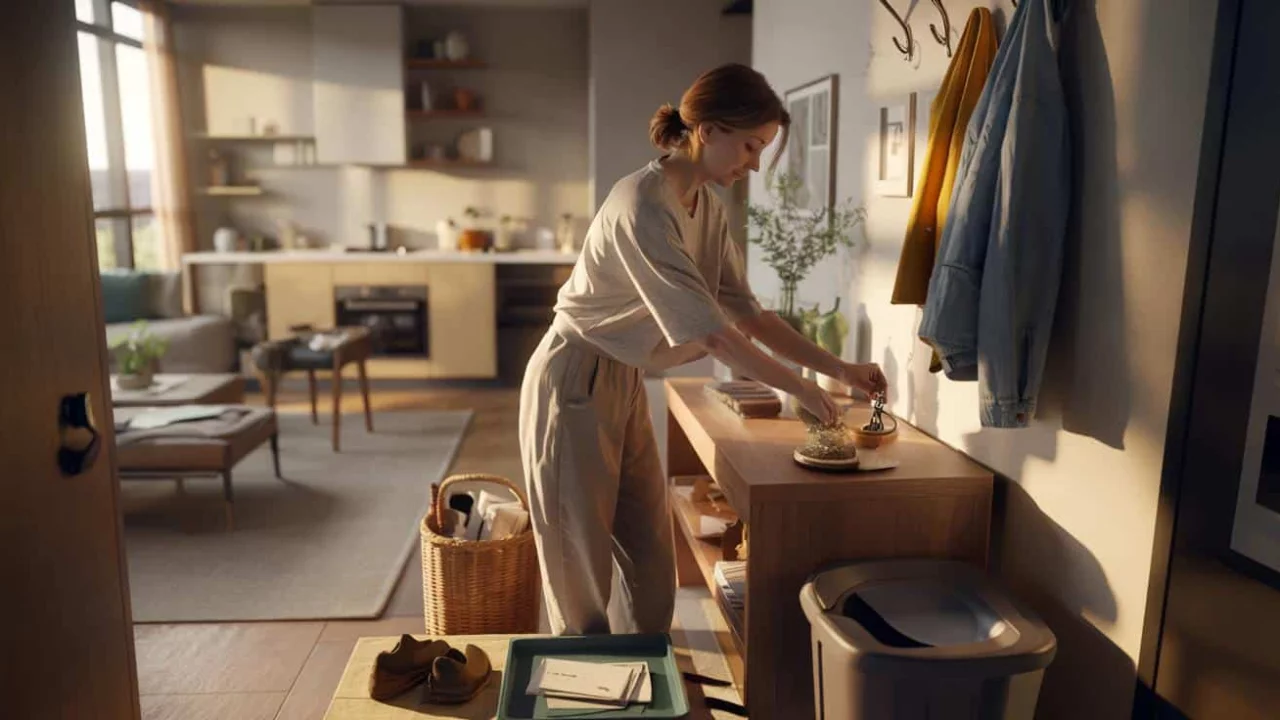
Sarah stared at the mountain of clean laundry that had been living on her bedroom chair for three weeks. What started as “I’ll fold these tomorrow” had grown into an intimidating tower that now required an entire Saturday to tackle. Sound familiar?
We’ve all been there. The coffee mug that sits on the counter “just until later.” The mail that gets tossed on the dining table. The jacket draped over the back of a chair because hanging it up feels like too much effort in the moment.
These tiny choices seem harmless, even logical. But they’re quietly sabotaging our peace of mind, one small mess at a time.
The one-touch rule that transforms your space
The solution isn’t about becoming a neat freak or spending hours organizing. It’s simpler than that, and it starts with preventing small messes before they multiply.
Enter the one-touch habit: every item you pick up gets handled only once before it reaches its proper home. No pit stops, no “temporary” spots, no promising yourself you’ll deal with it later.
“Most people think organization is about big overhauls, but it’s really about tiny decisions made consistently,” explains productivity coach Maria Chen. “The one-touch rule eliminates the mental burden of remembering what needs to be put away.”
Here’s how it works in real life. When you walk through the front door, your keys don’t get tossed on the counter. They go straight into the key bowl. Your coat doesn’t get draped over the first chair you see. It goes directly to the closet.
The beauty of preventing small messes lies in its simplicity. You’re not adding extra steps to your routine – you’re just being more intentional about where things land.
Breaking down the mess prevention system
Understanding which items create the biggest mess buildup can help you focus your efforts. Here are the main culprits and their one-touch solutions:
| Common Mess Creator | One-Touch Solution | Time Saved Weekly |
| Mail and papers | Sort immediately: trash, file, or action pile | 45 minutes |
| Dishes and cups | Wash or load dishwasher right after use | 30 minutes |
| Clothing items | Hang up or put in hamper immediately | 60 minutes |
| Keys, wallets, sunglasses | Designated spots near entrance | 15 minutes |
| Books and magazines | Return to shelf or reading basket | 20 minutes |
The key areas where preventing small messes makes the biggest impact are surprisingly predictable:
- Entry points: Front door, mudroom, garage entrance
- Kitchen counters: Where mail, keys, and random items gather
- Bedroom chairs: The notorious “floordrobe” staging area
- Bathroom counters: Where toiletries and towels pile up
- Coffee tables: Magnets for remotes, cups, and random objects
“The psychological weight of visual clutter is real,” notes environmental psychologist Dr. James Rodriguez. “When our surroundings feel chaotic, our minds mirror that chaos. Preventing small messes is really about protecting our mental energy.”
Why this simple habit transforms entire households
The ripple effects of preventing small messes extend far beyond having a tidy home. Families who adopt this approach report feeling less stressed, arguing less about chores, and spending more quality time together instead of constantly tidying up.
Children naturally pick up on the habit when they see it modeled consistently. Instead of nagging about putting toys away, parents find their kids automatically returning items to their proper spots.
“My 8-year-old now hangs up his backpack without being asked,” shares parent Jennifer Walsh. “It took about three weeks of consistent modeling, but now it’s just what we do in our house.”
The time savings are substantial. The average person spends 12 minutes daily looking for misplaced items. When everything has a designated spot and returns there after each use, that frustrating search time disappears.
Preventing small messes also eliminates the weekend “catch-up cleaning” sessions that eat into family time. Instead of spending Saturday morning tackling accumulated clutter, you’re free to enjoy activities you actually want to do.
The financial benefits surprise many people. When you know exactly what you own and where it lives, you stop buying duplicates. No more purchasing a third can opener because you can’t find the other two buried in kitchen drawers.
Guest-readiness becomes effortless. When friends drop by unexpectedly, you’re not scrambling to hide piles of stuff or apologizing for the mess. Your home is naturally welcoming because it stays organized through daily habits rather than panic-cleaning sessions.
“The one-touch rule changed our entire family dynamic,” explains home organization expert Lisa Chen. “Instead of constantly telling each other to clean up, we all just naturally maintain our shared spaces. It removed so much friction from our daily interactions.”
The habit becomes self-reinforcing once you experience its benefits. The visual calm of organized spaces motivates you to maintain them. The mental clarity that comes from knowing where everything belongs makes the small effort feel worthwhile.
Starting small is key to long-term success. Pick one category of items – maybe just keys and wallets – and focus on those for two weeks. Once that feels automatic, add another category like mail or dishes.
Remember, preventing small messes isn’t about perfection. It’s about creating systems that work with your natural habits rather than against them. The goal is progress, not picture-perfect spaces.
FAQs
How long does it take to form the one-touch habit?
Most people see automatic behavior within 2-3 weeks of consistent practice, though it can take up to 66 days for complex habits to become fully ingrained.
What if other family members don’t follow the system?
Start with your own items and spaces. Others often naturally adopt the habit when they see how much easier it makes daily life, especially when they stop having to search for their belongings.
Does the one-touch rule work for people with ADHD or other attention challenges?
Yes, many find it actually helps because it eliminates decision fatigue. Having a clear, simple rule reduces the mental load of remembering where things should go.
What about items that don’t have a designated home?
This usually indicates you need to create proper storage solutions. Every frequently used item should have a specific, easily accessible spot.
Is it realistic to never leave anything out temporarily?
The goal is consistency, not perfection. Even following the rule 80% of the time dramatically reduces mess accumulation compared to frequent “temporary” placements.
How do you handle items you use throughout the day, like reading glasses or water bottles?
These need multiple designated spots – one by your bed, one in the living room, one in your office. The key is having specific homes in each area where you use them.











Leave a Comment