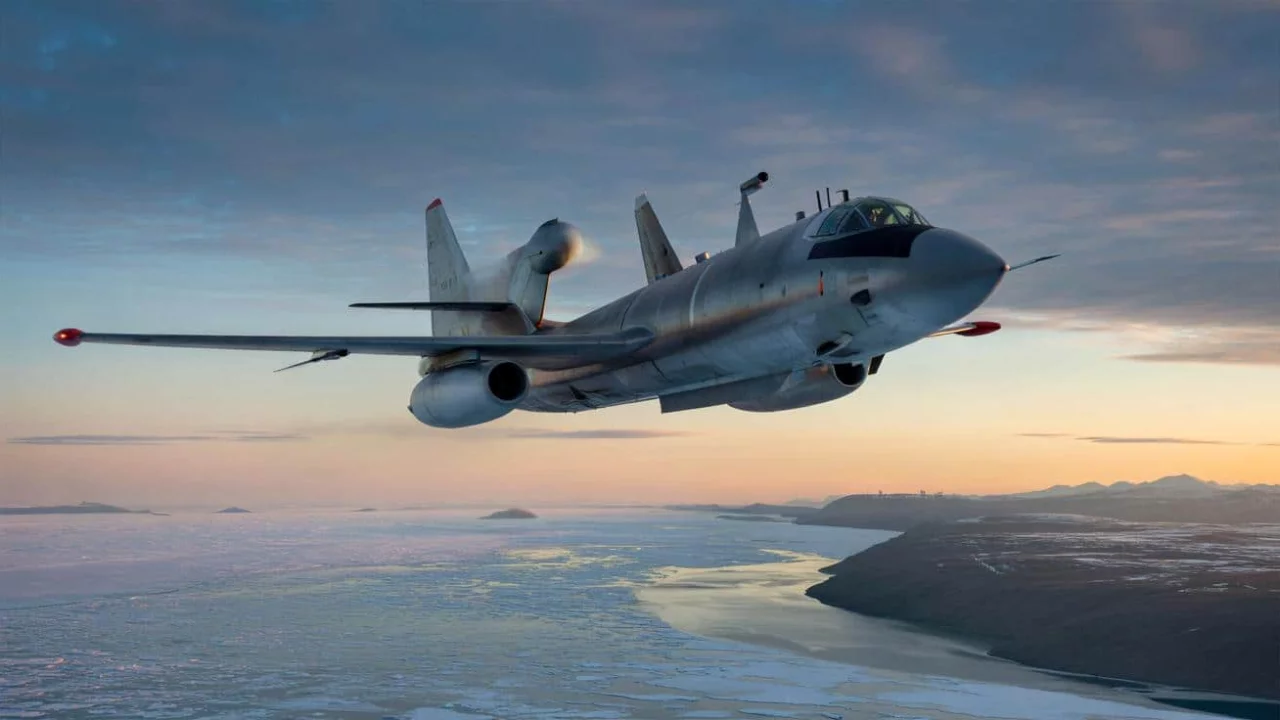
Imagine you’re a radar technician working the night shift in Alaska. The coffee’s gone cold, your monitor glows softly in the dim control room, and then—ping. A new contact appears on your screen, moving slowly but deliberately toward American airspace. Your heart skips a beat because you recognize that signature. It’s not a commercial airliner or a lost cargo plane. It’s Russian, and it’s heading straight for the invisible line that separates two superpowers.
This is exactly what happened when US forces detected a Russian Il-20M electronic intelligence aircraft approaching Alaska. Within minutes, American fighters were scrambling into the frigid Arctic sky. The routine of a quiet night shift had just become an international incident waiting to happen.
For most of us, these encounters feel like something from a Cold War movie. But they’re happening more often than you might think, and each one carries the weight of two nations testing each other’s resolve thousands of feet above the frozen edge of America.
When Electronic Spies Meet Fighter Jets
The Russian aircraft interception near Alaska wasn’t just any plane buzzing too close to US airspace. The Il-20M is essentially a flying intelligence laboratory, packed with sophisticated electronics designed to vacuum up radio signals, radar patterns, and communication frequencies. Think of it as a massive electronic ear, listening for anything that might reveal how America defends its northern frontier.
“These intelligence flights are designed to probe our response capabilities,” explains former Air Force Colonel Sarah Mitchell. “They want to see how quickly we react, what aircraft we send up, and how our defense systems operate under pressure.”
The encounter unfolded in the Air Defense Identification Zone, a buffer area extending roughly 200 miles from the US coastline. While technically international airspace, any unidentified aircraft entering this zone triggers immediate military response. It’s like having an invisible fence around your property—cross it uninvited, and the guard dogs come running.
US fighter jets intercepted the Russian aircraft following standard protocols. The pilots flew alongside the Il-20M, establishing visual contact and ensuring it didn’t penetrate deeper into sensitive airspace. No shots were fired, no emergency maneuvers were needed. Just two sets of military professionals doing their jobs while representing their nations’ interests.
Breaking Down The Numbers Behind Russian Aircraft Interceptions
These aerial encounters between US and Russian forces happen more frequently than most people realize. The data reveals a concerning pattern of increased activity near American borders, particularly around Alaska’s strategic location.
| Year | Russian Aircraft Intercepted | Location | Aircraft Type |
|---|---|---|---|
| 2023 | 18 incidents | Alaska ADIZ | Tu-95, Il-20M |
| 2024 | 22 incidents | Alaska/Pacific | Tu-142, Il-20M |
| 2025 | 26 incidents | Multiple regions | Mixed platforms |
The key factors that trigger these interceptions include:
- Russian aircraft approaching within 200 miles of US coastline
- Unannounced flights in international airspace near military installations
- Electronic intelligence gathering operations
- Testing response times of US air defense systems
- Demonstrating military presence during periods of political tension
“We’re seeing a steady increase in these probing flights,” notes defense analyst Dr. Robert Chen. “Russia is essentially mapping our defensive posture, looking for gaps or weaknesses they can exploit in future scenarios.”
The Il-20M specifically represents one of Russia’s most capable intelligence-gathering platforms. Based on the Il-18 airliner, it’s been modified with advanced radar, communication intercept systems, and electronic warfare equipment. When one of these aircraft approaches US airspace, it’s not just flying—it’s actively listening, recording, and analyzing American military communications.
Why This Matters To Everyone Living Under These Flight Paths
You might wonder why a Russian aircraft near Alaska should concern someone living in Texas or Florida. The reality is that these encounters shape the broader security environment we all live within, influencing everything from defense spending to international relations.
Every russian aircraft interception sends ripples through the diplomatic world. Russia tests American resolve, America demonstrates its readiness to defend its borders, and both sides gather intelligence about each other’s capabilities. It’s a high-stakes chess game played in the sky.
For military families stationed in Alaska, these incidents are reminders that their loved ones stand on the front lines of an ongoing geopolitical competition. Fighter pilots who scramble to meet these Russian aircraft know that one miscalculation, one moment of poor judgment, could escalate into something far more serious.
“These encounters require split-second decision-making at 30,000 feet,” says retired Navy pilot Commander Lisa Torres. “Our pilots have to balance showing strength with avoiding provocation. It’s incredibly demanding work.”
The economic implications also reach far beyond Alaska. Each scramble costs taxpayers thousands of dollars in fuel, maintenance, and operational expenses. More importantly, these incidents influence defense budget discussions and military modernization programs designed to counter Russian capabilities.
For aviation safety, these encounters create additional complexity in already challenging Arctic airspace. Commercial airlines must navigate around military exercises and intercept operations, sometimes causing delays or route changes that affect thousands of passengers.
The intelligence gathered during these flights also has long-term consequences. Russia learns about American radar coverage, response times, and communication protocols. This information could prove valuable in future conflicts or crisis situations, making each encounter a small but significant piece of a larger strategic puzzle.
Perhaps most importantly, these incidents serve as barometers of US-Russia relations. When diplomatic tensions rise, aerial encounters tend to become more frequent and aggressive. When both nations seek to reduce tensions, these flights often decrease or follow more predictable patterns.
FAQs
How often do Russian aircraft approach US airspace?
Russian military aircraft probe US airspace approximately 20-30 times per year, with most incidents occurring near Alaska due to its proximity to Russian territory.
What happens when US fighters intercept Russian aircraft?
American pilots fly alongside the Russian aircraft, establish visual contact, and monitor their movements until they leave the area. Communication typically occurs through standard international aviation frequencies.
Are these encounters dangerous?
While tensions run high, both sides follow professional protocols designed to prevent accidents. Pilots are trained to maintain safe distances and avoid provocative maneuvers that could escalate situations.
Why does Russia conduct these flights?
These missions serve multiple purposes: testing US response capabilities, gathering electronic intelligence, demonstrating military presence, and sending political messages during periods of tension.
How do these incidents affect civilian air traffic?
Military intercept operations can temporarily disrupt commercial flight paths, causing minor delays or route changes, particularly for flights operating near Alaska and the Pacific Northwest.
What prevents these encounters from escalating into conflicts?
Both nations follow established protocols, maintain professional military standards, and use diplomatic channels to manage tensions. Neither side benefits from turning routine intercepts into military confrontations.











Leave a Comment